Pharmacy Technician Regulation and My Journey To Become Licensed in Nova Scotia

Greetings pharmacy community! I am a pharmacy assistant in Nova Scotia and was asked by Devin (ages ago – sorry Devin!) to write a bit about the adventure I have been on to become a regulated pharmacy technician, and how I feel about the process.

When I began as a pharmacy assistant in 2007, regulation wasn’t even a thought in Nova Scotia. I was hired as a “pharmacy technician.” I was told to “listen to the pharmacist and do everything they ask you to do – they are your direct supervisor on shift, and you are there to support them and the work they do.” So I was trained on the job and became what my pharmacist needed me to be.

I loved my new job! I enjoyed helping my patients, and taking phone calls (even if I was confused as to which “little white pill” my elderly patients were looking to have refilled), filling scripts, and learning everything I could from my pharmacist. For the first time I felt like I had found purpose in what I was doing, and I was quite satisfied with my work. Yes, there were challenging times and tough questions, but there were funny moments as well.

To condense my tale, I ended up working at a very busy retail pharmacy that had a lot of unique things going for it.  As I was away from home, family and friends, I started looking at pharmacy websites and reading about the pharmacy technician regulation process that was happening in Ontario and Alberta.  I decided that this was the next step I wanted to take in my pharmacy career. To do this, I felt I  that needed a bit more knowledge of pharmacy laws, pharmacology, etc. In the summer of 2009, I purchased a few text books, and began to study the NAPRA, PANS, and NSCP websites in anticipation of writing the PEBC Evaluation Exam. I wrote the Evaluation exam in Halifax in April of 2010, with a room full of other hopeful candidates.

And then the waiting game began. As everything was new and nothing was in the Pharmacy Act, I, along with countless other assistants in Nova Scotia, could go no further. In 2011 we finally heard word that we could begin taking the four Pharmacy Technician Bridging Programs being offered through various colleges online (now only being offered by Selkirk College). I completed the final course through Humber College in the spring of 2012, and wrote the PEBC Qualifying Exam (MCQ and OSPE) in March of this year. It was a terrifying experience – so much rested on my abilities and knowledge, and at times I felt like I was failing miserably. I questioned whether I could ever be successful as a pharmacy technician. However, in May I received word that I passed the PEBC!

And then more waiting. Was the new Pharmacy Act ever going to get passed? No one was sure. I didn’t think that I would stick around Nova Scotia much longer, and so in July I started looking into the process to move to Ontario and pursue licensure through their process. Thank goodness that I didn’t! At the end of July we found out that the new Nova Scotia Pharmacy Act would be passed and in effect on the 6th of August! A bit more waiting as many changes were made in the Act (including the ability for pharmacists to give injections to their patients -go and get your flu shots!). Then news came that the NSCP would be offering jurisprudence exams for hopeful pharmacy technicians. I didn’t do much preparation as I used to spend hours on the website, but I did bring a binder stuffed to the hinges with everything I could think of to print. After all, you don’t necessarily need to know 100% of everything for pharmacy – but you do need to know where to find the information you need and how to interpret what you find. The exam was offered last week, and so now I am waiting on the results.

The final step is the Pharmacy Technician Assessment (PTA) which is being offered sometime after December, and once I am successful with this aspect, I should be ready to register as a pharmacy technician!

And so I return to Devin’s original request when he asked me to write for PharmAspire and talk about how the whole regulations process has been. I’d be lying if I said it was an entirely awesome, stress-free experience. Tears have been shed, and drinks have been consumed after exams. There has been so much preparation and anticipation; anxiety and agitation, but also excitement and that feeling of pride once another step in this five year process was achieved successfully.  I can say that I have learned so much through and from the process that I feel I can take on anything! My understanding of pharmacology is so much better (“Your little white pill? You have two on file. Were you looking for the one for your blood pressure or for your diabetes?”) and I feel like I am able to assist my patients more effectively and efficiently.  I am already putting to good use the knowledge that I have gained, and only hope that I can be utilized further once I am licensed to do so.

And so that’s been my journey thus far!

*

Disclaimer: The views and opinions expressed in this article are those of the author(s) and do not necessarily reflect the official policy or position of any agency, employer or affiliation.
Into the Depths

Let’s forget for a second that I am a pharmacist by trade. Anyone, regardless of your education, belief system or social class, can put thoughts on a page. Fortunately, many do. They take many forms such as journals, blogs, poetry, songwriting, editorials, novels, plays, or scripts. Even the social media sites Twitter and Facebook are great forums for quick hits and grammar-optional pontification if needed 🙂

So why do folks write?

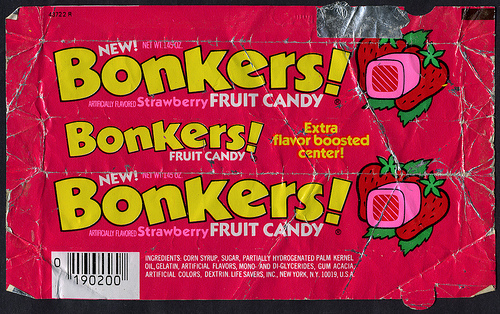
I’m not a philosopher by any means but I enjoy thinking and making others think. From a young age I was a curious sort with a never-ending stream of questions and observations. These served to both embarrass my parents and drive them bonkers, y’know, like the fruit-flavored candy with an even fruitier centre:

4392932409_90ae246824

(Awesome vintage photo courtesy of Jason Liebig – http://www.collectingcandy.com/ )

It’s still true today. My curiosity about people and behavior has not waned (and yes, embarrassing the parents is MUCH more intentional and fun). Only through engagement with others can you learn about them and find out just as much about yourself. Examples include similar or disparate reactions to the same situations or messaging, coping mechanisms, value sets, and motivator/stressor combos.

Team dynamics and group behaviors are an extension of this. What does it mean to be a ‘people-person’ versus a ‘loner’? I’ve always considered myself a people-person, but that does not necessarily mean that I was always accepted as part of a community or group. Similarly, I feel drawn to loners because they tend to have an independence or quiet confidence about them, at least in appearance. If I was building a team, sprinkles of both would be essential. The extroverts want to engage and the introverts usually have well-thought out ideas and opinions that require a little encouragement to share. Having a label just oversimplifies; sometimes you want to go your own way and other times you seek out support of others. The label is best applied to a tendency, not a personality.

So back to writing…the fear of judgement can be a paralytic. Even as I type this, that gnawing sensation that my opinions are available for all to see is a bit overwhelming and downright odd. Surely many others have considered doing the same but aren’t quite ready to voluntarily have folks peer into their thought-processes. What might they learn? Will readers understand my premise?

So these are my thoughts and anyone is welcome to them. Whether you’re a member of the pharmacy profession or on the fringe, I’ve been inspired by so many people it’s tough to acknowledge each one of them properly. Patients, family, friends and colleagues have all had a hand in this project, whether it be good supportive advice or reality checks. The best way I know to thank them is to keep sharing bits of me that they’ve helped grow.

For that I write…

Disclaimer: The views and opinions expressed in this article are those of the author(s) and do not necessarily reflect the official policy or position of any agency, employer or affiliation.

Odds and Ends – Pharmacy-Style

Just a few fun quick-hits:

1 ) Y’know? I really like counting Premarin; it’s ovoid shape makes the pills settle nicely on a counting tray. At one time the 4 colors were a bold green, maroon, pink and yellow. They are film-coated (no powdery messes) and they don’t need to be split. As a teaching tool, I have been told that the name itself refers to the original source of the medication and  translates to ‘PREgnant MARe’s urINe’ which is kind of a cool conversation piece whether completely true or not.

2 ) I can’t for the life of me figure out how to best handle multiple-strength dosing.

Once we received an Rx for Seroquel 75mg am, 50mg pm and 200mg qhs. It was filled with 25mg – 3 tabs qam & 2 tabs qpm, and as 200mg qhs. This Rx was refilled multiple times in about a 6-month period and due to recent adjustments, the filling of the 2 strengths somehow became staggered. We didn’t notice that the 200mg were lasting longer than they should and received an angry phone call from the specialist demanding to know why we filled the prescription the way we did: ‘I wanted him/her to take 8x25mg tabs at bedtime. The patient is no longer stable because he/she has decided not to take the night-time dose’. Okay, fine. Point taken.

Fast forward a few weeks. An Rx comes in for Gabapentin 500mg bid + 900mg qhs. Sensing that I may be causing more confusion than necessary, I ask if the doctor prefer I fill the prescription with one or multiple strengths (100mg and 400mg perhaps). Very politely I was asked why in the world  I would have someone take 19 caps a day when they could do it in 7? Um…I thought the same thing but, oh well.

3 ) Tylenol #1’s are a bone of contention for many folks. There must be an awful lot of people with intractable coughs requiring a bottle of these suckers a week. From a regulatory standpoint, I’ll need some convincing. A readily available Schedule II product, when taken in equivalent codeine doses, has the potential to be much more dangerous than its heavily regulated sister products. Ever notice how pharmacy teams treat T1s differently than other Schedule II products like iron supplements or decongestants? You want these products to be available for folks who truly need them, and not have it devolve into policing those that don’t (or would potentially benefit from an alternative therapy).

4 ) To the manufacturers of Concerta and Prometrium: bravo for your creativity in uniquely-shaped pills, but perfect spheres and cylinders are mighty annoying to try to count without them rolling off the counter onto the floor. At least the cylinder you have a good idea which direction it will go and chances are better for a great save or the 3-second rule (kidding).

Disclaimer: The views and opinions expressed in this article are those of the author(s) and do not necessarily reflect the official policy or position of any agency, employer or affiliation.