
A couple weekends ago I hopped on my bike and pedaled close to 100 km in my 4th MS Bike Tour.
The distance is one thing, and the need for a good pair of padded undergarments always provides ample fodder for tour volunteers and non-riding supporters. This year turned out to be one of the best yet, though very different than my previous three. This difference was for reasons that didn’t occur to me until afterwards.
We rode from the Windsor Exhibition Grounds to Acadia University under a comfortable, cloudy sky. After the first day, my new team settled into the residences at Acadia for an afternoon of swimming before the annual banquet. After dinner, we ended up back in our rooms to have a wobbly pop or two. During the evening, the dozen of us took turns explaining our reasons for being there. All were insightful and inspiring, and topics always involved family members or close friends with multiple sclerosis. Some were diagnosed at a young age and deterioration ran the gamut from slow (decades) to rapid (<2 years). You may get the impression that I can sometimes be rather long-winded, and you would probably be right. I’ll share the condensed version here for the sake of brevity:
Thirteen years ago, a mentor and friend began an MS Bike Tour team in support of a longtime colleague’s wife. I was aware of the team, but saw it as a cause with which I didn’t connect. I knew little about the disease, the progression, or the treatment options. Year after year, along with her wife, she would invest time in planning fundraising events, theme designs for the team picture, and seeking corporate donations. Each year she would ask me and I’d hedge. Perhaps I had plans the weekend of the event, or I didn’t have a decent bike, or even worse I was in terrible shape and wouldn’t survive it. It all changed when I found out my aunt was afflicted with a mild form of the disease. As kids, sometimes playdates with the cousins were cancelled for unknown reasons. Come to find out that her fatigue would persist for days or weeks, and she would be unsteady on her feet. At this point, my excuses rang a bit hollow and I made up my mind to commit to the cause.
2011 – The Cycledelics were celebrating their 10-year anniversary on the tour. Our black t-shirts were printed up as tuxedos with red-bow-ties. We sported top hats on our helmets and twirled canes into the banquet hall. I was 30-lbs overweight and my cargo shorts didn’t have a lot of padding. On the way back, I couldn’t stand to sit back on the seat and couldn’t walk for the better part of a week, but I made it.
2012 – We had a cowboy theme this year: plastic ten-gallon hats on our helmets and rodeo shirts. We rode into the banquet on hobby-horses. I bought a better bike, some padded shorts, and lost 20 lbs. Raised more money than the previous year and I wasn’t the last rider on the course this time.
2013 – ‘The Swarm’: dressed as bees, with bright-yellow t-shirts and electrical-tape pinned in place for stripes. We all wore headbands with antennae and big-round shades. This time the banquet attendees had us buzzing around their tables. All in good fun. I felt I was in the best shape of my life to date. I had trained for the 3-months before and my riding partner and I flew through the course. Even managed to do the extra 38 km loop on day 1 for good measure.
This brings us to 2014, and I had since taken on the pharmacy manager role at Sobeys. I was connected to a store manager in town who had also ridden on the tour and wanted to start up a corporate team. We brought 5 stores into the fold and pooled our riders fundraising efforts with a goal of $10,000. We had store BBQs, a poolnight, and two paintball afternoons. We had casual days for staff, we sold MS oatmeal cookies from the bakery, and sold 50/50 tickets. We went on to raise almost $14,000 for the fight against MS. Not too bad for year #1.
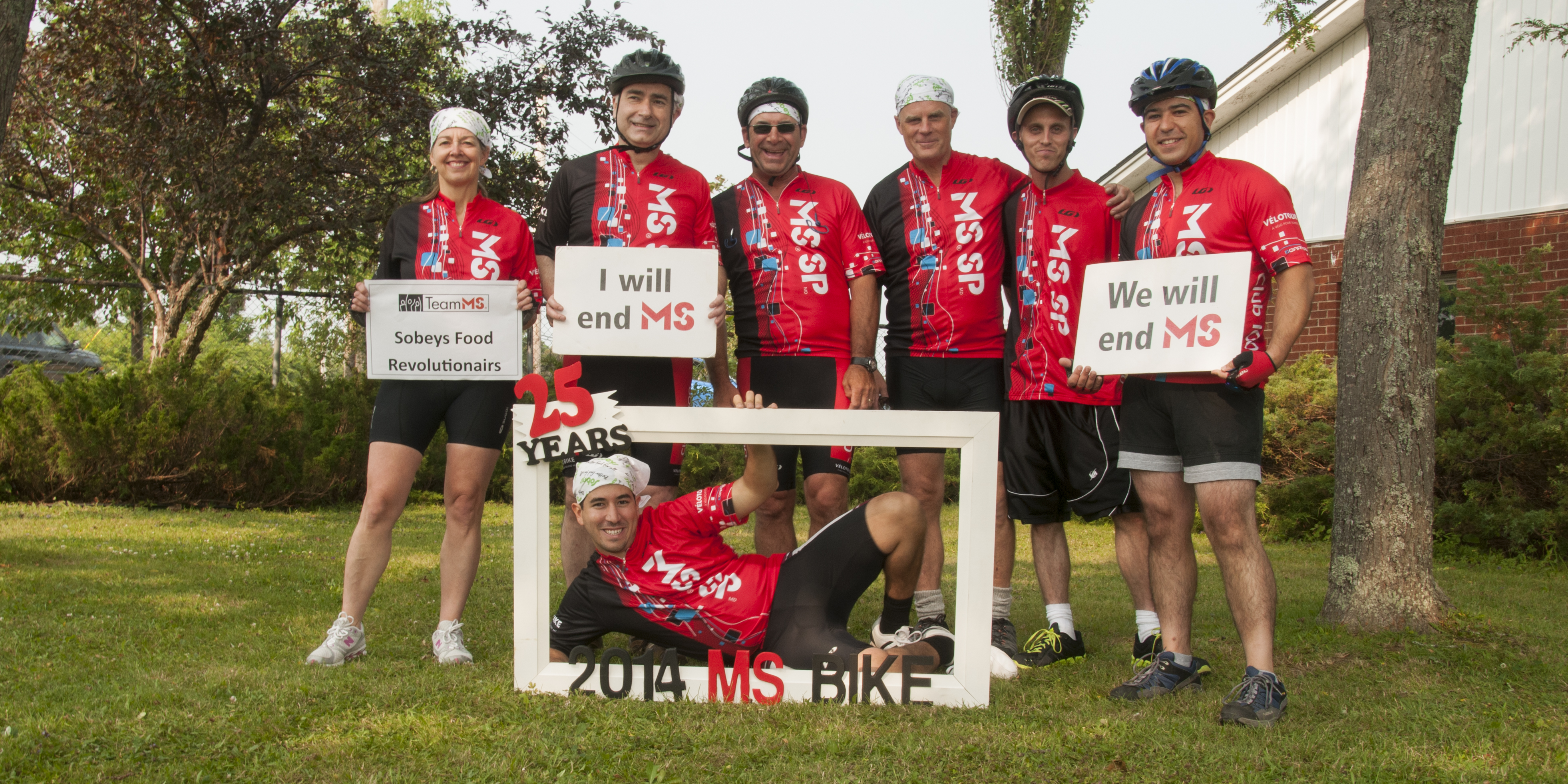
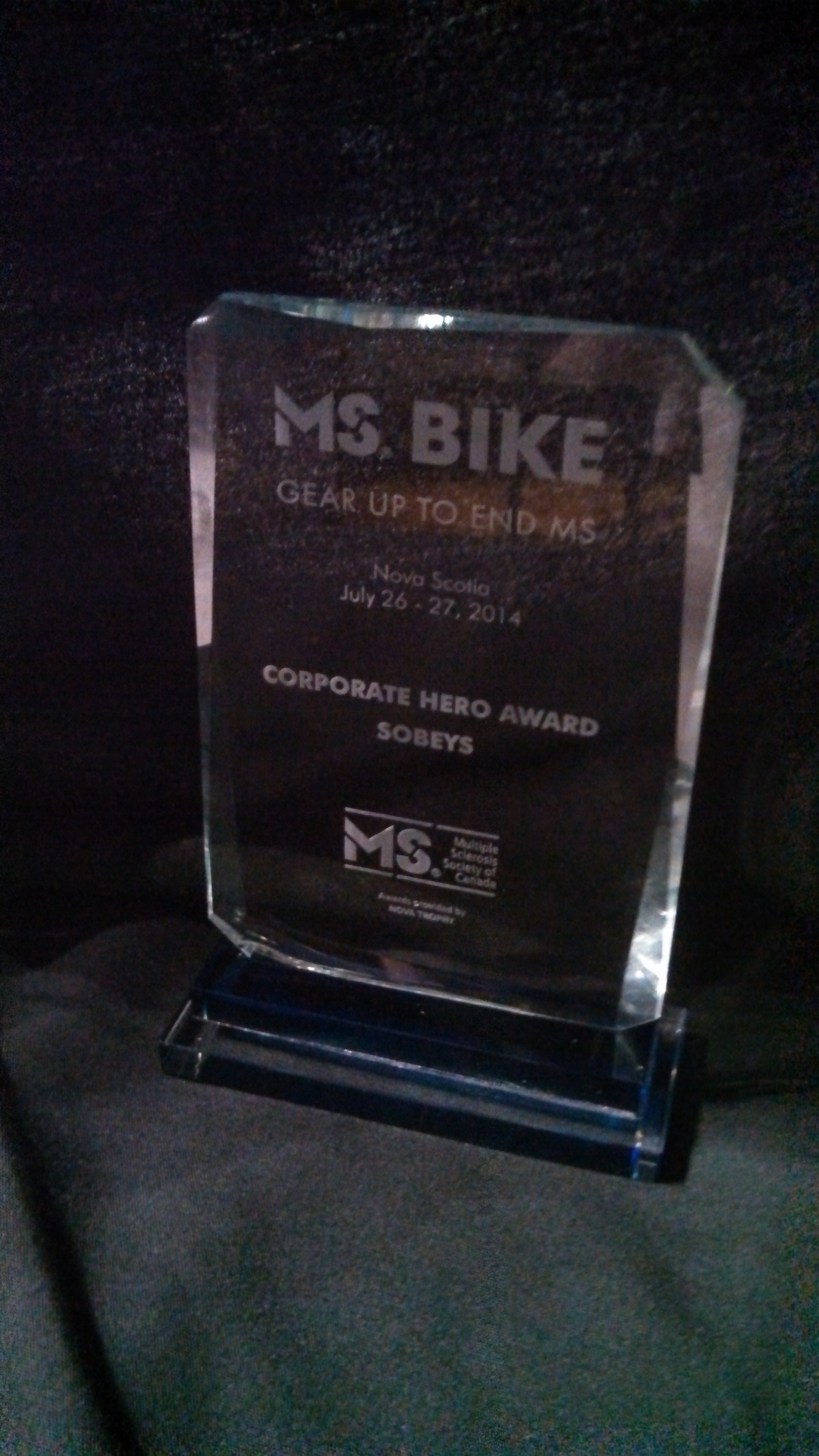
I was apprehensive leading up to the ride. I had hoped to see members of my former team but wasn’t aware of where they were staying or who would be attending. This new team was a hodge-podge of riders from different stores, and none I knew well. My fears were allayed once we arrived at Acadia. My former team members were two floors down in the same residence and we hung out exactly the way we did in previous years. I even ran into a friend I had not seen in well over a decade cutting fruit in the cafeteria (Nice to see you HB). Our team was the newest of the three corporate teams on tour and managed to take home some hardware for our efforts:

Our cheer was to the theme of Gilligan’s Island. Not everyone in attendance got the reference.
So why was this the best one yet? I didn’t train as much, and had a pair of dead legs 3/4 of the way through, so that wasn’t it. I doubled my previous personal best in fundraising, but that wasn’t it either.
This was the first tour that I felt like a leader. New riders would come to me for their preparation and itinerary. MS Society staff called me by my first name. Most importantly, I had a new appreciation for the passion and dedication shown by the staff, volunteers along the route, and the 330 riders who participated. People were giving of their time and energy to help others not because they were forced to, but because they wanted to. It’s contagious; we spent the whole night planning fundraisers for next year’s event. I know I’ll be recruiting some of you to join me on the 2015 ride.
When it’s all said and done, we really did pull together to make a difference in the lives of those suffering from MS. Drum-roll, please…
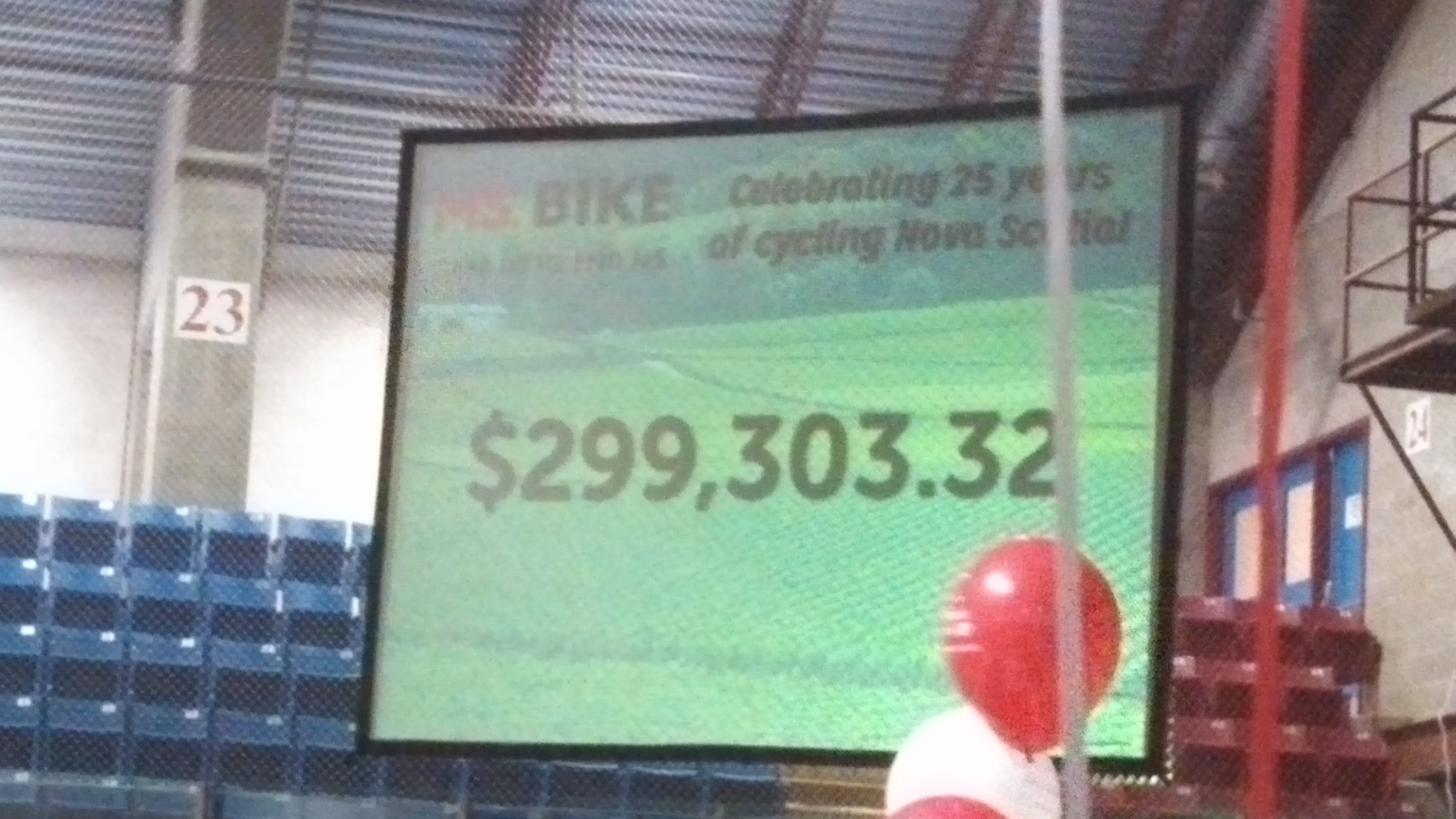
Makes it all worthwhile, doesn’t it?
Disclaimer: The views and opinions expressed in this article are those of the author(s) and do not necessarily reflect the official policy or position of any agency, employer or affiliation.
 PharmAspire