‘Come in Out of the Cold’ – Smoking Cessation Pt 2

Back in July, I wrote a summary of my first workplace smoking cessation presentation:

https://pharmaspire.wordpress.com/2013/07/17/smoking-cessation-and-other-lame-unimaginative-post-titles/

It was such a rewarding experience professionally. At the time, I was getting my feet wet in a new location and wanted to create more of a presence among my fellow employees. The goal was to educate my colleagues on what we can do for them and their families. Perhaps I could present to them a pharmacy service they would be proud of within and outside the walls of the building. Though turnout was low, I still enjoyed the session and wanted to share. I found myself writing this:

‘Here’s hoping the next one, – and yes, there will be a next one :) – , will build off of this and bring the discussion to two more people. If I’m lucky, maybe word of mouth will help the turnout. If I have to do 10 more sessions to help 10 more people, I’ll gladly sign up. As an added bonus, I may even be able to prescribe something for those that ask for help.’

It took almost 6 months, but something funny happened. Unbeknownst to me, people talked about it. At first, -no surprise here-, it was the (non-smoking) leadership of the store that appreciated that we would hold these sessions voluntarily. It certainly had the health-education side covered, but also promoted employee engagement. Anyway, 3 weeks ago an employee approached me in one of the aisles and asked if I could  let them know when I would be holding my next session. One of the attendees had enjoyed it back in the summer and managed to stop smoking. Turns out it was only for a week but it resulted in them settling back into a routine that featured a significant reduction in daily smokes.

That was all it took. As the title suggests, my next session was immediately planned and held the last Tuesday in November after posting signage all over the store common areas (punch-clock, lunch room, bathroom doors, etc). I used the same format as before: over the lunch hour (pepperoni pizza on the menu this time, much to the chagrin of our in-house dietitian :$), I had my co-host and  partner-in-crime on tap for variety, and we rolled out the same presentation.

The story should go something like this:

‘We had 20 people, most were employees but more than a few were family members trying to quit themselves or there to support a loved one. We laughed and cried. The presenters were charming and phenomenal in every way, not to mention well-dressed and extremely humble (hah!). After the discussion, we made a toast to good health and entered a rousing rendition of Kumbayah before they individually booked appointments to develop their care plans.’

Sigh. I want to say the above is mostly true, especially those wily presenters. Time to roll out some bullet points.

– Divide the congregation by 20

– There was a family member who wasn’t quite ready to engage.

– There was no crying…plenty of laughing

– We DID toast to good health. Kumbayah may have to wait for the Christmas party festivities.

– An appointment WAS booked and a care plan is being developed as I type this.

Addiction is intensely personal as both a struggle and a journey. Many choose to battle in their own ways. Some are completely successful while others are not. Only the smoker can ready themselves to quit, and some are never ready. I liked the way this read in the first post:

‘But maybe, just maybe, a few of those folks have really struggled with their attempts to quit and lack any confidence to push through. If I make myself available, and convey that I want to help, perhaps that contact can make a difference.’

One person asked for the session…that person received the session. With pleasure.

Disclaimer: The views and opinions expressed in this article are those of the author(s) and do not necessarily reflect the official policy or position of any agency, employer or affiliation.

Into the Depths

Let’s forget for a second that I am a pharmacist by trade. Anyone, regardless of your education, belief system or social class, can put thoughts on a page. Fortunately, many do. They take many forms such as journals, blogs, poetry, songwriting, editorials, novels, plays, or scripts. Even the social media sites Twitter and Facebook are great forums for quick hits and grammar-optional pontification if needed 🙂

So why do folks write?

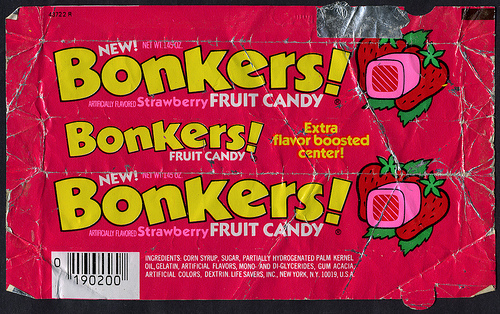
I’m not a philosopher by any means but I enjoy thinking and making others think. From a young age I was a curious sort with a never-ending stream of questions and observations. These served to both embarrass my parents and drive them bonkers, y’know, like the fruit-flavored candy with an even fruitier centre:

4392932409_90ae246824

(Awesome vintage photo courtesy of Jason Liebig – http://www.collectingcandy.com/ )

It’s still true today. My curiosity about people and behavior has not waned (and yes, embarrassing the parents is MUCH more intentional and fun). Only through engagement with others can you learn about them and find out just as much about yourself. Examples include similar or disparate reactions to the same situations or messaging, coping mechanisms, value sets, and motivator/stressor combos.

Team dynamics and group behaviors are an extension of this. What does it mean to be a ‘people-person’ versus a ‘loner’? I’ve always considered myself a people-person, but that does not necessarily mean that I was always accepted as part of a community or group. Similarly, I feel drawn to loners because they tend to have an independence or quiet confidence about them, at least in appearance. If I was building a team, sprinkles of both would be essential. The extroverts want to engage and the introverts usually have well-thought out ideas and opinions that require a little encouragement to share. Having a label just oversimplifies; sometimes you want to go your own way and other times you seek out support of others. The label is best applied to a tendency, not a personality.

So back to writing…the fear of judgement can be a paralytic. Even as I type this, that gnawing sensation that my opinions are available for all to see is a bit overwhelming and downright odd. Surely many others have considered doing the same but aren’t quite ready to voluntarily have folks peer into their thought-processes. What might they learn? Will readers understand my premise?

So these are my thoughts and anyone is welcome to them. Whether you’re a member of the pharmacy profession or on the fringe, I’ve been inspired by so many people it’s tough to acknowledge each one of them properly. Patients, family, friends and colleagues have all had a hand in this project, whether it be good supportive advice or reality checks. The best way I know to thank them is to keep sharing bits of me that they’ve helped grow.

For that I write…

Disclaimer: The views and opinions expressed in this article are those of the author(s) and do not necessarily reflect the official policy or position of any agency, employer or affiliation.

Odds and Ends – Pharmacy-Style

Just a few fun quick-hits:

1 ) Y’know? I really like counting Premarin; it’s ovoid shape makes the pills settle nicely on a counting tray. At one time the 4 colors were a bold green, maroon, pink and yellow. They are film-coated (no powdery messes) and they don’t need to be split. As a teaching tool, I have been told that the name itself refers to the original source of the medication and  translates to ‘PREgnant MARe’s urINe’ which is kind of a cool conversation piece whether completely true or not.

2 ) I can’t for the life of me figure out how to best handle multiple-strength dosing.

Once we received an Rx for Seroquel 75mg am, 50mg pm and 200mg qhs. It was filled with 25mg – 3 tabs qam & 2 tabs qpm, and as 200mg qhs. This Rx was refilled multiple times in about a 6-month period and due to recent adjustments, the filling of the 2 strengths somehow became staggered. We didn’t notice that the 200mg were lasting longer than they should and received an angry phone call from the specialist demanding to know why we filled the prescription the way we did: ‘I wanted him/her to take 8x25mg tabs at bedtime. The patient is no longer stable because he/she has decided not to take the night-time dose’. Okay, fine. Point taken.

Fast forward a few weeks. An Rx comes in for Gabapentin 500mg bid + 900mg qhs. Sensing that I may be causing more confusion than necessary, I ask if the doctor prefer I fill the prescription with one or multiple strengths (100mg and 400mg perhaps). Very politely I was asked why in the world  I would have someone take 19 caps a day when they could do it in 7? Um…I thought the same thing but, oh well.

3 ) Tylenol #1’s are a bone of contention for many folks. There must be an awful lot of people with intractable coughs requiring a bottle of these suckers a week. From a regulatory standpoint, I’ll need some convincing. A readily available Schedule II product, when taken in equivalent codeine doses, has the potential to be much more dangerous than its heavily regulated sister products. Ever notice how pharmacy teams treat T1s differently than other Schedule II products like iron supplements or decongestants? You want these products to be available for folks who truly need them, and not have it devolve into policing those that don’t (or would potentially benefit from an alternative therapy).

4 ) To the manufacturers of Concerta and Prometrium: bravo for your creativity in uniquely-shaped pills, but perfect spheres and cylinders are mighty annoying to try to count without them rolling off the counter onto the floor. At least the cylinder you have a good idea which direction it will go and chances are better for a great save or the 3-second rule (kidding).

Disclaimer: The views and opinions expressed in this article are those of the author(s) and do not necessarily reflect the official policy or position of any agency, employer or affiliation.

Pre-Hallowe’en Writer’s Block – Catch the Flu Fever…

…Check that, maybe you’d better not.

Having good friends, family, roasted pumpkin seeds, carved works of art, and funky costumes all come together is enough incentive to kick back and relax. Waking up yesterday, I realized that life had indeed continued and we have now passed from autumn to flu season:

http://thechronicleherald.ca/novascotia/1160685-flu-shots-now-available-at-local-pharmacies

http://www.cbc.ca/news/canada/new-brunswick/pharmacists-push-to-treat-minor-health-issues-1.2074210

The two links featured above are part of this season’s awareness campaign to get folks out for flu shots at their local pharmacies. The interesting contrast between the articles is highlighting the opposite direction from where they’ve traveled to provide this service.  The first is from Nova Scotia, where legislation has only recently been passed to allow pharmacists to administer medication. Naturally, this is huge news for the province and a huge opportunity for pharmacists to expand their roles with strong support from public health. After already receiving prescribing rights (more accurately, assessing rights), pharmacists are now able to add administration to a bag of tricks that already includes minor ailments, adaptations, emergency fills, renewals, and therapeutic substitution. The second link is from New Brunswick where pharmacists have been giving flu shots for 4 years now (!?) and the program is really taking off. Unfortunately the NB bag appears to contain at least one less trick than NS. They do not have the ability to do minor ailments assessments although regulations have been drafted.

Yes, I am completely oversimplifying and exaggerating the difference. It’s been awhile since I did a sweep of the country so I find myself very curious about what is happening in other provinces. In actual fact, NB has been more progressive than most in outlining pharmacist powers, although the framework hasn’t been as rigid. For instance, there are no limits on refilling prescriptions and folks everywhere seem to have a loose translation on what is termed an ’emergency fill’. Technician regulation seems to be moving forward at a glacial pace in both provinces though a new Act has passed allowing the profession in NS.

It’s all about stakeholders and bureaucracy. Everyone has an angle but the most powerful driver is the almighty dollar. We have finite resources to spread around so any progressive movement for pharmacy MUST mean a reciprocal shuffling of those resources for someone else in the health care sector. By reallocating these dollars to fund new services, the public will certainly benefit through better access and education. The problem lies with a limited commodity like flu vaccine. The opportunity is there, but it’s so important to take maximum advantage that we almost need to drop everything until the wave is over. Funny how much we need to think as a capitalist to improve our socialist healthcare system.

Oh well, I got mine today and we delivered another 4 just to get rolling. We want this to be sustainable and after today, I really think we have a shot 😉

Happy Hallowe’en!

Nightmare before Christmas

Disclaimer: The views and opinions expressed in this article are those of the author(s) and do not necessarily reflect the official policy or position of any agency, employer or affiliation.

Pharmacy Advocacy – Pull up a Soapbox

Well don’t mind if I do 🙂

Advocacy for the pharmacy profession as a whole is like your favorite cheesecake recipe: there are many ingredients in differing amounts, but you can’t leave one out and expect it to taste right. Unfortunately It often feels like we’re trying to make this cake using only the cream cheese and hoping we can add the rest of the stuff when it’s half-cooked.

There are many segments in the pharmacy profession: community, institutional, academia, research, insurance/benefit providers, government, and consulting (to name a few) and all are required to advocate for the profession. All of these segments are impacted by reimbursement models and changes to legislation, either directly or indirectly. I strongly believe that pharmacists in all sectors want to thrive in the new environment but, as Laura’s recent post on ‘Comfort’ can attest, clinicians need time to evolve as practitioners. One day we were not prescribing, the next day the regulations passed and our whole way of practicing changed. Due to this short transition period, we find ourselves trying to convey confidence to the public while at the same time fending off doubters from other health professionals that feel we’re overstepping.

So polish up your soapbox. I’m sure you have one laying around somewhere. It doesn’t have to be large, or new, or fancy in any way. It just needs to support your weight so that you can stand above the rabble and be heard. It’s up to all of us to support our livelihoods as caregivers in a healthcare system that preys on those who lack vision. Should you have a rewarding interaction with anyone (patient, colleague, peer, another healthcare professional, etc.), share it so that others can begin recognizing their own.

With the flu-shot blitz fast approaching, we will once again be in the public eye. Get yourself ready to look the public square in the eye and show them how effective we can be with our new responsibilities. AND If they want to know a bit more about what we can do, Make sure your soapbox is in the corner…just in case 🙂

Disclaimer: The views and opinions expressed in this article are those of the author(s) and do not necessarily reflect the official policy or position of any agency, employer or affiliation.

Talking to the Sky

This blog is about inspiration and the many forms in which it presents itself. We lost an important colleague from the pharmacy world last week. She inspired many of her students as well as her peers.

She had been a fixture in the south end for well over 20 years and well-known in the community. Her proximity to the university meant that pharmacy students were never in short supply and she pushed them to be strong contributors to the profession. Her passion for teaching extended to the more recent influx of international pharmacists. She was patient and nurturing, allowing them to adapt their styles and lessons from their home countries. The college never hesitated to lean on her to evaluate new entrants and approve their structured time service.

I guess I should explain the title. Before you get the idea that this will devolve into a religious ramble, a few things I should point out as background. Firstly, I was raised Roman Catholic but have not been practicing (and I use the term loosely) for the past 20 years. I may debate and challenge many things about the faith chosen for me, but one thing I DO believe in is the human spirit. Everyone has a driving force that ultimately steers them in the life path they choose. For some, it may be material things. For others, power and control. When someone is known for helping others, it’s never because they are forced to. I had the pleasure of working alongside this individual since 2006 though her name was well-known to me when I started out as a student in 1998. I had lost contact over the past year so when the news hit, memories (as they have a habit of doing) come flooding back. Our last conversation was brief and unremarkable; It was October 2012, and as I recall we both just rehashed our summer vacations before being interrupted by the conference proceedings. So today I found myself looking up and getting lost in thought for a few minutes. If her spirit was floating about somewhere in the ether, I hope she heard my well-wishes.

Karen, may you rest in peace.

http://obits.dignitymemorial.com/dignity-memorial/obituary.aspx?n=Karen-Zed&lc=3758&pid=167056856&mid=5673497


Disclaimer: The views and opinions expressed in this article are those of the author(s) and do not necessarily reflect the official policy or position of any agency, employer or affiliation.

Champion of the No-Win Situation

I’ve been asked on more than one occasion what actually goes on in this neurotic, high-strung, circus of a mind I have. If only it was a Cirque de Soleil installment as opposed to a low-rent, 2-ring version.

Today, I’ve been contemplating the role of the community pharmacist and working with the public in general. We say “the customer is always right” in business time and time again. But at what point do we delineate between a fast-food joint and a professional environment, a product-driven service and a cognitive one?

It shouldn’t come as a surprise that most of us at one time or another have had a disagreement with a member of the public. These arguments can be about pricing, product selection, or communication in general. We try to take the high road as much as possible because it’s in our nature to be helpful. It is also our duty to help patients navigate our corner of the healthcare system. But what if you’ve tried to explain a situation as best you can and there is still no satisfaction? What if all the applicable rules have been followed, the proper folks were contacted, and employees carried out their tasks as prescribed, but still the customer remains unhappy? This is the hard pill to swallow. Once it gets beyond the point of no return and the customer has lost patience and faith that the situation will ultimately be resolved, there are no winners:

Scenario #1) You end up being ‘right’:

Although true, it’s bologna (or baloney depending on the mood). The consumer can now feel ashamed that they made a mistake, and possibly a spectacle in your store. You can puff your chest out and confirm that you are rightful ruler of the pharmacy domain. So what? This individual may no longer feel comfortable seeking you out in the future because that baggage is now part of their experience in your pharmacy.

Scenario #2) They end up being ‘right’ (which is always…see above).

Congratulations, you’ve given them the ammo they need to hold you over the barrel. You may have unwittingly validated their mistrust in your operation and the story will pass on to all of their friends, extended family, and complete strangers they meet on the waterfront. You slice up the humble pie to share with your fellow staff and take any lumps dispensed from the verbal frying pan.

Scenario #3) Reconciliation

Both parties agree that there may have been a possible miscommunication or regret how the situation was handled from their end. Even though this is the ‘best-case’ scenario, the onus is on the pharmacy provider to make any compromise as palatable as can be, since the consumer drives the business. The goal is to avoid them deciding to go somewhere else for a fresh start.

Oh, I forgot the last one:

Scenario #4) You’re both wrong

The line is drawn in the sand at the centre of town, you walk ten paces and turn around quickly only to find the ammo is behind the bar at the saloon. Everyone has a great laugh and reminisce about the happier times when all third parties were billed manually and we had typewriters that never jammed. All joking aside, this does happen occasionally and unfortunately, we lose this one too by virtue of the fact that the consumer has every right not to know better. Whereas we, the experts, have more tools at our disposal to figure things out.

That last phrase is probably the most important of this whole post. Admittedly, I don’t know much about cars, heat pumps, or hanging drywall. I rely heavily on trade experts who deal with these things every day and trust their advice is sound  (ideally while avoiding being ripped off). When the public does seek our services, it’s important to remember that we need to be that trusted expert that offers support no matter the customers’ education level or familiarity with our line of work. It can be frustrating when someone doesn’t know the name of the pill they need refilled, or don’t understand drug plan formularies. In many of these cases, they don’t need a lecture, they often just need someone to work through the issue with them.

I guess when it comes to ‘No-Win’ situations, we can’t be looking to win, only to help. If we help, everybody wins. Pure, unadulterated circus-brain logic right there.

Disclaimer: The views and opinions expressed in this article are those of the author(s) and do not necessarily reflect the official policy or position of any agency, employer or affiliation.

Suicidal Ideation – How Can We Help?

Even writing the title made me squirm a little bit.

My guess is many of the readership will associate the term suicide with an event or an individual that evoke deep-rooted emotions. If you’re like me, you’re used to seeing people at their worst: in severe pain after day surgery, coughing up one of those pesky ‘lungs’ due to pneumonia, or being hit with a head-spinning diagnosis along the lines of diabetes or cancer. Unfortunately, suicide is a whole other monster to have nightmares about.

At some point in our professional careers, we will face a situation that none of us want to see happen: a person, -not a patient per se- , but a person is exposing their emotional core and saying in some way that they are giving up. If you already have a relationship with this person, the impact is devastating, if you don’t, I almost find it surreal to think that there’s a real threat that your interaction may make the difference between holding on and following through.

Let’s be fair and say we’re waaaay too hard on ourselves.

Although the threat is serious and real, it’s very doubtful that this person woke up that morning and suddenly began plotting. There is almost always a progression, either initiated by a single traumatic event, or perhaps a caustic home environment that has been chipping the layers away for years. I’ve found myself doing lots of listening, and not able to say very much due to my fear of saying ‘the wrong thing’. Is there really a wrong thing to say? I repeat often that I’m concerned and want to help. I try to determine if this episode is fleeting or intermittent. Have there been previous attempts? How much planning has been done? Have preparations been made? Do they know what kind of support they need? I also make sure they know that my expertise is limited and at this stage, having crisis numbers available to call is often the best  way to connect them to experienced professional help.

My solace, regardless of outcome is that I made myself available to this person in their time of need. Working in community, we pride ourselves on being accessible. When this kind of thing happens, everything else takes a back seat. Working with the ‘More Than Meds’ project http://morethanmeds.com , I find that I am much more composed and realistic with my ability to be a positive light in such black pitch. Even a soft candle may be enough to illuminate the way out of the dungeon; whether I am the right one to make them move in that direction is out of my control, but I’m learning to be okay with that.

Disclaimer: The views and opinions expressed in this article are those of the author(s) and do not necessarily reflect the official policy or position of any agency, employer or affiliation.

More Than…

http://morethanmeds.com

This is more than just another website with links and resources. It’s more than one or two folks with a really good idea to share. It’s also asking pharmacists to do more than they’ve ever been asked to do before.

It’s a paradigm change in the approach to mental health.

As pharmacists, when we tackle our studies in school, CNS is either loads of fun in 3rd year, or frustrating as hell. Diagnoses that don’t fit patterns, therapies that aren’t well-understood, and a general absence of neat black-and-white boundaries to confine decision-making. It would be great if we could measure objective targets for mental health: ‘You’ve been on citalopram for 6 weeks now and this blood test says your libido level is up to eleventeen mmol/L from a low of forty-threeve”. Alas, all cases are subjective and unique, requiring discussion, education, and support for the journey to improved mental-health. Medications that were once seen as ‘the answer’ are now better recognized for what they are: complements to a patient-centred approach.

A good friend of mine offers a counter-point that deserves mentioning. On the topic of objective metrics, he says:

“Of course I’d argue that for other areas of medicine people look to the surrogates too quickly, being fooled by them as being accurate indicators of “clear sailing” (a good blood test) or doom (a bad blood test). With medications for mental illness it is what the patient experiences that matters. We can get feedback from the suitability of treatment pretty quickly, from symptom management, progress toward personal goals and recovery, treatment tolerance and side effects, etc. You can’t get that from a statin or diabetes medication. You can only hope that you are the one to see the measurable benefit vs. all the others who took it and didn’t need to, or took it and still had the thing they were trying to avoid.”

Having said that, pharmacists are often the first point of contact when patients are seeking help with their experiences and may provide opportunity for early intervention. A recent article in the Capital Beat – June 2013 (http://www.cdha.nshealth.ca/media-centre/news/more-meds-pharmacists-and-communities-partner-better-mental-health) outlined the MoreThanMeds project. Dr. Andrea Murphy, one of the co-founders of the project, captures the opportunity by stating, “Pharmacists are often underused or are not working to their full scope of their practice when providing services for individuals living with mental illness. (They) are well positioned to help individuals with lived experience of mental illness, and especially those who often have difficulty getting the right care at the right time.”

<…the right care at the right time…> This phrase really makes you think. Those with longstanding mental illness will report feeling ostracized, or judged, or helpless. Depending on the day, there may be a brief window of opportunity for an individual to be receptive to conversation. Many days this may not be the case, however knowing the pharmacist is available can help build up that trust.

I’m only beginning this journey, but so far it’s been extremely rewarding to scope out community mental health resources from a consumer point of view. I can’t wait to share my experiences with other pharmacists; we can be much bigger part of the collaborative mental health team in the communities we serve.

I aspire to be More Than…a conventional community pharmacist when it comes to mental health support for patients and families…much more.

Disclaimer: The views and opinions expressed in this article are those of the author(s) and do not necessarily reflect the official policy or position of any agency, employer or affiliation.