K.I.S.S.

My fondness of words often gets me into trouble when expressing my thoughts in these pages or in person. Every few drafts, my editor Laura needs to snap me back into reality by stating how a reference, or in some cases, complete tangents make very little sense. Re-writing paragraphs is part of the routine now, but I swear it’s so clear in my mind as I type.

A new year is upon us, and another fresh start. I found many parts of 2017 challenging. Many people close to me were dealing with personal strife and it seemed to pile on. Losses of family members, relationship breakdowns, catastrophic injuries and prolonged recoveries all made multiple appearances during the year. My hope is that 2018 will hold more good fortune. The pharmacy profession has been the one constant through my adult life, so I tend to reflect on that first to regain my footing when I’m starting to wobble.

It happens to be mid-year review season for our company’s employees and I’m beginning to have some productive conversations with my management team. For the sake of simplicity, my message for 2018 consists of two points and they will always be front of mind when making decisions for our dispensaries:

  1. Patient-focused care vs distribution-focused care.
  2. Own the therapy, not the physical prescription.

For the first one, it’s more of a reinforcement of the discourse we’ve been having for as long as I remember. The difference to me is that we have much better measures and overall evidence to the health benefits of adherence strategies and care plans. These have been part of pharmacy practice for a long time, and pharmacists from all over have wanted to have productive conversations with their patients. I can personally attest to the pressures of filling prescriptions on time; sometimes those interactions are shortened, and that extra open-ended question remains unasked. Removing barriers to clinical care is essential to the next evolution of pharmacy practice.

For the second, Wikipedia is always handy for a quick definition:

Therapy (often abbreviated txTx, or Tx) is the attempted remediation of a health problem, usually following a diagnosis. In the medical field, it is usually synonymous with treatment (also abbreviated tx or Tx). The English word therapy comes via Latin therapīa from Greekθεραπεία and literally means “curing” or “healing”.[1]

A *prescription* is a health-care program implemented by a physician or other qualified health care practitioner in the form of instructions that govern the plan of care for an individual patient.[1] The term often refers to a health care provider’s written authorization for a patient to purchase a prescription drug from a pharmacist.

Unless the pharmacist is the prescriber, and owning the administrative side of a prescription as well, I am also reinforcing that pharmacists can own the therapy more than ever before. The crux of the matter is defining the clinical (treatment) versus the technical (program) portions of that therapy. We do this every day in practice. For example, how many times has a family member or mutual friend asked for an opinion on a new sample they started taking, or a drug regimen that their doctor is considering? Each of us have a process whereby we collect info about allergies and medical conditions, other medications, relevant blood test results, etc. and arrive at a recommendation. We may agree with the drug, the dosage, the frequency, and the necessary monitoring plan or we may need more information to properly assess. Then we’re done. We stand by our response. At that stage, there is no written or virtual piece of paper. There is no suggestion of how many the physician wants dispensed at one time. There is no discussion about different brands or changes in the shape of tablets. Only an assessment of whether it’s appropriate or not, and how to get the most out of the regimen. Idealistically, we could envision a day where that same approach could apply to a busy dispensary. Some have already begun defining that clinical/technical separation by investing in layout changes, new automation, and role adjustments, including regulated technicians. Lab values are being requested in some provinces already and the availability of this information is becoming more accessible. Demonstration projects are being developed to take advantage of a pharmacist’s expanded scope.

These two tenets are closely intertwined. By staying patient-focused, and having dispensary teams adhering to a patient-first philosophy, it becomes much easier to own the therapy because the relationships are that much deeper, the conversations broader, and the interventions that much more meaningful.

There is a lot of good work ahead, and complexities to overcome along the way. Hopefully by keeping the messaging simple, those barriers in the distance won’t seem so difficult after all.


Disclaimer: The views and opinions expressed in this article are those of the author(s) and do not necessarily reflect the official policy or position of any agency, employer or affiliation.
Letter to a Lost Friend

Dear Dave,

It’s approaching Christmas time again. Those of us with younger children feel an additional rush of excitement as we watch them absorb the magic of the season through elves on shelves and letters to Santa. People are busy, but it’s mostly a good busy; wrapping presents, fighting with the tree, and wrestling with lights. It all seems worth it when the egg nog is poured and a light snow is dusting the lawn. We have a couple scented candles that alternate our evening mood, between a pine and a pumpkin spice scent. Most importantly, it’s a time to celebrate friends and family. As thankful as we are for those that are close to us, this year we’re missing someone.

It’s hard to believe that the morning of Dec 19 will mark one year since we became aware of your passing.

There have been few events in my life when the world has simultaneously come to a screeching halt yet time seems to be lost. Weeks and months were a bit of a blur, and motivation was extremely difficult to find. You were a teammate first, and due to your open demeanor and unflappable style, quickly became a respected friend. I’d known you for close to 9 years, but others could attest to decades of service to the practice of pharmacy in Newfoundland. Now that I think of it, you shared so much of yourself with so many people over the years, the fact that you were a pharmacist was just one small piece of the picture.

When I visited your territory in the spring, there was something ethereal about retracing the path on the west coast and opening the audits you had begun just weeks and months prior. Reading your comments was difficult, and discussing with your team the action plans you had created. For that week, I was away from my family and in a new part of the country. Although I had a job to do, it never felt like work. In fact, the tasks themselves merely served as a reason to engage pharmacy staff, and speak openly about how we were feeling. They painted a picture of someone so patient, so encouraging in every interaction. In every store, they were gracious and thanked me for my visit, even when the results were underwhelming.  I still keep in contact with some and plan to continue. I hope they all realize just how much they helped me overcome my sadness.

One year later, we’re stronger than ever. Change is inevitable, and you are a constant reminder that silver linings are always present on even the darkest of storm clouds.

So tonight the team…check that…your team, will be together once again from across the Atlantic provinces. We will raise a glass, not in mourning, but to honour your impact on each of us. I’m working on my best Neil Young and Bob Dylan impressions in case we happen to grab some guitars and sing along your some of your favourite 70’s folk rock.

We’ll do our best to celebrate to the fullest. We will cherish the times we have together and laugh about this crazy road we travel called life.

Rest easy my friend. Until we meet again,

-Dev


Disclaimer: The views and opinions expressed in this article are those of the author(s) and do not necessarily reflect the official policy or position of any agency, employer or affiliation.
Bridging the Gap

Pharmacy finds itself in a bit of a conundrum when it comes to workforce needs over the next 5 years. Many pharmacists from my generation of 15-20 years ago remember the recruiting environment whereby students in all years of study were engaged with all sectors of the industry. They really had more control when it came to planning their entry to a career. Oftentimes, opportunities were available in many regions of the country so settling in a preferred location was commonplace.

In the time since then, changes to the economics of pharmacy have prompted many changes to the services being provided, and the scope of practice for most health professionals has been evolving quicker than we had seen in the decades before. Pharmacists are being sought out for their cognitive abilities to help lessen the burden on family physicians, who in turn help lessen the burden on specialists, etc. In doing so, the technical aspects of the jobs are increasingly being back-filled by a set of new professionals: the registered technicians.

Between university programs exploring entry-level PharmD graduate designations, and community college intensifying their technology curriculum, we should have seen this coming 5-7 years ago. The appetite to change pharmacy practice is growing at an accelerated rate, further away from drug distribution and more into clinical services. The constructive non-conformists among us enabling this change need to have the support behind them.

For the longest time, there was excitement for pharmacy assistants to update their skills through bridging programs offered by accredited bodies. The expense was prohibitive for many, and those committed to becoming licensed were taking a risk that the workforce would not be ready to take advantage. Maintaining that license when opportunities were scarce could be deflating, and as a result a large number of individuals took the wait-and-see approach. As time went on, motivation began to wane.

In reviewing the NS Regulations, the deadline for bridging is here:

 (2)    An applicant who has all of the following qualifications on or before December 31, 2017, is eligible for registration and licensing as a pharmacy technician:

              (a)    successful completion of a program approved by the Council to educate and train persons to be pharmacy technicians;

              (b)    at least 2000 hours of work experience in a direct patient care pharmacy practice in Canada in the 3-year period immediately preceding entering the program referred to in clause (a);

              (c)    all the qualifications set out in clauses (1)(b), (c), (e), (f) and (g).

As for the letters at the bottom, most applicable are:

               (e)    successful completion of the examination to assess required professional competencies;    

                (f)    successful completion of an assessment of the applicant’s basic competencies in a direct patient care practice setting approved by the Council;

For other jurisdictions with similar limits, the PEBC qualifying exams are only held twice yearly, and the successful completion of an assessment may vary. Regardless, if a commitment wasn’t made to complete the requirements at this point, it would be virtually impossible to meet them by the end of this calendar year for those hoping to practice in Nova Scotia. In Ontario for instance, bridging programs needed to be completed prior to Jan 1, 2015.

This is adding up to a situation where current long-term employees in community and hospital would need to return to classes to upgrade their skills to gain eligibility for licensure. Confounding this point, new graduates entering the workforce potentially have very little practical experience. We certainly trust that our regulatory bodies have established vetting procedures and oversight that matches those of pharmacists, but as a new profession, there is still a degree of uncertainty. It will take time for widespread acceptance, but happily, that integration is well underway.

The success of these individuals will directly drive the clinical opportunities and roles for pharmacists in the future. Pharmacy programs are being retooled to become even more clinically-focused and patient-centred. We need to support those that are completing their training, and do what we can to integrate their skills into our dispensaries. Technicians will benefit. Pharmacists will benefit. Teams will benefit and all together pharmacy will reach new heights.


Disclaimer: The views and opinions expressed in this article are those of the author(s) and do not necessarily reflect the official policy or position of any agency, employer or affiliation.

Nothing but Hip

I was hesitant to write two music-themed posts in a row, but as much as I would like to isolate myself in a pharmacy bubble some days, real life forces me to look inwards. Trying to make sense of how people affect each other every single day is a lifetime’s work. In whatever vocation you choose, whether you’re the star of the show, the director, or an essential piece behind the scenes; there is always a deeper story under the uniform.

Gord Downie, best known as the lead singer of the Tragically Hip, passed away Oct 17, 2017 at the age of 53 from brain cancer.

His uniform was that of a poet, whose lyrics evoked canadiana. His prose seemed to always leave a sense of mystery as to the true meaning.

Last year in August, I felt compelled to write a post dedicated to the Hip’s final concert. I wrote about  how it brought so many people (11.7M) together for three full hours of magic. The point of the post was to suggest that we give of ourselves as much as we feel comfortable, and help each other live the best lives we can. The risks and rewards are all part of living life to the fullest; taking our own chances and being ready to catch others should they stumble along the way.

To quote Laura from that post:

“So let’s remember what Gord and the Hip did on Aug 20. They gave everything they had left to their fans in one last hurrah. Every Canadian, healthcare professional or not, can stand to give a little more to others, care a little less what people think and get on with living their best life.”

Being a pharmacist in 2017 is more challenging than ever. Check that, being in healthcare in 2017 is more challenging than ever. As costs continue to rise, service delivery is evolving for all health professionals. There is a need for all health professionals to become more efficient in maximizing our scope. Pharmacists in various parts of the country are involved in a multitude of new services: independent therapy initiation, lab requests, layered access to provincial drug files, projects in the realm of genomic testing and subsequent dosing adjustments, naloxone training, and INR monitoring just to name a few. Patient-focused care is the direction in which we’re headed, with drug therapy being only one avenue to improved health. Some of us are more prepared for these changes, but we all have a part to play in making it happen.

“A great song’s greatest attribute is how it hints at more. The Hip has always had a strong curiosity to see what’s around the next corner. To see what more we can do, what more we can say — to each other, primarily. We try and serve the song. If we’re any good at all it’s because we’re together on that.” — Gord Downie, 2009

Replace the word song with just about any source of pride, and it gets to the heart of who we are as people and as a community. For this blog, I choose to replace the word song with the word profession as that’s truly how I feel about where we are headed. “A great profession’s greatest attribute is how it hints at more…”

You’ve inspired a generation, a country, and gone too soon. You are the personification of the tragically hip, and will live on in the annals of music history.

Rest easy Gord, fully completely.


Disclaimer: The views and opinions expressed in this article are those of the author(s) and do not necessarily reflect the official policy or position of any agency, employer or affiliation.

Don’t Stop

The inspiration for today’s post is from an unlikely source, and I’m struck by my inability to get the song out of my head over the past week.

My father recently lent me Mick Fleetwood’s autobiography, he being the seminal figure in the evolution of Fleetwood Mac. I had heard records when I was little. The album Rumours was released in 1977 and the band was quite the rage during my infancy. His writing style is free and easy, and genuinely feels like you’re sitting in a room having an extended chat. The man has lived a wild life, and is unabashed by the drama and destruction that has followed him around. It’s interesting to pass through all of the many distinct chapters of his life and that of the band that shares his namesake. Most folks will identify with the commercial success of the current lineup, but there have been a total of 16 members since 1967. That’s a lot of change in 50 years, and he’s welcomed all of it, much of which he created.

So naturally I’ve found myself rediscovering their music and all of the songs I may have heard and not realized the artist. One of those songs is ‘Don’t Stop’. It stands as one of their most famous and used as a theme for Bill Clinton’s 1992 presidential campaign. The chorus serves as an earworm:

Don’t stop, thinking about tomorrow.

Don’t stop, it’ll soon be here.

It’ll be here, better than before.

Yesterday’s gone. Yesterday’s gone.

This is how I like to think about pharmacy practice. Through difficult times, we want to look ahead and use lessons of the past to make something better. Recently, I spent three days in a room full of my peers discussing patient-focused care and re-discovering what it was that drove me to pharmacy in the first place: the professional-patient relationship and the ability to help people. They come to us because of our expertise in drug therapy, but our capacity to help can go so much deeper. We see the person instead of the drug list. We offer assistance starting with their goals instead of academic theory.

It’s invigorating to have so many positive experiences on which to build. Maybe someone presents feeling tired and irritable. After an assessment, it’s suspected that thyroid supplementation may help, along with that nagging itchy dry skin and a pesky feeling of cold most of the time. Connecting the dots, and discussing benefits of therapy modifications can be so rewarding.

Don’t stop….thinking about tomorrow.

I have so many tomorrows to think about right now. How do I want to re-energize the pharmacy teams with what I’ve learned? We can discuss shuffling workstations, moving equipment, organizing appointments on overlap shifts, or simply having regular short, daily meetings to bring everyone together.

Don’t stop…it’ll soon be here.

Why wait? Every tomorrow is a new opportunity to introduce and refine behaviour. Being excited for all of the ‘what if’ possibilities is the way to go. Many provincial jurisdictions have robust prescribing opportunities for chronic conditions, and allow for pharmacist-driven lab requisitions. That future will arrive soon for everyone practicing in Canada.

It’ll be here, better than before.

Keep an open mind. Even systems and processes that seemingly work well today can be tweaked and enhanced when we get new information or new ideas to drive them.

Yesterday’s gone. Yesterday’s gone.

…but by no way forgotten. Disappointing patient interaction? It happened. We learn from those experiences and move to the next. It won’t be the last, and we haven’t found a cure for the human condition. Awesome interactions are also in the past, but the passion we carry from those experiences will touch tomorrow’s colleagues and patients and heighten their engagement.

I’m closing on 19 years in the industry. There have been plenty of stops and starts, and periods of stagnation, but we’ve always risen to the occasion for the needs of our patients, who over time become more like friends and family. Whether you’re a new graduate, or experienced clinician, a community or hospital pharmacist, together we are the profession. We guide it by refusing to stop, and constantly thinking about what we can do tomorrow.


Disclaimer: The views and opinions expressed in this article are those of the author(s) and do not necessarily reflect the official policy or position of any agency, employer or affiliation.

Information Overload

After returning from some time off, it never ceases to amaze me how easily we can shove our brains into overdrive and expect them to keep up for any period of time. Taking a step back, my idea of ‘relaxing’ is usually forcing myself to turn off my phone. Hopefully the angst of not knowing what’s happening in the world will subside in a few days and I can properly enjoy the remainder of the week before having to ramp up once again. I want to believe I’m getting better as I age, but sadly that is likely not the case.

The fact is we live in a fast-paced, information age. If we obsessively try to stay on top of all that’s happening in the universe, our attention span inevitably suffers from the sheer volume of information available. Conversely, if we make a point to avoid the network and are ill-informed, we’re living like dinosaurs.

I remember when our family’s first computer was a Vic20 by Commodore. I also remember upgrading to a Commodore 64 and splurging on a Datassette peripheral that ‘played’ data off of cassettes. Games had 8-bit graphics, simple animation, and cheesy synthesized music that we fell in love with during the 80’s. I remember stressing about completing projects in school; the library closing at 9pm and an absent-minded 10-year-old me leaving my notes in class. The feeling of jealousy crept over when I recall that a buddy’s parents just bought the latest edition of Encyclopedia Brittanica, at least 5 years newer than my set at home.

Nowadays, everything is seemingly instantaneous. From television to banking, from dating to stock trading, from music to DIY projects, we can repeatedly click the mouse with our brains on autopilot, and results will appear on screen quicker than you can blink. For example:

“When in Rome, do as the Romans do.”

We take this to mean whenever you’re unsure of your surroundings, observe and copy behaviours of others. Well I have some good news; now we can prepare. Thanks to Google (founded 1998), why don’t we actually do what the Romans are doing?

I guess they’re abstaining from consuming or imbibing around the water fountains for one.

“If I jumped off a bridge, I suppose you would do that too.”

…is another saying that speaks to common sense. Ill-advised decisions shouldn’t be duplicated. In other words, do as I say, not as I do. Prior to 2005, when YouTube came online, I don’t imagine the RCMP had to issue statements warning folks to refrain from doing just that after a video went viral.

As healthcare providers, we are keenly aware of all of the knowledge available on the web. Unfortunately, much of it may be distorted by media reporting, bias, and even interpretation from family and friends. Disease states are emotional triggers for those receiving a difficult diagnosis. No sooner does the word diabetes leave a physician’s lips, then out comes a smartphone to research tests, diets, treatments, and outcomes.

This can be so overwhelming. As I see it, part of my role is to help sort out the vital information and deliver it in a way that puts someone at ease, and feeling more in control of how to use that information. Instead of overloading, we often need to have multiple conversations to reinforce and build on understanding. A clear mind with a clear path has a much better chance to succeed.


Disclaimer: The views and opinions expressed in this article are those of the author(s) and do not necessarily reflect the official policy or position of any agency, employer or affiliation.

The Climb

I’ll wait a moment for you to finish singing the chorus while doing your best Miley Cyrus impression.

Today’s topic has a management slant, due to a number of recent conversations had during our yearly review season. The idea of letting go. It’s something that’s difficult to accept, and even harder to use the philosophy to keep yourself and your teams engaged.

Say you take over a new retail operation as a manager for the first time. As a new manager, chances are you’ve worked on high-functioning teams and learned what to focus on and what NOT to do to get results. The first stage is feeling out the people and the workflow. This period is very blue sky; everything is an opportunity and the urge is there to mix things up.

After a few months, the long-term planning begins. Most of the quick fixes have occurred, and the team has a sense of your style. The schedule may have changed. Certain tasks may be assigned to different roles. New technology may be introduced. Now that the ‘newness’ and shine have worn off somewhat, you’ve settled in and are building your vision for the future.

Then it happens: someone puts in their notice. My immediate reaction used to be: ‘great, in 2 weeks we’ll be short-staffed, I’ll need to take on x, y, and z, plus hire someone, and my best trainer will no longer be here, so we’ll be playing catch up all summer / flu season / Christmas break, etc’. Does this sound familiar? All your best-laid plans are at risk, and you have no idea when you’ll get it back to this happy point right now.

I’ve talked frequently about my satisfaction in watching people learn and grow. I’ve been lucky to work with some of the sharpest minds in my field. They have made me better every step of the way, and I’ve tried my best to pay it forward. My most ambitious employees, the ones I’ve shared experiences, and pushed in new directions, have always left to further their careers. In the moment it’s disappointing, but if I’ve truly prepared them for their next chapter, then they have earned the right to choose what happens next. I will support that decision either way, even if it means letting go.

“Sometimes being a friend means mastering the art of timing. There is a time for silence. A time to let go and allow people to hurl themselves into their own destiny. And a time to prepare to pick up the pieces when it’s all over.”
—Octavia Butler

Succession planning isn’t just about looking at a roster of names and picking the best-suited. Succession planning is paying it forward. If someone has taken the time to grow you, then you take the time to grow the folks that you lead. Those goals we set every year? They represent your plan, and the path you both take to get there. If you have an assistant manager, you will be sharing financial information and business plans for the next 6 months. A people supervisor? They will need to evaluate and challenge their staff to learn new tasks and perfect old ones. The hope is that they learn from your examples, and add their own flavour to the process, which should include being an example for their own trainees. The best way to mitigate the loss of a team member is to treat it as an opportunity for another to step into the role.

So I’ve chosen to manage people as if they are on the side of a mountain with me; we’re all trying to reach the top, and everyone has their own footholds and paths to get there. If we encounter each other, my goal will be to lift you as far as I can go, knowing that it may slow me down for a bit, knowing that you may very well pass me on your journey. The end result will be that together, we will be further up the slope, both looking down occasionally to see who may benefit from our help and experience.

It’s never goodbye, only farewell. We’ll see each other again on the climb.


Disclaimer: The views and opinions expressed in this article are those of the author(s) and do not necessarily reflect the official policy or position of any agency, employer or affiliation.

Six Months Later

Everyone deals with loss in their own way. I prefer to write to help bring order and meaning to my thoughts.

June 19 will mark the six-month anniversary of the horrific event in Logy Bay that rattled our Atlantic pharmacy team to the core. Dave Collins was taken from us much too soon, and the open criminal investigation that resulted will not provide any sense of closure for the foreseeable future. The waves of emotional tumult have softened somewhat, but can still crash into you at the most inopportune times.

Six months on, there has been some healing. Six months on, there has been reflection. If there is reference to a silver lining, it’s that Dave was the furthest thing from a divisive or controversial figure; he was universally liked for his charm and his caring for others. For the same reasons he is so sorely missed, it is near impossible to think of him in a negative light.

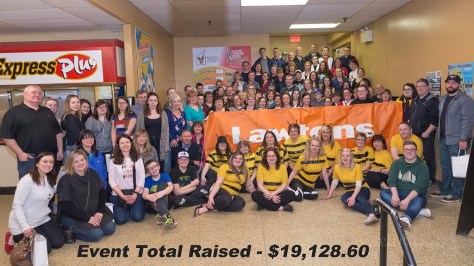
His contributions to the pharmacy community are expansive, including being a longtime member and former Board member for the Pharmacy Association of Newfoundland and Labrador. The outpouring of support for Dave’s legacy has been remarkable. Notably, Memorial University in St. John’s, has established an student award, the ‘David J. Collins Memorial Award In Pharmacy’ to honour him each and every year. In April, a bowling fundraiser was held to help establish that award, with teams from NS and Corner Brook (~700km away) in attendance to celebrate his life. I had the pleasure of meeting some of them during my recent trip in March. This picture speaks for itself, provided by Lawtons Drugs own Steadman Bowers:

DaveCollinsFundraiser

Bringing people together is what Dave always did. That’s not conjecture or an exaggeration, I really do mean always. No matter the circumstances, Dave was the single most consistently optimistic person I have ever met. So much so, that we would routinely poke fun at him (always in a good-natured way). We would predict his reaction to catastrophic events, just to see how he could possibly see any sliver of light in the darkness. He never let us down. Usually with a 70’s rock-n-roll lyric in tow, his philosophical candor brightened the room every time.

Six months later, I work hard every day to use those lessons to inspire others. We don’t want to panic when faced with adversity, but lean on each other, and value each other’s strengths. Without fail, we’ll always be stronger in the end.

“Imagine all the people living life in peace. You may say I’m a dreamer, but I’m not the only one. I hope someday you’ll join us, and the world will be as one.” – John Lennon

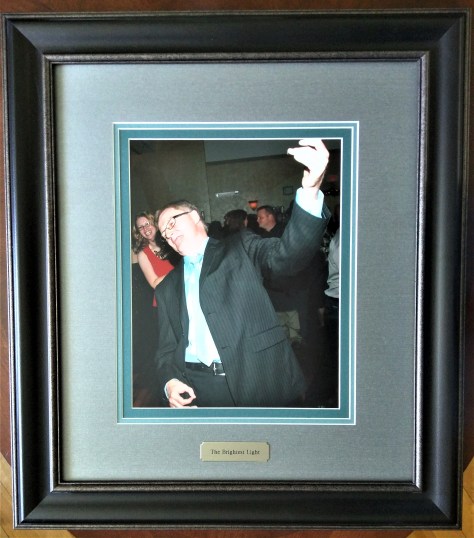
Dave – we know you’re still with us, wanting us to be better professionals, better teammates, and better people. Save us all a beer where you are; we look forward to sharing a pint when we see you again. We’ll need our sunglasses; you’ll be outshining the lights up above just as you did down below.

Six months later, the silver lining is that you’re changing us for the better…

BrightestLightPA


Disclaimer: The views and opinions expressed in this article are those of the author(s) and do not necessarily reflect the official policy or position of any agency, employer or affiliation.

The Evolution of Tech Regulation

For decades, whenever the pharmacy industry referred to ‘licensed staff’ they were obviously talking specifically about pharmacists and certified dispensers. These individuals were wholly responsible for the operation of a pharmacy, be it in a community or hospital setting, rural or urban areas. Audit results, public image, complaints, level of service requirements, these were all included under the umbrella. Even if the dispensary license holder wasn’t present, the licensed staff on duty have all of the professional responsibilities as an independent clinician for prescribing services, injections, education, and ensuring optimal use of medication therapy. Full names are displayed in public view and on name tags. Credentials are made available for scrutiny if requested.

So this decade has seen the emergence of a new profession, and for pharmacists, the new challenge of wrapping our minds around a different stripe of licensed staff. These team members have their own scope, their own mandates, and their own vision for the contributions they can make to complement and help evolve the pharmacist role.

For the longest time, dispensaries were primarily pharmacist-centric. Every situation, whether clinical, operational, logistical or workflow-related flowed through the pharmacist on duty. Naturally, our primary role was safe drug distribution. Reducing daily distractions and interruptions was the end goal. Strategies were developed to use technology to filter incoming phone calls, layout of pharmacies were planned to encourage support staff to handle external requests and better triage the pharmacist’s involvement.

Nowadays, it’s generally recognized that pharmacists hold tremendous value as a collaborative team-member in the realm of medication management. With so much information available to other health professions and to the lay public, we are the authority, the subject expert on everything medication-related. Clinical activities are taking place at hospital nursing stations and nursing homes. Travel clinics provide prescribing services and vaccination administration. Medication reviews allow the identification, and often resolution, of drug-related problems. Pharmacists are needing to be more accessible and patient-facing than ever before. Even with the advent of these specialized clinical roles, the actual distribution of medications still needs to occur safely, and with the same degree of excellence that we have always known.

My light-bulb moment came in the fall of 2015. We had introduced a regulated technician to our dedicated long-term care site a few months prior, and admittedly, my fellow pharmacists and I were apprehensive. We had an idea of how workflow would be impacted, but we still felt ownership over every step in the process. We were still the responsible dispensary managers. We still answered for any breakdown in the distribution process. We were still left to manage discrepancies and handle incidents that occurred. Those things are still true today, but it took awhile for trust to build and allow someone to share some of the burden.

Our regulated tech was committed to quality, willing to challenge our boundaries and remain patient as we worked through our own thoughts and feelings about these changes. She often needed to quell her frustration and exasperation when two steps forward led to one step back. Everything we knew needed to be broken down: where did she fit in the current process? What steps are we comfortable delegating? Where are we physically positioned in the pharmacy? Do we need to adjust workstations? What order do functions occur to ensure completeness and safety as before?

Sometimes it took a day, sometimes weeks, sometimes even months. Eventually, she was taking away significant technical functions off of our plates and freeing us up to make extra phone calls, better investigate interactions, follow-up on recommendations, etc.

My Eureka moment:  One day I was working through my onscreen clinical check. It was a prescription for a new antibiotic for a UTI, with some renal clearance concerns to assess. I called the attending nurse to discuss the therapy. Based on the patient’s age, current weight and recent serum creatinine, the dose was appropriate and I electronically signed off on the prescription. I then realized my work on that prescription was done. Really? I thought to myself. What about collecting the label? Technical. What about ensuring the DIN matches the bottle from the shelf? Technical. Hmmmm. Well surely I need to see the visual contents of the vial before it goes out the door to the nursing home…

No I didn’t. My clinical duties were complete. Those technical duties? I had entrusted them to my regulated technician. I could move on and focus on another prescription that needed clinical evaluation. Accepting that I was no longer the last step in the distribution process was quite mind-blowing, and very weird at first.

Since that day, my whole perspective has changed. We have licensed staff in our pharmacy community who want to take responsibility for all technical aspects of distribution. They are capable. They are ready to prove themselves. In my location, we now forget what it was like without a regulated tech and really notice when there is illness or vacation.

They will make us better. They just need the chance to evolve with us.


Disclaimer: The views and opinions expressed in this article are those of the author(s) and do not necessarily reflect the official policy or position of any agency, employer or affiliation.

Keeping It Under Our Hats

We pharmacists take pride in the many hats we wear on a daily basis. As with any collaborative health professional, we often are involved in patient cases that require much more than providing information about drug therapy.


A·poth·e·car·y (əˈpäTHəˌkerē/) – a person who prepared and sold medicines and drugs.

At one time, this was our most recognizable hat. The physician diagnosed, put a plan together, and off you went to the chemist (British term for pharmacist) to receive an elixir or compounded salve to cure your ills. Providing the right medications and the proper doses is still a large part of a pharmacist’s role, but as we evolve, so does our headgear.

Teach·er (‘tēCHər/) – a person who helps others to acquire knowledge, competences or values.
As drug therapy becomes more complex, and monitoring vital to positive outcomes, pharmacists need to constantly be prepared to educate on all types of regimens. These range from over-the-counter drugs to specialized biologic treatments. We must include what to watch for in terms of side effects as well as any positive measures of surrogate endpoints (e.g., A1C, total cholesterol).
Assessor (əˈsesər/) – a person who evaluates the quality of a person or thing.
We put on this hat in the counseling room when we need to assess understanding. ‘Please demonstrate how you are using your inhaler’. ‘Are you familiar with the term INR, and why frequent blood testing is necessary?”Explain when and how to use an Epipen or Naloxone Kit.’ This will usually lead into further teaching moments over the course of many interactions.
Nav·i·ga·tor (ˈnavəˌɡādər/) – a person who directs the route or course of a ship, aircraft, or other form of transportation, especially by using instruments and maps.
Navigator
Image courtesy of the Computer Whisperer: http://www.thecomputerwhisperer.us
This would look pretty sharp with a lab-coat, don’t you think? You can thank my involvement with mental health initiatives for this one. The founders of the Bloom Program here in Nova Scotia realized that our mental health system featured a wealth of resources and community-based initiatives that were not being used to capacity or not expanding due to lack of awareness. One of the original tools developed was called, appropriately enough, The Navigator and aimed to collect all known programs, community groups, hotlines and resources for each jurisdiction around the province. The goal was to empower community pharmacists to be more comfortable with being the first point of contact during crises and provide direction to patients and their families. This extends not just to specialist care, but financial aid, legal aid, counseling, and long-term care resources as well.
Coun·se·lor (ˈkouns(ə)lər/) – a person trained to give guidance on personal, social, or psychological problems.
I hesitated to list this one because pharmacists can not replace the skills and roles of trained counseling professionals. We do find ourselves in situations that require counseling ability in a more general sense. A supportive ear in the right place at the right time can sometimes make the difference in building trust and opening the door to a proper referral.
Ad·vo·cate (ˈadvəkət/) – a person who publicly supports or recommends a particular cause or policy.
Whether it’s recommending an equally effective generic combo instead of a newfangled drug therapy or suggesting a suspension for someone unable to swallow large capsules, we aim to put the patients’ health first. Pharmacists have called shelters to get those in need a place to stay, and are regularly contacting drug plans to wade through complex coverage policies. If we notice a patient’s condition rapidly decline, we may alert family members in their circle of care or help connect them with specialized programs.
Men·tor (ˈmenˌtôr,ˈmenˌtər/) – an experienced and trusted adviser.
The pharmacy community is strong. As much as we coach patients to take responsibility for their health, we also take time to precept students, giving them real life experience and challenging their knowledge. This is invaluable to their development as leaders within the profession. These relationships often last throughout careers and beyond.
And lastly, the most important hat of all:
You the person behind the degree, under the lab coat.
As health care professionals, we possess a common set of trained skills, but our effectiveness is predicated on the passion that we bring to our work, our hobbies, our relationships, and our experiences. I wore a ball cap for many years of competitive baseball, and a felt cowboy hat for variety shows. Others don biking helmets for tours through Paris or Spain. Perhaps a hard-hat is worn for charitable works in impoverished countries, or simply a headband for another satisfying hour at the gym.
It’s true that as a service provider, some consumers just want to see a pharmacist, but countless others want you. Your thoughts, your opinions, your advice matter greatly to all of those you aim to help. Develop your style, get comfortable with infusing your soul into whatever you do. Everyone will benefit.
So lift up that brim. We can’t keep personalities under our hats.

Disclaimer: The views and opinions expressed in this article are those of the author(s) and do not necessarily reflect the official policy or position of any agency, employer or affiliation.