Not Forgotten

Two years ago around this time, PharmAspire was still in its 6-month infancy. Writing was, and continues to be a salve that helps to both allay negativity and create positivity wherever it may be found. Two years ago around this time, a tragic event occurred that affected me in an unexpected way.

The loss of Karen Zed, a well-respected community pharmacist in the south-end of Halifax and mentor to countless pharmacy students and international pharmacy graduates, impacted a large section of the local pharmacy community. She had been working less than five days prior, and was telling her staff that she expected to be back helping her patients less than 36-hours before the news arrived. The shock was real, and the aftershock was felt for quite some time: long-standing pharmacy patients asked for her for many months after her passing, her university and college involvement was sorely missed, and colleagues from a four-decade career silently mourned a loss of a reliable friend.

I was fortunate to have been her manager for more than 5 years, and although I knew very little of her personally, I had the utmost respect for her career, and her approach to patient care. When I initially wrote the blog post in Sept 2013, it was a reflection on my experiences with her, and how I had lost contact in the previous year. What I didn’t expect was the response to the post. It was the first time I realized how close-knit our pharmacy community truly is. It is still the most-viewed piece I have ever written. She touched so many lives.

The alumni really wanted to honour her contributions and received support to fund an award in her name. The Karen Zed – Spirit of Community Pharmacy Award was summarized on page 2 of our pharmacy newsletter, the DUCPAD Dispatch. The goal was to recognize students who share Karen’s passion for community pharmacy and contribute to a learning environment while on structured clinical rotations. Within the past year, the fund has steadily grown but at the time of this writing, it has not quite reached a level to be a sustainable award. There is hope that we will reach the threshold and present this award at the end of this school year. If you would like to contribute, I encourage you to click the following link:

Http://alumniapps.dal.ca/giving/giving.php

By selecting ‘Health Professions’ in the drop-down menu below ‘Select a designation by faculty’, the College of Pharmacy will auto-populate in the field below. Among the worthy causes listed in the final drop-down menu, Karen’s award is on the bottom.

I believe in the creation of this award and have made my own donation. Community pharmacy is such an important part of the healthcare system and it’s nice to recognize students who are hungry to learn and enjoy helping patients with their medication needs. This award promotes the values we share and ensures the spirit of a dear colleague lives on.


Disclaimer: The views and opinions expressed in this article are those of the author(s) and do not necessarily reflect the official policy or position of any agency, employer or affiliation.
Lists

Whenever an overwhelming sensation appears at the back door like an unwelcome family of raccoons clawing through the garbage, I feel the need to decompress. Part of the ‘stepping back’ process is trying to figure out exactly from where the worry stems.

Enter = lists

Sure, lists are archaic. It’s a call back to simpler times before your phone tracked your shopping habits and email inboxes spewed endless reminders about what to do when. Everybody has their own twist to organization, and I thought of myself as the last person who would buy a Dayminder to keep track of things, but it really came down to two simple but related items:

  1. The more things I had to remember, the higher the anxiety and stress.
  2. The energy expended to mentally keep track of everything took away from the energy needed to actually perform the tasks. Procrastination created a vicious cycle of more items leading to less production, leading to more items.

I like to think my memory is half-decent. I can be extremely rough on myself if refill requests are missed, phone calls aren’t returned on time, or communication isn’t clear and the team repeats mistakes as a result. When I managed smaller operations, there seemed to be time to address most tasks immediately. Any backlog items stood out and screamed to be completed. As I worked my way up to larger and more complex operations, those backlogs became a black cloud that hung around. The day-to-day quick hits were manageable but every new info request or investigation pushed the big picture/long-term growth items further down the list. I was reacting to everything, a trap in which we often find ourselves. I also find that the longer you’re in a role, your value to others increases because you have more ready answers than before. If I didn’t have a strategy to cope with the distractions and increased workload, before long I would be riding the hamster wheel to Burnout City.

My response was to purchase an agenda book, arranged by tabbed months and two calendar days on each page. The first step was to unload my mind by writing down every item, be it emails to be sent, phone calls to be made, references to check, or just thoughts about things I didn’t quite understand. Once it was on the page, I no longer had to remember it. Even though my first list was lengthy, I could look at it differently; instead of bouncing from one thing to another as it popped into my head (worried that I’d forget again) and juggling multiple half-completed tasks, I could now pick a few things that fit in to the time available that morning and afternoon. Might I add that physically crossing something off is much more satisfying than dismissing an alert or closing a window.

So at the beginning of every shift, I take two minutes and carry forward any items from the previous day and re-write them in priority groups. Throughout the day, if something comes up that isn’t immediately manageable, or if I get another brainwave for a project or opportunity, it’s pen to paper right away to be prioritized the following day. It sure saves on post-it notes scattered around the computer monitor. Over time, I can balance the quick and dirty jobs with one or two of the long-range projects so there’s always a feel of progression. Currently my list is somewhat smaller than when I started, but it still fills half a page. There are some payroll submissions to follow-up, narcotic reconciliation for the month, and narcotic destruction to complete. I have some incidents to report, policy and procedures to review, and obtain a status report on some store renovations. There are tasks to delegate to others, like hiring and onboarding practices, which require time for training. Finally, there are the bigger projects: analysis and revamping of our drug and wound care inventory, engagement initiatives for the staff, and clinical intervention activities for our consultant pharmacists including flu clinics and prescribing within our expanded scope.

If there are visitors scheduled in the upcoming weeks, it’s in the book. Any meetings or conference call commitments are in the book. The key really is that I keep it close by and refer to it often, as you never can tell when a distraction will come along (like a surprise College audit last week) and throw a wrench in your plans.

So whether your list is of the work or home variety, I suggest a purging of the mind, be it on paper or on a fancy tablet/phone/dictation machine. It helps me focus on things that are important to me now and later and keeps the stress level somewhat in check. As opposed to drowning in work, clear the mind and start swimming for the shore.

There. Completed the article. Time to cross it off my list 😉


Disclaimer: The views and opinions expressed in this article are those of the author(s) and do not necessarily reflect the official policy or position of any agency, employer or affiliation.

#Neverfail

I was thinking recently about what it meant to people to discuss failure. Wikipedia provides the standard definition:  “Failure is the state or condition of not meeting a desirable or intended objective, and may be viewed as the opposite of success.” Further in the article, it touches on failure as being a matter of perspective or following an individual’s belief system, so I’d like to pick up that baton and run with it for a bit.

In order to fail, one requires a defined expectation or a set of expectations. These may be personal goals (working out three times a week, learning a new language) or work-related (reducing incident rates, increasing inventory turnover), but from the get-go there are usually criteria for success and deadlines to be met. If those conditions are not met, then we would deem it a failure. It feels so final, and somewhat dejecting.

So what if we took control over those conditions?

Think of a complex project. Perhaps there are ten things to accomplish to complete the project, and when the deadline approaches, only eight are met. Would that be a failure? Worst-case scenario, even if the project hinged on all ten being completed, and therefore the eight completed steps were rendered meaningless, there would be positives. The experience gained by pushing through the completed portions would give a sense of confidence and allow for more efficient action the next time. On the other hand, those remaining pieces were either too challenging with the timelines given, or required resources or training that weren’t available. So, on reflection, we are set up to have a greater chance of success for the next project.

Instead of ‘failing’, it’s more like we’re ‘on the path to success’. Let’s look at prescribing services. It’s been a few years since legislation was passed in Nova Scotia to allow pharmacist prescribing. Other provinces have taken up the mantle and are promoting to the public in varying ways. Our version features limited funding for government drug plan beneficiaries for select minor ailments. This is a positive step and the measurement of success is outcome-based; will the service be in-demand, will it save clinic or emergency room visits? Most importantly, will the pharmacist gain the trust of the public to carry out the services start to finish independent of a primary care physician? To place the yardstick to measure service value, we need repetition and a significant volume of interactions. So if we don’t reach a specified number, does that make the project a failure?

I prefer to think of it in terms of positives. What this opportunity has created is a forum for pharmacists to work towards a common goal and discuss what has worked and what hasn’t. Each new patient discussion extends the awareness to another family or community group, each physician notification provides education as to what we are able to remove from a hectic clinic workload. As pharmacists receive support to change their practice styles, this will allow for successful prescribing activities, and every dipping of the toe into the new waters is an encouraging one.

Really, the only failure in any of this is a failure to try something new. It’s like disliking a food you’ve never tried (which I’m sure we’ve all done at some point); you will never know if you’re missing out. So be bold – if you’re willing to learn from mistakes, and aren’t afraid to find success, then you can #Neverfail.


Disclaimer: The views and opinions expressed in this article are those of the author(s) and do not necessarily reflect the official policy or position of any agency, employer or affiliation.

The 5 P’s of Team-Building

Every once and awhile, I try to put into words some of the philosophies I’ve adapted and applied in my own workplace. They may seem to have brought me a degree of success, but by no means does this qualify me as an ‘expert’ in the area; if anything there are constant opportunities to refine and better adhere to the points below. A strong team raises the bar for performance. Whether you’re leading a strong team or are a member of one, I find these points help address larger issues, and many of the little problems take care of themselves. Before I start with the main five, there are two themes that happen to start with the letter P that tie each of these together: Please – we always ask for input, behavior changes, or solutions to our shared problems, and Praise – we reward any successes, no matter how small.

1) Presence By far the most important element in my opinion. In order to follow through on any initiative, a team needs to be cohesive, and complementing of each other. The only way to establish this foundation is a want to be around the team and learn about the individual members. What values are important to them? What constitutes a good vs a bad day? Who are they drawn to for guidance? What contributions make them the most proud? Spending time with the team is the best way to find out.

2) Planning – Having a vision and verbalizing it to the team can’t be understated. In prior posts, I have explored the need to share and engage others as their approaches may be different, but their visions for the team, for the business, for themselves may overlap quite a bit. Together, the strategic plan has input from everyone directly involved with its execution. Potential barriers are identified early on, and individuals are coached to have ownership over their separate pieces of the shared plan. Short-term goals are evaluated, and long-term or stretch targets are adjusted accordingly.

3) Proactivity This element requires a bit of finesse. Usually borne out of crisis, being proactive serves to not just correct a known problem, but to prevent it from happening in the first place. A definite challenge is proving that the time invested to make a change in behavior, saves the time spent reacting to an undesirable outcome. An example of this would be calling a family member before processing an expensive prescription. This step may offset (or in many cases, save) the time spent correcting the issue after upsetting the customer when they arriveThe key here is the culture change that comes with it. When there are many crises, and therefore, many undesirable outcomes, being proactive is an easier sell. Once the bulk of those are rectified, being proactive becomes the team thought-process and raises the standard of performance. The crises are no longer obvious and staff are much more in control of their work volume, meaning they’re better prepared for the next inevitable wave of change.

4) Practicality Especially in the beginning, before real bonds are formed between team members, it’s essential to have some ‘easy wins’. These are very realistic, functional process changes that when realized, benefit everyone equally. One pharmacy example was to implement communication stamps and initialing hard copies. The stamps sent consistent messages to assembly staff and the initials identified the person sending the message in case clarification was needed.

5) Patience This is the toughest element to master. I’ve been blessed to be a part of a number of excellent teams. Some I have had the privilege to lead, others I was made to feel like an important cog in a high-powered machine. The grander the scope or the larger the team, the more energy needs to be invested to keep the train moving. Coaching requirements are unique to the individuals on the team. Some may grab concepts faster than others. Inconsistency with words and actions is expected. Mistakes will be made. Those frustrations are the necessarily evil to grow people. Once they see the value of being around, planning ahead, being proactive and thinking practically, they will make the performance of everyone around them a little bit better.


To finish off, team-building is hard. Although that’s admittedly a crude statement to make, there’s no point in mincing words. Sometimes, people associate ‘team-building’ with ice-breakers, or performing tasks with blindfolds and obstacle courses. These exercises may highlight the need to work together and be comfortable with one another, but unless those lessons are translated to the vision and the tasks at hand, they run the risk of being footnotes left behind in the annals of history. Please indulge me as I add a 5a to my list:

per·se·ver·ance
ˌpərsəˈvirəns/
noun
  1. steadfastness in doing something despite difficulty or delay in achieving success.

So is it worth it? Teams are important. People are more important. They’ve made me a better professional, a better person. I hope to help do the same for them.


Disclaimer: The views and opinions expressed in this article are those of the author(s) and do not necessarily reflect the official policy or position of any agency, employer or affiliation.

Who’s Training Whom?

Before the Rotation

This should be interesting.

A freshly graduated regulated technician student is arriving at my dedicated long-term care dispensary this week to perform her required 4-week clinical rotation.

She will be looking to me for guidance on ethical and procedural issues. She will ask how best to complement the pharmacist on duty and pattern her style accordingly. She will rightly expect that after these four weeks, she will have a defined role with measurable tasks and clear boundaries. Upon licensing, she hopes to offer an immediate impact in whichever pharmacy she is employed.

There’s really only one problem: I have never had a regulated technician on staff, nor have I worked with one at another location.

This isn’t necessarily a bad thing. With this trusty preceptor introduction package mailed to me from the community college, I can enter into this experience with an extremely open mind. Although I have a plan for how a regulated technician will contribute in my site, my pharmacists will each need to develop trust in this new professional, and so will I.

The title will be confusing in that when I started in pharmacy, a technician was a technician. A few years ago, the title of ‘Technician’, or RPhT was protected in those provinces where regulation was moving forward. Those who were previously known as technicians were reclassified as ‘assistants’ but in casual conversation, are still often referred to (especially by other healthcare providers) as technicians. After all, their roles were expanded and the label attached to it has come to resemble that of the certified dispensers of yesteryear: able to dispense medications, but not performing the clinical role of the pharmacist.

So, if she’s patient with me, I’ll try to let go of as much as I can: checking of new and refilled prescriptions for completeness and accuracy, screening batched prescriptions through our automation software, accepting and confirming physician and/or nurse practitioner verbal orders. These are all ways to reduce the burden placed on a pharmacist.


Aftermath

The first week was full of administrative tasks. We covered workplace health and safety, oriented her to all of our workstations and began reviewing the workbook we had been given. Many tasks requiring evaluation were relatively straightforward; phone etiquette, accuracy with assembling prescriptions, and inventory control required minimal direction as my student had prior dispensary experience.

Then the fun began…

At our site, there are two huge checking-related tasks that swallow up a large part of a pharmacist’s day: witnessing weekly cycle-fills of unit-dose pouches and packaging verification of new and refilled prescriptions. Like a moth to a flame, she grabbed the reins with the cycle-fills. Paired with another regulated technician candidate, they took turns with one verifying and correcting a batch, and the other performing the double-check, manual quality assurance, and sign-off. I then came in behind and repeated the final check. The results were amazing. Not only were all the batches organized and accounted for, they identified procedural gaps in the packaging process for us to correct as a team. Our packaging error rate for the month actually went down. As for the refills/new prescriptions, the learning curve was steeper. I let her grab a bin of packaged prescriptions for a nursing home, and once again followed behind and verified her work. In the three remaining weeks, she checked over 500 prescriptions and found a number of mistakes. The part that I enjoyed was that her questioning and requests for clarification made us all better; we may have just assumed answers in the past in regards to pack sizes, or the wording of directions, or dosing times. In only one case, a quantity was miscalculated by data entry that managed to squeak through, but even this order was misinterpreted by two others.

Now that I’ve seen firsthand the potential impact of such a role on my operation, I can’t wait to get started. Pharmacists have long been responsible for the appropriateness of the therapy as well as the final dispensed product. It’s liberating to be able to focus on the clinical aspects of a prescription: the indication, the dose adjustments, drug or food interactions, and monitoring. Having trusted professional colleagues to ensure accurate dispensing allows more of the pharmacist’s time to be devoted making recommendations, reacting to advisories, and planning staff education.

Many thanks CJ and KLS. Where we go from here will be due to your commitment to quality and professionalism. Pharmacy needs this. You’re teaching me to embrace this change.


Disclaimer: The views and opinions expressed in this article are those of the author(s) and do not necessarily reflect the official policy or position of any agency, employer or affiliation.

Reporting Incidents – Focus on Long-Term Care

Now that I am back in the realm of long-term care, it’s apparent that some things have changed significantly since I was last here: automation, prescription-processing software and the role of pharmacists as consultant liaisons to nursing home facilities are just a few. Amongst the items that haven’t changed is the responsibility surrounding incident handling and reporting, and it can be argued that it continues to increase in importance. The recent media focus on pharmacy hasn’t been the most positive.

Between the steps of prescribing, dispensing, and the administration of medication, there are countless ways for errors to occur: transcription, misinterpretation, data entry, assembly, dosing time, dosing frequency, length of therapy, interactions, quantity, packaging and labeling, dropped doses, brand changes, discontinuations, etc (you get the idea). Of course we aim to maintain a similar number of safeguards to prevent such errors, but unfortunately some still manage to squeak through.

As we become more advanced with our packaging systems and software, there has been a steady shift in the quality and quantity of medication errors requiring a response and an action plan. Here are some observations and some points for consideration:

1) Reporting rates have increased – Both at a facility level and the dispensary level, we are seeing more reports flowing through. There has been a conscious change through regulatory bodies to report any and all perception of error, regardless of who may interpret the potential risk (administrator, pharmacist, assistant, RN, LPN, family member, etc).

2) Errors are more easily identifiable – If drug administration moves from a multi-dose to a unit-dose packaging format, it becomes apparent if single doses were given or not. If doses were provided from a vial, the risk of double-dosing or under-dosing is higher, but not necessarily identified until a later date (if at all). The emergence of electronic medication administration records (eMAR) has added a new layer of error potential as well; if stop dates aren’t entered properly by pharmacy staff, it will prompt a dose to be given after a course is complete and no inventory remains.

3) The vast majority are of the ‘near-miss’ variety – This tells me that the quality assurance measures we employ are working. Problems are identified prior to administration of medication, so there is virtually no potential for patient harm, yet we may still craft action plans to prevent recurrence.

4) The severity of actual medication incidents is declining – This is a personal observation in that I don’t have any comparative evidence to recite. We used to see errors within drug classes with similar strengths and directions (i.e. paroxetine vs. fluoxetine, metoprolol vs. atenolol), or look-alike drugs that end up in the same bottles (i.e. Synthroid 50ug/domperidone 10mg, lorazepam 1mg/gliclazide MR 30mg, Tylenol #3/Metformin 500mg, etc). These types of errors are devastating for everyone involved. Our prescription-processing systems and packaging automation go a long way to prevent wrong product or strength dispensing. However, if a broken tablet was found in a vial, it may not be recorded as an incident, but if it’s in a unit-dose package, that specific dose is incorrect and should be recorded as such.

5) Raw numbers alone do not tell the whole story – Nobody likes to have incidents of any kind, but we need to report them to learn about gaps in our training and our service that we genuinely want to address. Without any context, an incident rate may be considered high or low, but we need to dive deeper into the severity of errors being reported and the steps involved in the breakdown. One example I have was from a number of years ago that was recounted by a pharmacy manager friend of mine. A batch of unit-dose packaging was run with an incorrect start date. In this case, the first medication pouch was due to start on Sept 23 when it should have been Sept 24. Upon delivery, nursing staff would have received a duplicate day of medications and this was identified right away. The pharmacy was notified and in response, corrected an administrative error where two staff members failed to properly sign-off on checking the dates. As this particular batch had twelve people, it was reported as twelve separate errors. I concede that from a facility side, the near-miss could have potentially affected twelve people. From a quality assurance perspective, there was one procedural error, and therefore one action plan to execute. The quarterly service report nevertheless looked quite poor, and pharmacy staff were discouraged.

In closing, the last thing anyone wants is a culture of fear. Error reporting in any setting should be about transparency and working together for the benefits of our mutual patients. We learn and adapt our programs to properly address shortcomings in a timely manner, with penalties reserved for a failure to take steps to fix whatever may be flawed, not for the reporting itself.

We are proud to strive for a world where no mistakes are made and therapies result in optimal outcomes. Till then, we will continue to support each other to follow-up errors and use a team-approach to discuss remedies.

After all, there is only one problem with being perfect; you never learn know how to fix anything.


Disclaimer: The views and opinions expressed in this article are those of the author(s) and do not necessarily reflect the official policy or position of any agency, employer or affiliation.

Dominican Dreams

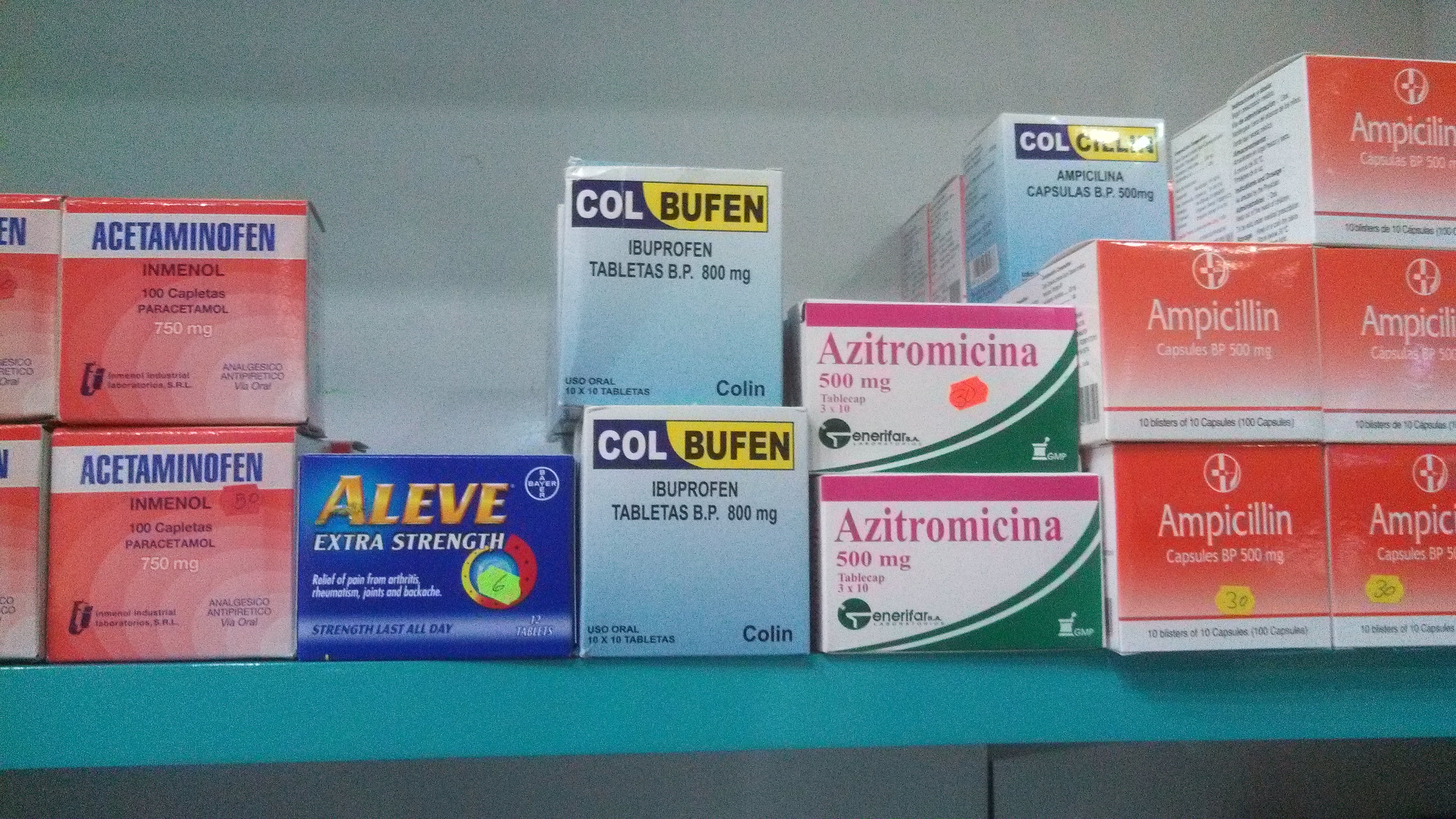
Well after a winter that still doesn’t seem to want to move on willingly, the balmy climes of the Caribbean were a much-needed detour. Waking up to warm sunshine for a week worked wonders to melt the icicles of some seasonal depression. I got to thinking: wouldn’t it be GREAT to practice pharmacy on a tropical island paradise? So then I stroll into the convenience store on the resort. Among the sarongs, the cigars, and the wood-chip-filled bottles of Mamajuana, I stumble upon this:

IMG_20150426_092913_046

Okay. I give up.

Your eyes do not deceive you. From left to right, we have acetaminophen 750mg, Aleve extra strength, Ibuprofen 800mg, ‘Azitromicina’, and ampicillin 500mg. This selection was found in a gift shop and it didn’t appear the ladies behind the counter were…’ahem’…well-versed in the medications they were selling. I understand that regulations are lax in some countries, but compared to the controls we have in Canada, I would hate to be doing any kind of medication reconciliation when this kind of stuff is considered over-the-counter.

From looking around the pool, and hearing from people in the party I was with, I would posit that some may have some blood pressure problems. I reckon that others may be on blood thinners for atrial fibrillation or stroke prevention. There may be hidden macrolide or penicillin allergies floating up to the wet-bar where a friend would casually say: ‘Oh, that sounds like a UTI. Here, I just picked up a few of these for myself just in case. Try some, they’ll fix you up.’ I’m sure this has never happened before on the resort.

Still, perhaps I’m taking this a bit too seriously. I should take some friendly, sun-baked advice:

IMG_20150426_092954_391

The Friccilicont is a menthol / methyl salicylate rub with a funky name but not too notable other than the pesky allergy risk.  However, a little buspirone would do wonders to chill me out. Yup. Buspirone. We don’t see it too often anymore, but it’s a lovely CYP 3A4 substrate that’s used for anti-anxiety and to enhance the effect of anti-depressants. Anybody picking this up in the airport ‘Pharmacia’ may not be told to lay off the grapefruit juice at the buffet. Once again, more than a few blood pressure meds or antibiotics could be in the carry-on that don’t play well with this one, especially if it was in regular use.

One more thing: All-inclusives are known for a few perks. Adults (and perhaps some late-teens) seem to enjoy the beach umbrellas, the barter-shopping, and BARS IN EVERY LOBBY/BEACH-HOUSE/POOL/ROOM/PARKING LOT/CORNER STORE/RESTAURANT. They even come find you if you’re looking lonely out in the common areas. Reading through the monograph for buspirone, alcohol may not be the best thing to consume. Additive CNS depression notwithstanding, liver and kidney impairment are significant cautions. Any diabetics snacking in the preferred lounge?

In closing, I’m poking some fun at the relative lack of controls and standards in a foreign country, but it’s really meant to contrast the type of clinical decision-making pharmacists in Canada are making every day. We take pride in heading off many of the potential issues outlined above and in the process, reduce the risk for significant adverse effects for drugs individually and in combination for patients in our care.

Aren’t you glad that we don’t have these on our counters:


IMG_20150426_093103_942

Make sure to fill up on the M&Ms while you’re at it. I can’t look at this picture without picturing the American ad where the fatherly gentleman is bouncing out his front door and down the sidewalk. This is followed by a fast-talking fellow listing all of the disclaimers and precautions over top of ‘good morning’ imagery.

Sigh – Here’s to Dominican dreams and relaxing vacations.


Disclaimer: The views and opinions expressed in this article are those of the author(s) and do not necessarily reflect the official policy or position of any agency, employer or affiliation.

Sharing a Vision

Vision is the art of seeing what is invisible to others.” – Jonathan Swift*

The author of such noted works as Gulliver’s Travels and A Modest Proposal offers this piece of wisdom for anyone in a role that requires forward thinking and plan execution. My favorite part of this quote is the word ‘art’ being used as a descriptor. Art is creation; it’s translating ideas and intuition into reality. That’s the power of the human mind: what you see could very well be invisible to those around you, but those around you are also seeing things that may be invisible to you. When I graduated, the idea of paid medication reviews was foreign. We were available to the public for all of their medication needs, whether it be a 3-minute consult or one lasting half an hour. Those off-hand medication reviews were not formalized or necessarily valued as they should have been. It wasn’t until a small group lobbied associations and governments to fund these services that they started to appear.

The best part? Vision as an art, is not defined in black and white. It’s like a rainbow in that every person views through their own prism; the conditions and viewing angle are unique and the person directly next to you will not capture the same arc or brilliance. Whether narrow or broad spectrum, a vision is defined by a person’s individuality, style and skill-set. Those same medication reviews now have a framework, but it’s up to each pharmacist to create value for their patients and for themselves as practitioners.

Now anyone can be artistic but most often the quality is measured by social perception or taste. Do you have a favorite genre of music? How about painters or sculptors? For those that don’t thrill you, does that make the artist any less talented or the art of poorer quality? Does anyone remember the controversy when the National Gallery of Canada spent $1.8 million dollars to buy the Voice of  Fire? Regardless of our own opinions on Abstract Expressionism, this piece was a result of Barnett Newman’s vision and is admired and appreciated by many. If you are interested in viewing more of Mr. Newman’s works, please visit: https://www.artsy.net/artist/barnett-newman

So if everyone has artistic capability and may see things others can’t, why do certain folks stand out in the crowd as being visionaries in their respective fields?


Great leaders communicate a vision that captures the imagination and fires the hearts and minds of those around them.‘ – Joseph B. Wirthlin*

It’s rather difficult to formulate an opinion or contribute to a vision if you’re not aware it exists. That song on the radio was written, arranged and recorded, but until it was promoted there were few listeners. Van Gogh was certainly eccentric but if he had never dared to show his canvas to anyone, it’s doubtful he’d have much of a place in history. In the Canadian pharmacy world, our leaders have provided the Blueprint For Pharmacy and on an increasing scale, policy decisions are being made in reference to the Blueprint vision.

We are all experiencing enormous change integrating these new clinical services to current practices. Our local leaders are communicating their visions through provincial associations and government relations. Demonstration projects are popping up in Nova Scotia in the form of the Bloom Program and funded minor ailment prescribing. Perhaps there are plenty of items happening that were once invisible to you. By the same token, it’s up to us to communicate our visions as well. Insert yourself into the discourse and create your own art for how your future should look. Have a supportive family doctor in the clinic that performs home-visits? Perhaps there is an opportunity to collaborate on a disease-state management program. Interested in reading lab screening for thyroid disorders? Someday, endocrinology may be needing our help to identify red flags or coordinating dose adjustments. There is no wrong answer or approach so don’t be afraid to apply your style.

After all, you’re seeing things no one else can; only you can make them visible.


*Quotes courtesy of Brainy Quotes – http://www.brainyquote.com/

Disclaimer: The views and opinions expressed in this article are those of the author(s) and do not necessarily reflect the official policy or position of any agency, employer or affiliation.

Freedom 550

Two years.

2 cycles around the sun. 730 days. 8 seasons (though really only 4 in Nova Scotia – 18 months of combined pre-winter, winter, and lying-groundhog-extended-winter, followed by a short fishin’ season).

That’s right, we’ve reached the two year mark for this blog. I’m having a difficult time processing that.

The title represents the average number of words in each post along with the sensation that writing gives me. No matter what trials and tribulations arise in my daily life, writing has and continues to be a release. Organizing my thoughts is a challenge, but stepping back to view the bigger picture is a necessary evil. Every couple of weeks is an opportunity to reset and refocus on why I do what I do as a father, as a person, and finally, as a pharmacist.

On the second anniversary, I appeal to those who are feeling discouraged by referring back to my first entry on Mar 28, 2013 titled ‘Inspiration‘. I truly feel the same way now as I did then: it’s our profession and together, we control which direction to go. I hate to quote myself, but my thinking hasn’t changed one iota:

I truly believe the answers to every obstacle are already among the group and are waiting to be discovered through engagement and networking.”

So I raise a glass to my close friends and family; you are the reason for this blog in the first place. Your encouragement, your counsel, your perspective continues to inspire me. To Laura, your honesty in breaking down my words and tone has been spot on. None of this would be possible without you convincing me to post that first article. To Sandra, thank you for allaying my doubts and fears about being in a spotlight, and also for referring me to Vicki, who has opened my eyes to a world of journalism and graciously allowed me to contribute to her vision.

I can’t wait for what’s in store for year #3…

dcovey@pharmaspire.ca


Disclaimer: The views and opinions expressed in this article are those of the author(s) and do not necessarily reflect the official policy or position of any agency, employer or affiliation.

Temporarily Grounded

I missed my flight home this morning.

It’s a new experience to be sure. As I get acclimated to an unfamiliar airport terminal for the next five hours or so, I couldn’t help but to somehow try to turn it into a positive experience.

The travel itinerary started innocently enough; a quick trip to meet with a colleague over the dinner-hour followed by an aquarium visit with a close friend who lived nearby. It took me a while to plan and commit to this trip. This wasn’t just any colleague, in fact it was the point of the excursion. I was to meet the editor who believed in my writings enough to feature it in a national magazine over a year before and she deserved a personal thank you. I bit the bullet, took a chance to meet her and I’m so glad I did.

During the course of a wonderful brunch filled with Benedicts and omelettes, we chatted about media and content planning, provincial success stories from pharmacy entrepreneurs, and initiatives taking shape below our Canadian border (all of which I found fascinating and hope to highlight in a future post).

As pleasant as yesterday was, today is off to a rocky start. My alarm went off as scheduled with over an hour’s grace to reach the airport. Unfortunately, this was the first time I had used this particular airport, which is an important point to mention for reasons that will become apparent.

Thinking I was a mere 6-7 km jaunt to my destination, the cab picked me up with 20 minutes to spare before the specified arrival time on my boarding pass. Well, that 6-7 km cab ride came along with with what felt like 50 intersections and intermittent traffic snarls. Still, we managed to arrive about 10 minutes late; not the end of the world, but a bit rushed. I hurry inside, print my boarding pass and realize the queue in front of me is waiting to board the ferry across the canal to the actual terminal. My agitation is welling up inside with 18 minutes to departure. The ferry docks…except it doesn’t. Watching the mast outside the window bob and weave, forward and reverse for the next 12 minutes (yes, I was counting) was very disconcerting. The fellow in front of me is now furiously on his cell trying to delay take-off. I can only imagine what it was like for the passengers waiting to disembark.

The boat empties and we climb aboard. It turns out the ferry pilot was having difficulty lining up the ramp and needed numerous attempts. At this time the plane is gone and I’m rehearsing how I will explain myself at the registration desk. I saunter stoically to the lady and present my worthless paper that five minutes before had masqueraded as a plane ticket. Since my cell battery was low, they allowed me one phone call befitting my punishment. Now my drive won’t be waiting for me at the the other end and my kids won’t be stranded at school.

So here I am. Thinking about pharmacy and subsisting on a $11 ham sandwich from the lounge. The whole experience reminds me of when I began offering a new clinical service at my dispensary and you’re probably wondering where that ridiculous segue came from. We had a pilot (see what I did there?) to promote minor ailments and I had someone asking about herpes simplex. Let’s see:

– I started out nervous. I wondered if I was able to commit in the first place without having an idea how it would turn out or how it would impact workflow.

– Once invested, I was able to consult with colleagues who were aware of success stories and had strategies to overcome my misgivings. Through conversation and research, I felt pumped up and ready to go.

–  When the time came, I was met with some barriers: my own planning was flawed due to an unfamiliarity with the process (paperwork, time commitment) and perhaps a little overconfidence. In addition, there were factors out of my control that ultimately led to a setback (staff illness, appointment cancellation that ended up not being re-booked).

The end result? I was forced to reflect and figure out the current situation. I certainly learned a few things that helped for the next time.

The next chance will come along very soon, and likewise, I won’t be missing that next flight.


Disclaimer: The views and opinions expressed in this article are those of the author(s) and do not necessarily reflect the official policy or position of any agency, employer or affiliation.