It Comes in 50 Shades Apparently

A few years back, I was hosting a segment of our yearly 2-day orientation session for new pharmacist hires to the company. Most were new graduates but some were coming to us from other provinces and/or chains.

I was aware that a certain book was making the rounds at about that time and somehow my improvisational skills led me to drop the title with respect to the new expanded pharmacy scope. To my ‘surprise’, at least 3 people in the audience were in the midst of reading this book and were justifiably confused (though intrigued) by my seemingly random tangent. Although pharmacy is an exciting place, it seemingly pales in comparison to the plot of a story I should have spent more time investigating.  Now, I have never read the book and understand it to be a wholesome story of two people that meet and enjoy going for coffee, holding hands and don’t-you-dare-leave-this-book-laying-around-anyone-under-18.

After about 30 seconds, folks started reaching beneath the tables to gently pick their jaws back up from the floor. Queue the giggling. I enjoyed the mid-morning giddiness myself.

My point was that pharmacists, in a general sense, are used to having set rules to follow. Now every profession has rules in the form of guidelines, regulations, acts, or policies. We also have best practice memos to further help direct and support us as individuals. These documents are vital to minimizing liability as practitioners while stressing public safety. Those rules prior to the legislative changes meant we had our comfy room in the healthcare house; the boundaries were established and many scenarios had played out countless times. Black, meet white. Now, if somebody came to the door of the pharmacy room and invited you out, then you would have a taste of collaborative practice and it seemed like a treat. It was like being allowed to eat at the big-kids’ table at Thanksgiving; an experience you’ve waited for and look forward to the next time it happens.

So enter the blueprint of pharmacy and changes to pharmacy acts across the country. We now replace the walls to that comfy room with strips of yellow duct tape on the carpet. Now you can see the hallway, or venture into the next room without needing approval. You know where you used to spend all of your time, but your space got a whole lot bigger. Needless to say, each scenario with medication reviews, prescribing, administering, or ordering blood tests is new to everyone, and therefore virtually impossible to predict. Becoming a clinician means a certain degree of trial-and-error, and judgement calls based on the best information possible. There may not be a tidy ‘right answer’ or a similar situation on which to build.

As we gain confidence in our worth and abilities, many pharmacists may completely leave their yellow outline and settle in different areas of the healthcare house. They may join travel clinics and vaccinate full time, or perhaps pharmacists may liaise with physicians’ offices to perform medication review consults in their offices. They may become more visible and independent in rural communities as they perform minor ailment and emergency prescribing services.

In each possibility, and for each and every pharmacist delving into said opportunity, there will be fifty shades. You will be making decisions and backing them up with gusto. You will be challenged from time to time, but so is each and every health professional out there.

Embrace the grey. Explore the new rooms. Make yourself at home.

Disclaimer: The views and opinions expressed in this article are those of the author(s) and do not necessarily reflect the official policy or position of any agency, employer or affiliation.

Out of Bullets

“We offer flu shots, but have run out until the middle of next week.”

Unfortunately, my site is far from the only one parroting these words ad nauseam this past weekend:

http://atlantic.ctvnews.ca/n-s-pharmacies-having-a-hard-time-keeping-up-with-flu-shot-demands-1.1637675

In this article, it states that 60,000 people have been shot…er…vaccinated by their pharmacist in Nova Scotia when that number was expected to only be around 20,000. In addition, 435,000 flu shots have been distributed. That number represents 47% of the population, which puts NS in line to be the most vaccinated province in Canada. Those are some impressive numbers.

The first frenzy took place mid-Oct with media advertisements and statements from public health. Due to an administrative hiccup, my site had one pharmacist out of three with the authority to administer injections so we had to be creative with scheduling. Still, we managed to exhaust our initial supply and applied for another distribution. Then, the fever died down (pun intended). Things went quiet over the holidays with only the occasional inquiry. Then we get thrown a curveball from our sister province Alberta:

http://www.cbc.ca/news/canada/calgary/alberta-flu-cases-spike-5-deaths-confirmed-1.2482027

Not exactly a happy New Year to be sure.

Needless to say, this was a scary item to read online or hear on the 5 o’clock news. People reacted and started coming out in droves. When physicians’ offices began running out, pharmacies were the place to go. We had families calling from 45 minutes away to see if we had supply and offered the service. In saying yes, often the following question was “where are you located exactly?” People who had so far resisted getting vaccinated had their minds made up to receive one. Parents were bringing in their kids (5 years and up) and weren’t leaving even if it took a bear hug from mom or dad to control flailing limbs. It was pretty intense at the dispensary last week managing these requests. That is, until we burned through our relatively small supply and started to turn folks away.

Reports indicate that the flu season is only expected to peak in February and we’ve already begun to see a spike in positive influenza tests across the country. The FluWatch report issued by the Public Health Agency of Canada up to Jan 4 notes that cases are being reported in a higher proportion of adults 20-64, which is a change from last year. You can find the full report here:

http://www.phac-aspc.gc.ca/fluwatch/13-14/w01_14/index-eng.php

That last link took me awhile to digest. At least the graphs were varied and pretty-looking.

All in all, I believe we can surmise that pharmacy has strongly impacted awareness and access to the flu vaccine so far in our first season. Now, I say this with the caveat that the season is not over and final vaccination rates are not yet available.  Incorporating an injection service into our current processes is new, and it’s unpredictable, but I have to admit it’s been satisfying. Congratulations to all of my fellow colleagues who took the plunge and are embracing this new public health service with fervor and professionalism. If you’re like me, the overwhelming feedback from patients has been supportive and appreciative.

On that note, a quick story from Friday night…

A family of four from quite a distance away called to ask about having their kids vaccinated. One was 5, the other was 7 and their family doctor had no vaccines left. Once they arrived over the supper hour, I prepared the syringes and laid out the supplies. I had not uncapped the needle when the tantrums started. A boy and a girl were both convicted in the fact that whatever was going on was NOT happening on this night. The parents were worried that supply wouldn’t be there if they had to return and as it stood, I was down to about a half-dozen at that point. There were tears, and kids are slippery when they want to be. However, with a little patience, I was able to follow through without incident even though I wondered about them ever wanting to see me again. Five minutes later, the mom and a now sheepish little girl approached. The conversation went like this:

Mom: “What did you say? Did you want to tell him what you just told me?”

Girl: Hides behind mom

Mom: “She asked that if next year Dr. xxx isn’t able to give the shot again, would she be able to come see you?”

Me (in full blush): “Of course! You did very well.”

I found the rest of the night to be a bit of a blur 🙂

I hope we get our next allotment soon…

Disclaimer: The views and opinions expressed in this article are those of the author(s) and do not necessarily reflect the official policy or position of any agency, employer or affiliation.

The New Year’s Resolution Post

Of course this site needs one. 2014 is a new year, and with a clean slate, what better time to evaluate what’s been happening and strive to make those changes that have been put off all year? Getting back to the gym 2-3 times a week, learning how to play the guitar, finally getting the house in order…of course all of these things will happen simply because you received a new calendar for Christmas and can’t wait to hang up the January picture.

Therein lies the rub: heightened expectations mean a bigger fall if we don’t achieve our goals. During smoking cessation sessions, one point that resonates is the dreaded ‘quit date’. After relaxing over the holidays, a lot of folks attempt to turn the page by making a New Years’ resolution that often sets the bar beyond what they have the confidence to achieve.

Practicing pharmacy has some parallels. At first blush it may not seem like it but weening ourselves off technical aspects of our jobs involves training of others, trusting of others and the actual letting go. The exacting nature of what we do makes this troublesome as we are so used to being the centre of the dispensary. Giving up any control at all is uncomfortable. Letting others ‘own’ a responsibility means they first have to be shown all aspects of the job then left to their own devices. If it gets screwy, then that ‘owner’ oversees the cleanup and resolution. I’m not at all suggesting that pharmacists don’t maintain an awareness of what’s going on, but as far as a drug distribution assembly-line is concerned, our role is becoming more and more the beginning (assessing appropriateness of therapy) and end of the process (counseling and follow-up). Anything that occurs in between should be evaluated and adjusted by those who are most directly involved. Occasionally this is a pharmacist, but more often than not, technical assistants are capable of running the show. Since this isn’t happening at my site yet, empowering members of my team to ‘own’ more than they have will be a precursor to any clinical goals I set.

Since a smooth workflow is conducive to a lower-stress day, checking prescriptions remains a priority that we balance with the newer clinical services. One of my resolutions is to avoid seeing patient interactions as ‘interruptions’ to the day-to-day workflow and embrace those opportunities to build relationships. Perhaps I can start with this suggestion from a former pharmacy professor:

https://twitter.com/RxDeanMac/status/416466843600044033

Simple, but the question is open-ended and your time commitment is predicated on the answer you receive. Now, truthfully, will I be able to follow my resolution 100% starting Jan 1st? I seriously doubt it in the sense that my routine for the past 12+ years has been largely technical in nature. Currently, checking and dealing with insurance issues takes up a large part of the day. While both provide a satisfactory service to a vast majority of patients, breaking this cycle is not something that comes naturally to my practice. That said, my goal is to take the initiative to invite a patient into an extended interaction each day (as opposed to waiting for it to happen). If wait times increase slightly from time to time because of this initiative and staff messaging to consumers is well-delivered, we can have the cake, and be able to have a nibble or two. I’m confident that performing within our expanded scope of practice will be sustainable, but also realistic and ultimately rewarding.

Stay tuned. I hope to have some wins to report in the near future. I also can’t wait to hear some of yours 😀

Disclaimer: The views and opinions expressed in this article are those of the author(s) and do not necessarily reflect the official policy or position of any agency, employer or affiliation.

Happy Holidays

Many of my posts seem to be about reflection.

Whether it be people, places, events or anecdotes, the spirit of this blog is to reach as many pharmacists with thoughts and experiences that may help them achieve a rich practice experience wherever they choose. Contributors range from all across the spectrum and include not just pharmacists, but other health professionals affiliated with pharmacy practice. I find the added perspective from nurses, technicians, doctors, benefit providers, and educators (to name a few) really help to enhance our messaging (yay, flu shots!) and support contributions that we may overlook (taking 5 minutes to review discharge orders, or explain special auth processes).

Candy cane mortar

The past year has been very rewarding for PharmAspire. The social media aspect is a strange animal so it’s taken some time to get a handle on it. Some of the posts seem to have connected with readers from the comments I’ve received. For users of the wordpress site, these comments have been posted directly on the blog but I’ve had supportive feedback through email and text as well.

Building on these successes, 2014 is anticipated to be even better with a variety of content styles, and from a larger pool of contributors. If you would like to be a part of the project or have any content ideas to pass along, feel free to contact me:

Email: <dcovey@pharmaspire.ca>

Facebook: https://www.facebook.com/pharmaspire.ca

Twitter: @PharmAspire

After such a shameless plug, I have plenty to be thankful for this time of year. A special holiday thanks goes out to Laura M. She has been invaluable in not only introducing me to the blogosphere, but kicking my behind to promote on the above social media sites, and most importantly, applying gentle amounts of spit and polish to all of my ramblings so they are more easily read and on point (mostly). Her pieces on the site have added a real-world, front-line flavor that are genuine and powerful. Thank you Laura for the motivation and inspiration.

To all current readers, this would also not be possible without your interest in the writings and discussion. Pharmacy is dear to the hearts of all of us. Our careers, our public personae, our future opportunities all hinge on the events of today and how we navigate them. Our collective thoughts and observations are vital to seizing those opportunities as they arise. If this project helps connect two pharmacists or health professionals that have never met for the good of the profession, then we all benefit.

From myself, Laura M. and all PharmAspire contributors, we wish you a very happy holiday season. Here’s to good health and good times with family and friends! See you in the New Year!

Disclaimer: The views and opinions expressed in this article are those of the author(s) and do not necessarily reflect the official policy or position of any agency, employer or affiliation.

Opiate Addiction in NS

Since graduating pharmacy school in 2009, I’ve noticed the problem of opiate addiction has had heavy media coverage in Nova Scotia. It feels like once a month we hear of yet another horrible story. Someone overdosed. Someone committed suicide because they couldn’t handle their addiction anymore. Someone is arrested because they are selling prescription narcotics on the streets. The problem is growing every week.

Recently, I took a course on opiate addiction and its treatment through the Centre for Addiction and Mental Health (CAMH). This course highlighted just how vast this problem is, not only in Nova Scotia, but across Canada. The coursework included the physiology of addiction,  pharmacology of opiates in addiction and how to treat people with the disease. I learned many valuable lessons from this course and I’d like to share a few with you.

1) Addiction is a brain disease. It is not a choice.

In pharmacy school, I was taught that if an opiate was prescribed for the right patient in the proper circumstances, people could not possibly become addicted to them. The implication here is that the people who are given these prescriptions must CHOOSE to become addicted or they must have a predisposition to addiction. If Mary breaks her leg and is given oxycodone IR to manage the pain,  she will be able to come off of those pills without issue unless she decides otherwise.

In the CAMH course, we were shown several videos where patients in methadone and buprenorphine treatment programs discussed how they became addicted. One person broke her leg and was given oxycodone. Another had dental pain and was given Percocet to help her cope. Another guy had chronic back problems. All of them were prescribed these drugs for legitimate reasons by doctors who just wanted to help their patients feel better. Every single one of these patients became addicted. Not because they wanted to, or chose to become addicted. Not because they had underlying mental health issues (though some did, not all) and were self medicating. They became addicted because of the drugs themselves.

With opiates, euphoria sets in during the first dose. Patients feel great when they take them, not only because their pain improves but because they work directly on the reward pathway. Because of this, the person taking an opiate feels fantastic. It’s that same reward pathway that leads to all the trouble. When the euphoria leaves, the patients feel awful.  Actually, they feel even worse than before starting drug therapy. And so, they reach for more. In this way, the cycle of addiction begins.

The take home message here, for me anyway, is to change the way I discuss these medications with people. The goal of course, is not to scare them away from proper pain management. Rather, if someone asks me if they can become addictive, to change my answer from the one above learned in pharmacy school to yes, they can be addictive. Therefore, use them when you need to and at no other time. And, if you feel like it is becoming a problem or you’re losing control of your use, talk to someone you can trust.

2) Addiction is a lifelong disease.

I’ve known this for awhile but this course really hammered the point home for me. Addiction is something to be managed, not cured. It is unrealistic to expect that the patient that comes to your pharmacy with their first prescription for methadone will ever discontinue maintenance treatment. It should be looked at like hypertension or diabetes. A chronic illness that we can manage very well and, in doing so, allow our patients to have normal, happy, productive lives.

In that same vein, it is unrealistic to expect that our patient on methadone will never relapse. Addiction waxes and wanes. The patient who was stable for years on 50 mg may have to have a dose increase to 70 mg for a while because they started using again for whatever reason. Just like your patient with hypertension may need a medication adjustment every once in a while, so too will your opiate-addicted patient.

3) Counselling, in all its forms, is essential. 

In this course, I learned of the incredible value that case managers, social workers and addictions counsellors give to the treatment of addicted patients. Studies have shown that regular counselling, even if it is simply a 5 minute chat, improves outcomes for these patients. The counsellor speaking to us at the course said that this applies to any health care provider who has contact with these patients. In fact, he pointed to the huge potential role pharmacists have to play in counselling. We see these patients much more often than any other member of their care team. In the beginning, we see them every single day. When they have been stable for some time, we will see them at a minimum of once weekly.

I have used this information to change how I dispense methadone. It is very easy to say “ok John Doe, here is your dose, have a good day.” I’ve started asking how they are feeling. Are they having any side effects, do they notice any withdrawal symptoms? I’ve begun to ask them how they are sleeping, and if they have any pain anywhere. These conversations do not take much longer than the “here’s your dose” conversation but they provide so much information. They also make the patient feel like they can come to me with any issues. One patient mentioned to me that they start sweating 3 hours after their dose. This points to the fact that the dose might be a bit high because sweating is a side effect of increasing methadone doses. Both the patient and myself discussed the issue with the prescribing physician and the issue was resolved.

Conversations like that show the patient that we are on their team and there to help them. They are also the main reason I wanted to be a health-care professional in the first place.

In closing, the problem of addiction in this country is not going to go away any time soon. We need more health care professionals trained to deal with the ever increasing population of patients who need our help. We need more doctors to get their methadone and/or buprenorphine exemptions. We need more pharmacies to dispense methadone. We need to educate the public on the benefits of treating patients who have addictions. We need to help quell the fears of people who are terrified of clinics and pharmacies who are involved in addictions treatments. The studies are there to prove success can be achieved and communities can be saved from this awful disease. We all need to pull together to make that happen.

If you’re looking for more information on this course or addiction material, check out the CAMH website www.camh.ca

Also, previous posts have discussed the More Than Meds project that is ongoing in Nova Scotia. People with addictions need people like pharmacists to help them navigate the healthcare system.  Check out the More Than Meds project at http://www.morethanmeds.com

Disclaimer: The views and opinions expressed in this article are those of the author(s) and do not necessarily reflect the official policy or position of any agency, employer or affiliation.

‘Come in Out of the Cold’ – Smoking Cessation Pt 2

Back in July, I wrote a summary of my first workplace smoking cessation presentation:

https://pharmaspire.wordpress.com/2013/07/17/smoking-cessation-and-other-lame-unimaginative-post-titles/

It was such a rewarding experience professionally. At the time, I was getting my feet wet in a new location and wanted to create more of a presence among my fellow employees. The goal was to educate my colleagues on what we can do for them and their families. Perhaps I could present to them a pharmacy service they would be proud of within and outside the walls of the building. Though turnout was low, I still enjoyed the session and wanted to share. I found myself writing this:

‘Here’s hoping the next one, – and yes, there will be a next one :) – , will build off of this and bring the discussion to two more people. If I’m lucky, maybe word of mouth will help the turnout. If I have to do 10 more sessions to help 10 more people, I’ll gladly sign up. As an added bonus, I may even be able to prescribe something for those that ask for help.’
It took almost 6 months, but something funny happened. Unbeknownst to me, people talked about it. At first, -no surprise here-, it was the (non-smoking) leadership of the store that appreciated that we would hold these sessions voluntarily. It certainly had the health-education side covered, but also promoted employee engagement. Anyway, 3 weeks ago an employee approached me in one of the aisles and asked if I could  let them know when I would be holding my next session. One of the attendees had enjoyed it back in the summer and managed to stop smoking. Turns out it was only for a week but it resulted in them settling back into a routine that featured a significant reduction in daily smokes.

That was all it took. As the title suggests, my next session was immediately planned and held the last Tuesday in November after posting signage all over the store common areas (punch-clock, lunch room, bathroom doors, etc). I used the same format as before: over the lunch hour (pepperoni pizza on the menu this time, much to the chagrin of our in-house dietitian :$), I had my co-host and  partner-in-crime on tap for variety, and we rolled out the same presentation.

The story should go something like this:

‘We had 20 people, most were employees but more than a few were family members trying to quit themselves or there to support a loved one. We laughed and cried. The presenters were charming and phenomenal in every way, not to mention well-dressed and extremely humble (hah!). After the discussion, we made a toast to good health and entered a rousing rendition of Kumbayah before they individually booked appointments to develop their care plans.’

Sigh. I want to say the above is mostly true, especially those wily presenters. Time to roll out some bullet points.

– Divide the congregation by 20

– There was a family member who wasn’t quite ready to engage.

– There was no crying…plenty of laughing

– We DID toast to good health. Kumbayah may have to wait for the Christmas party festivities.

– An appointment WAS booked and a care plan is being developed as I type this.

Addiction is intensely personal as both a struggle and a journey. Many choose to battle in their own ways. Some are completely successful while others are not. Only the smoker can ready themselves to quit, and some are never ready. I liked the way this read in the first post:

‘But maybe, just maybe, a few of those folks have really struggled with their attempts to quit and lack any confidence to push through. If I make myself available, and convey that I want to help, perhaps that contact can make a difference.’

One person asked for the session…that person received the session. With pleasure.

Disclaimer: The views and opinions expressed in this article are those of the author(s) and do not necessarily reflect the official policy or position of any agency, employer or affiliation.

Pharmacy Technician Regulation and My Journey To Become Licensed in Nova Scotia

Greetings pharmacy community! I am a pharmacy assistant in Nova Scotia and was asked by Devin (ages ago – sorry Devin!) to write a bit about the adventure I have been on to become a regulated pharmacy technician, and how I feel about the process.

When I began as a pharmacy assistant in 2007, regulation wasn’t even a thought in Nova Scotia. I was hired as a “pharmacy technician.” I was told to “listen to the pharmacist and do everything they ask you to do – they are your direct supervisor on shift, and you are there to support them and the work they do.” So I was trained on the job and became what my pharmacist needed me to be.

I loved my new job! I enjoyed helping my patients, and taking phone calls (even if I was confused as to which “little white pill” my elderly patients were looking to have refilled), filling scripts, and learning everything I could from my pharmacist. For the first time I felt like I had found purpose in what I was doing, and I was quite satisfied with my work. Yes, there were challenging times and tough questions, but there were funny moments as well.

To condense my tale, I ended up working at a very busy retail pharmacy that had a lot of unique things going for it.  As I was away from home, family and friends, I started looking at pharmacy websites and reading about the pharmacy technician regulation process that was happening in Ontario and Alberta.  I decided that this was the next step I wanted to take in my pharmacy career. To do this, I felt I  that needed a bit more knowledge of pharmacy laws, pharmacology, etc. In the summer of 2009, I purchased a few text books, and began to study the NAPRA, PANS, and NSCP websites in anticipation of writing the PEBC Evaluation Exam. I wrote the Evaluation exam in Halifax in April of 2010, with a room full of other hopeful candidates.

And then the waiting game began. As everything was new and nothing was in the Pharmacy Act, I, along with countless other assistants in Nova Scotia, could go no further. In 2011 we finally heard word that we could begin taking the four Pharmacy Technician Bridging Programs being offered through various colleges online (now only being offered by Selkirk College). I completed the final course through Humber College in the spring of 2012, and wrote the PEBC Qualifying Exam (MCQ and OSPE) in March of this year. It was a terrifying experience – so much rested on my abilities and knowledge, and at times I felt like I was failing miserably. I questioned whether I could ever be successful as a pharmacy technician. However, in May I received word that I passed the PEBC!

And then more waiting. Was the new Pharmacy Act ever going to get passed? No one was sure. I didn’t think that I would stick around Nova Scotia much longer, and so in July I started looking into the process to move to Ontario and pursue licensure through their process. Thank goodness that I didn’t! At the end of July we found out that the new Nova Scotia Pharmacy Act would be passed and in effect on the 6th of August! A bit more waiting as many changes were made in the Act (including the ability for pharmacists to give injections to their patients -go and get your flu shots!). Then news came that the NSCP would be offering jurisprudence exams for hopeful pharmacy technicians. I didn’t do much preparation as I used to spend hours on the website, but I did bring a binder stuffed to the hinges with everything I could think of to print. After all, you don’t necessarily need to know 100% of everything for pharmacy – but you do need to know where to find the information you need and how to interpret what you find. The exam was offered last week, and so now I am waiting on the results.

The final step is the Pharmacy Technician Assessment (PTA) which is being offered sometime after December, and once I am successful with this aspect, I should be ready to register as a pharmacy technician!

And so I return to Devin’s original request when he asked me to write for PharmAspire and talk about how the whole regulations process has been. I’d be lying if I said it was an entirely awesome, stress-free experience. Tears have been shed, and drinks have been consumed after exams. There has been so much preparation and anticipation; anxiety and agitation, but also excitement and that feeling of pride once another step in this five year process was achieved successfully.  I can say that I have learned so much through and from the process that I feel I can take on anything! My understanding of pharmacology is so much better (“Your little white pill? You have two on file. Were you looking for the one for your blood pressure or for your diabetes?”) and I feel like I am able to assist my patients more effectively and efficiently.  I am already putting to good use the knowledge that I have gained, and only hope that I can be utilized further once I am licensed to do so.

And so that’s been my journey thus far!

*

Disclaimer: The views and opinions expressed in this article are those of the author(s) and do not necessarily reflect the official policy or position of any agency, employer or affiliation.

Into the Depths

Let’s forget for a second that I am a pharmacist by trade. Anyone, regardless of your education, belief system or social class, can put thoughts on a page. Fortunately, many do. They take many forms such as journals, blogs, poetry, songwriting, editorials, novels, plays, or scripts. Even the social media sites Twitter and Facebook are great forums for quick hits and grammar-optional pontification if needed 🙂

So why do folks write?

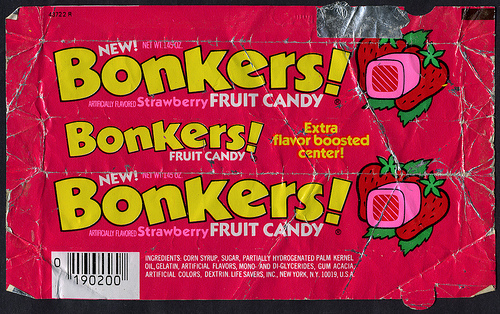
I’m not a philosopher by any means but I enjoy thinking and making others think. From a young age I was a curious sort with a never-ending stream of questions and observations. These served to both embarrass my parents and drive them bonkers, y’know, like the fruit-flavored candy with an even fruitier centre:

4392932409_90ae246824

(Awesome vintage photo courtesy of Jason Liebig – http://www.collectingcandy.com/ )

It’s still true today. My curiosity about people and behavior has not waned (and yes, embarrassing the parents is MUCH more intentional and fun). Only through engagement with others can you learn about them and find out just as much about yourself. Examples include similar or disparate reactions to the same situations or messaging, coping mechanisms, value sets, and motivator/stressor combos.

Team dynamics and group behaviors are an extension of this. What does it mean to be a ‘people-person’ versus a ‘loner’? I’ve always considered myself a people-person, but that does not necessarily mean that I was always accepted as part of a community or group. Similarly, I feel drawn to loners because they tend to have an independence or quiet confidence about them, at least in appearance. If I was building a team, sprinkles of both would be essential. The extroverts want to engage and the introverts usually have well-thought out ideas and opinions that require a little encouragement to share. Having a label just oversimplifies; sometimes you want to go your own way and other times you seek out support of others. The label is best applied to a tendency, not a personality.

So back to writing…the fear of judgement can be a paralytic. Even as I type this, that gnawing sensation that my opinions are available for all to see is a bit overwhelming and downright odd. Surely many others have considered doing the same but aren’t quite ready to voluntarily have folks peer into their thought-processes. What might they learn? Will readers understand my premise?

So these are my thoughts and anyone is welcome to them. Whether you’re a member of the pharmacy profession or on the fringe, I’ve been inspired by so many people it’s tough to acknowledge each one of them properly. Patients, family, friends and colleagues have all had a hand in this project, whether it be good supportive advice or reality checks. The best way I know to thank them is to keep sharing bits of me that they’ve helped grow.

For that I write…

Disclaimer: The views and opinions expressed in this article are those of the author(s) and do not necessarily reflect the official policy or position of any agency, employer or affiliation.

Odds and Ends – Pharmacy-Style

Just a few fun quick-hits:

1 ) Y’know? I really like counting Premarin; it’s ovoid shape makes the pills settle nicely on a counting tray. At one time the 4 colors were a bold green, maroon, pink and yellow. They are film-coated (no powdery messes) and they don’t need to be split. As a teaching tool, I have been told that the name itself refers to the original source of the medication and  translates to ‘PREgnant MARe’s urINe’ which is kind of a cool conversation piece whether completely true or not.

2 ) I can’t for the life of me figure out how to best handle multiple-strength dosing.

Once we received an Rx for Seroquel 75mg am, 50mg pm and 200mg qhs. It was filled with 25mg – 3 tabs qam & 2 tabs qpm, and as 200mg qhs. This Rx was refilled multiple times in about a 6-month period and due to recent adjustments, the filling of the 2 strengths somehow became staggered. We didn’t notice that the 200mg were lasting longer than they should and received an angry phone call from the specialist demanding to know why we filled the prescription the way we did: ‘I wanted him/her to take 8x25mg tabs at bedtime. The patient is no longer stable because he/she has decided not to take the night-time dose’. Okay, fine. Point taken.

Fast forward a few weeks. An Rx comes in for Gabapentin 500mg bid + 900mg qhs. Sensing that I may be causing more confusion than necessary, I ask if the doctor prefer I fill the prescription with one or multiple strengths (100mg and 400mg perhaps). Very politely I was asked why in the world  I would have someone take 19 caps a day when they could do it in 7? Um…I thought the same thing but, oh well.

3 ) Tylenol #1’s are a bone of contention for many folks. There must be an awful lot of people with intractable coughs requiring a bottle of these suckers a week. From a regulatory standpoint, I’ll need some convincing. A readily available Schedule II product, when taken in equivalent codeine doses, has the potential to be much more dangerous than its heavily regulated sister products. Ever notice how pharmacy teams treat T1s differently than other Schedule II products like iron supplements or decongestants? You want these products to be available for folks who truly need them, and not have it devolve into policing those that don’t (or would potentially benefit from an alternative therapy).

4 ) To the manufacturers of Concerta and Prometrium: bravo for your creativity in uniquely-shaped pills, but perfect spheres and cylinders are mighty annoying to try to count without them rolling off the counter onto the floor. At least the cylinder you have a good idea which direction it will go and chances are better for a great save or the 3-second rule (kidding).

Disclaimer: The views and opinions expressed in this article are those of the author(s) and do not necessarily reflect the official policy or position of any agency, employer or affiliation.

Mobile Outreach Street Health (MOSH)

In any pharmacy practice, the diversity of the patients seen is huge. There are people with diabetes, mental illness, or cancer. People who can’t come to the store themselves and have to send family members or friends. People just coming out of the hospital. People going into nursing homes. I could go on for days about what we see in pharmacies.

I work on a busy downtown Halifax street. The population I serve is unique and extremely varied. We have a large immigrant population. We have a large elderly population due to several big apartment buildings in the area. We also have a population of people who live in shelters or on the streets.

The homeless in most cities are marginalized. The public walks past them as they beg for money without even a look. I myself have been guilty of this in the past. It wasn’t until I started working at my store that I really started to see these people. I don’t mean see with my eyes alone. I mean truly understand their plight; how they got there, and how they suffer.

Many of these people are addicted to drugs, some recreational but mostly prescription narcotics. How they got to that place was innocent enough. They may have had an injury, or a kidney stone, or a friend who was on the medication and offered to share.  Some have a problem with alcohol that has robbed them of their livelihoods and they are left to try to steal Listerine to quell their withdrawal symptoms.

Some have mental illness. Depression which leads to self medication with alcohol or drugs. Schizophrenia or bipolar disorder which lead people to run away from them in the street or tell them they are “crazy.”

Many times these patients end up in the legal system due to their addictions or mental illness because the public often doesn’t know what else to do but call the police. There are not enough resources in this town to help fix the root of these problems.

There is one group of people who are working very hard to change that: Mobile Outreach Street Health.

MOSH is a programme run through the North End Community Health Clinic and Capital Health. They have set up a group of nurses with a big van stocked with medical supplies, blood requisition sheets and HIV and Hep- C testing kits, and much more.

MOSH advocates for people who need a champion but don’t have one. I have worked with them many times. They have helped my patients get into a free dental clinic. They have paid for medications that were desperately needed but unaffordable. I have called them when concerned about a patient’s mental state and suicide risk. I have called them to ask if they have had contact with a patient I haven’t seen in a while. Each and every time I talk to MOSH, I am impressed by their programme and what they are achieving.

As a result, more homeless patients have health cards. More have access to medications and addictions counselling. More are receiving dental and wound care. More have access to clean needles and sharps containers.

As a health care professional and a proud Haligonian, I am so glad this service exists. The MOSH team saw a huge void in the healthcare system and they work every day to make sure it is filled. If we all tried to do this on some small scale in our practice daily, our patient care, and indeed our patients, can only get better.

For more information on MOSH, click on the link below.

http://www.cdha.nshealth.ca/primary-health-care/mobile-outreach-street-health-0

Disclaimer: The views and opinions expressed in this article are those of the author(s) and do not necessarily reflect the official policy or position of any agency, employer or affiliation.