Six Months Later

Everyone deals with loss in their own way. I prefer to write to help bring order and meaning to my thoughts.

June 19 will mark the six-month anniversary of the horrific event in Logy Bay that rattled our Atlantic pharmacy team to the core. Dave Collins was taken from us much too soon, and the open criminal investigation that resulted will not provide any sense of closure for the foreseeable future. The waves of emotional tumult have softened somewhat, but can still crash into you at the most inopportune times.

Six months on, there has been some healing. Six months on, there has been reflection. If there is reference to a silver lining, it’s that Dave was the furthest thing from a divisive or controversial figure; he was universally liked for his charm and his caring for others. For the same reasons he is so sorely missed, it is near impossible to think of him in a negative light.

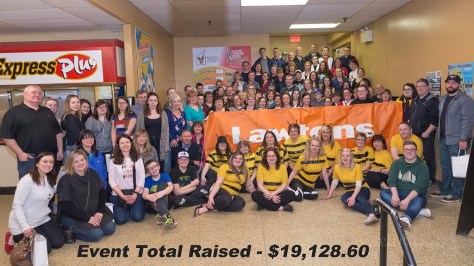
His contributions to the pharmacy community are expansive, including being a longtime member and former Board member for the Pharmacy Association of Newfoundland and Labrador. The outpouring of support for Dave’s legacy has been remarkable. Notably, Memorial University in St. John’s, has established an student award, the ‘David J. Collins Memorial Award In Pharmacy’ to honour him each and every year. In April, a bowling fundraiser was held to help establish that award, with teams from NS and Corner Brook (~700km away) in attendance to celebrate his life. I had the pleasure of meeting some of them during my recent trip in March. This picture speaks for itself, provided by Lawtons Drugs own Steadman Bowers:

DaveCollinsFundraiser

Bringing people together is what Dave always did. That’s not conjecture or an exaggeration, I really do mean always. No matter the circumstances, Dave was the single most consistently optimistic person I have ever met. So much so, that we would routinely poke fun at him (always in a good-natured way). We would predict his reaction to catastrophic events, just to see how he could possibly see any sliver of light in the darkness. He never let us down. Usually with a 70’s rock-n-roll lyric in tow, his philosophical candor brightened the room every time.

Six months later, I work hard every day to use those lessons to inspire others. We don’t want to panic when faced with adversity, but lean on each other, and value each other’s strengths. Without fail, we’ll always be stronger in the end.

“Imagine all the people living life in peace. You may say I’m a dreamer, but I’m not the only one. I hope someday you’ll join us, and the world will be as one.” – John Lennon

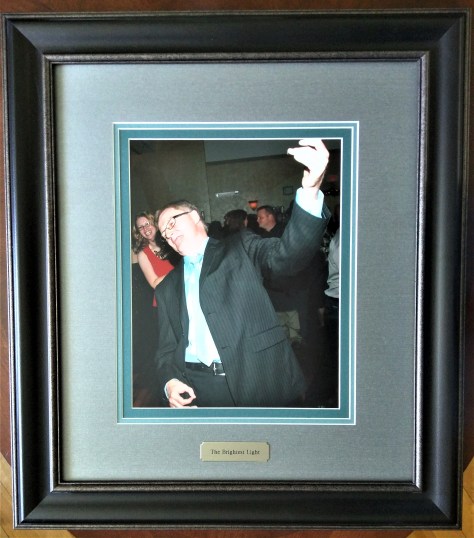
Dave – we know you’re still with us, wanting us to be better professionals, better teammates, and better people. Save us all a beer where you are; we look forward to sharing a pint when we see you again. We’ll need our sunglasses; you’ll be outshining the lights up above just as you did down below.

Six months later, the silver lining is that you’re changing us for the better…

BrightestLightPA


Disclaimer: The views and opinions expressed in this article are those of the author(s) and do not necessarily reflect the official policy or position of any agency, employer or affiliation.
The Evolution of Tech Regulation

For decades, whenever the pharmacy industry referred to ‘licensed staff’ they were obviously talking specifically about pharmacists and certified dispensers. These individuals were wholly responsible for the operation of a pharmacy, be it in a community or hospital setting, rural or urban areas. Audit results, public image, complaints, level of service requirements, these were all included under the umbrella. Even if the dispensary license holder wasn’t present, the licensed staff on duty have all of the professional responsibilities as an independent clinician for prescribing services, injections, education, and ensuring optimal use of medication therapy. Full names are displayed in public view and on name tags. Credentials are made available for scrutiny if requested.

So this decade has seen the emergence of a new profession, and for pharmacists, the new challenge of wrapping our minds around a different stripe of licensed staff. These team members have their own scope, their own mandates, and their own vision for the contributions they can make to complement and help evolve the pharmacist role.

For the longest time, dispensaries were primarily pharmacist-centric. Every situation, whether clinical, operational, logistical or workflow-related flowed through the pharmacist on duty. Naturally, our primary role was safe drug distribution. Reducing daily distractions and interruptions was the end goal. Strategies were developed to use technology to filter incoming phone calls, layout of pharmacies were planned to encourage support staff to handle external requests and better triage the pharmacist’s involvement.

Nowadays, it’s generally recognized that pharmacists hold tremendous value as a collaborative team-member in the realm of medication management. With so much information available to other health professions and to the lay public, we are the authority, the subject expert on everything medication-related. Clinical activities are taking place at hospital nursing stations and nursing homes. Travel clinics provide prescribing services and vaccination administration. Medication reviews allow the identification, and often resolution, of drug-related problems. Pharmacists are needing to be more accessible and patient-facing than ever before. Even with the advent of these specialized clinical roles, the actual distribution of medications still needs to occur safely, and with the same degree of excellence that we have always known.

My light-bulb moment came in the fall of 2015. We had introduced a regulated technician to our dedicated long-term care site a few months prior, and admittedly, my fellow pharmacists and I were apprehensive. We had an idea of how workflow would be impacted, but we still felt ownership over every step in the process. We were still the responsible dispensary managers. We still answered for any breakdown in the distribution process. We were still left to manage discrepancies and handle incidents that occurred. Those things are still true today, but it took awhile for trust to build and allow someone to share some of the burden.

Our regulated tech was committed to quality, willing to challenge our boundaries and remain patient as we worked through our own thoughts and feelings about these changes. She often needed to quell her frustration and exasperation when two steps forward led to one step back. Everything we knew needed to be broken down: where did she fit in the current process? What steps are we comfortable delegating? Where are we physically positioned in the pharmacy? Do we need to adjust workstations? What order do functions occur to ensure completeness and safety as before?

Sometimes it took a day, sometimes weeks, sometimes even months. Eventually, she was taking away significant technical functions off of our plates and freeing us up to make extra phone calls, better investigate interactions, follow-up on recommendations, etc.

My Eureka moment:  One day I was working through my onscreen clinical check. It was a prescription for a new antibiotic for a UTI, with some renal clearance concerns to assess. I called the attending nurse to discuss the therapy. Based on the patient’s age, current weight and recent serum creatinine, the dose was appropriate and I electronically signed off on the prescription. I then realized my work on that prescription was done. Really? I thought to myself. What about collecting the label? Technical. What about ensuring the DIN matches the bottle from the shelf? Technical. Hmmmm. Well surely I need to see the visual contents of the vial before it goes out the door to the nursing home…

No I didn’t. My clinical duties were complete. Those technical duties? I had entrusted them to my regulated technician. I could move on and focus on another prescription that needed clinical evaluation. Accepting that I was no longer the last step in the distribution process was quite mind-blowing, and very weird at first.

Since that day, my whole perspective has changed. We have licensed staff in our pharmacy community who want to take responsibility for all technical aspects of distribution. They are capable. They are ready to prove themselves. In my location, we now forget what it was like without a regulated tech and really notice when there is illness or vacation.

They will make us better. They just need the chance to evolve with us.


Disclaimer: The views and opinions expressed in this article are those of the author(s) and do not necessarily reflect the official policy or position of any agency, employer or affiliation.
Keeping It Under Our Hats

We pharmacists take pride in the many hats we wear on a daily basis. As with any collaborative health professional, we often are involved in patient cases that require much more than providing information about drug therapy.


A·poth·e·car·y (əˈpäTHəˌkerē/) – a person who prepared and sold medicines and drugs.

At one time, this was our most recognizable hat. The physician diagnosed, put a plan together, and off you went to the chemist (British term for pharmacist) to receive an elixir or compounded salve to cure your ills. Providing the right medications and the proper doses is still a large part of a pharmacist’s role, but as we evolve, so does our headgear.

Teach·er (‘tēCHər/) – a person who helps others to acquire knowledge, competences or values.
As drug therapy becomes more complex, and monitoring vital to positive outcomes, pharmacists need to constantly be prepared to educate on all types of regimens. These range from over-the-counter drugs to specialized biologic treatments. We must include what to watch for in terms of side effects as well as any positive measures of surrogate endpoints (e.g., A1C, total cholesterol).
Assessor (əˈsesər/) – a person who evaluates the quality of a person or thing.
We put on this hat in the counseling room when we need to assess understanding. ‘Please demonstrate how you are using your inhaler’. ‘Are you familiar with the term INR, and why frequent blood testing is necessary?”Explain when and how to use an Epipen or Naloxone Kit.’ This will usually lead into further teaching moments over the course of many interactions.
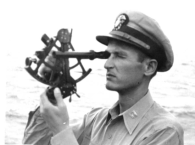
Nav·i·ga·tor (ˈnavəˌɡādər/) – a person who directs the route or course of a ship, aircraft, or other form of transportation, especially by using instruments and maps.
Navigator
Image courtesy of the Computer Whisperer: http://www.thecomputerwhisperer.us
This would look pretty sharp with a lab-coat, don’t you think? You can thank my involvement with mental health initiatives for this one. The founders of the Bloom Program here in Nova Scotia realized that our mental health system featured a wealth of resources and community-based initiatives that were not being used to capacity or not expanding due to lack of awareness. One of the original tools developed was called, appropriately enough, The Navigator and aimed to collect all known programs, community groups, hotlines and resources for each jurisdiction around the province. The goal was to empower community pharmacists to be more comfortable with being the first point of contact during crises and provide direction to patients and their families. This extends not just to specialist care, but financial aid, legal aid, counseling, and long-term care resources as well.
Coun·se·lor (ˈkouns(ə)lər/) – a person trained to give guidance on personal, social, or psychological problems.
I hesitated to list this one because pharmacists can not replace the skills and roles of trained counseling professionals. We do find ourselves in situations that require counseling ability in a more general sense. A supportive ear in the right place at the right time can sometimes make the difference in building trust and opening the door to a proper referral.
Ad·vo·cate (ˈadvəkət/) – a person who publicly supports or recommends a particular cause or policy.
Whether it’s recommending an equally effective generic combo instead of a newfangled drug therapy or suggesting a suspension for someone unable to swallow large capsules, we aim to put the patients’ health first. Pharmacists have called shelters to get those in need a place to stay, and are regularly contacting drug plans to wade through complex coverage policies. If we notice a patient’s condition rapidly decline, we may alert family members in their circle of care or help connect them with specialized programs.
Men·tor (ˈmenˌtôr,ˈmenˌtər/) – an experienced and trusted adviser.
The pharmacy community is strong. As much as we coach patients to take responsibility for their health, we also take time to precept students, giving them real life experience and challenging their knowledge. This is invaluable to their development as leaders within the profession. These relationships often last throughout careers and beyond.
And lastly, the most important hat of all:
You the person behind the degree, under the lab coat.
As health care professionals, we possess a common set of trained skills, but our effectiveness is predicated on the passion that we bring to our work, our hobbies, our relationships, and our experiences. I wore a ball cap for many years of competitive baseball, and a felt cowboy hat for variety shows. Others don biking helmets for tours through Paris or Spain. Perhaps a hard-hat is worn for charitable works in impoverished countries, or simply a headband for another satisfying hour at the gym.
It’s true that as a service provider, some consumers just want to see a pharmacist, but countless others want you. Your thoughts, your opinions, your advice matter greatly to all of those you aim to help. Develop your style, get comfortable with infusing your soul into whatever you do. Everyone will benefit.
So lift up that brim. We can’t keep personalities under our hats.

Disclaimer: The views and opinions expressed in this article are those of the author(s) and do not necessarily reflect the official policy or position of any agency, employer or affiliation.
Blow Me Down

To all of my readers native to the lovely province of Newfoundland, the title is exactly the reference you have in your head at the moment.

To the uninitiated, Blow Me Down is the name of a provincial park on the west coast of Newfoundland on a peninsula between Lark and York Harbours. Therefore, it’s also found in the names of various trails, land forms, and businesses. My favourite, and really the seed of this post, was stumbling across this retirement centre about 50 km from Corner Brook.

The title is also referring to my reaction on this, the 4th anniversary of PharmAspire. 

So why was I in Newfoundland? Pharmacy of course. Due to the tragedy that befell a dear colleague just before Christmas, the region he supported has been emotionally adrift. Like all of us, when answers are lacking we try out our brave faces in an attempt to carry on as normal. The onset of winter was the darkest I can remember, and three months later, the pall carries us into the spring. It’s familiar now, so reminiscing about fond memories tends to bring about smiles a bit more often, and those touched by Dave’s spirit share a strong, common bond. I’m here to finish some audit work he started, and that thought alone has made the last week rather surreal.

Being the city slicker I am, anything outdoorsy is met with reluctance. If I’m goaded enough, I will absolutely enjoy building snowmen, sliding, skating, 4-wheeling, swimming, canoeing, but never from my own ambition; someone who knows the ropes needs to bring over the plate of excitement for me to sample. The west coast of NF is still quite wintery at the end of March, and I have never seen so many snowmobiles taking residence in the hotel parking lot. Deer Lake is my hub, my command centre. Just off the Transcanada and about 5 minutes to an airport that would fit comfortably in the new Ikea being built in Dartmouth, I’ll do my traveling 90 minutes northeast and about 30+ minutes down the coast.

A few observations that struck me driving through this beautiful part of the country: 1) there isn’t much to look at between townships (or exits for that matter), 2) sidewalks are rare, as are pavement markings, so dodging pedestrians on snow-covered roads can be a bit unnerving, and 3) through the light flurries just before Corner Brook, I’ve found myself looking directly at the side of a mountain that has angled streaks reminiscent of a marbled steak. It was pretty neat to be driving through Humber valley with walls of rock and ice on either side.

After a week of meeting new people, coaching, discussing procedure, assessing dispensary layouts and staffing mix, I am reminded of the quality of pharmacy services you find anywhere. The styles and personalities may be a bit different, but they fit well in the communities they serve. I learned something new every day that I will carry with me to others. Dave brought these pharmacists, these technicians, these assistants together. They are leaning on each other for support and healing together despite their differences and relative distance.

This blog was created to help share experiences and positivity with others. Ever the optimist, Dave’s outlook on life was to accept every day as a gift; enjoy the people, never panic, give your best, and end the day celebrating any improvement, no matter how small.

I don’t know when or if I’ll be back, but for a week I felt welcome and accepted. Those folks carry a piece of Dave with every memory and recalled conversation. Each time I met someone new, inevitably they would smile and tell a story worth a few chuckles. In some small way, it felt like I was saying hello to him once again. Pair that with an anniversary of my first dabble into the writing forum, and it’s overwhelming.

Like the strong winds that constantly whip over the Murray Mountains, it’s enough to knock me off my feet.

Blow me down…


Disclaimer: The views and opinions expressed in this article are those of the author(s) and do not necessarily reflect the official policy or position of any agency, employer or affiliation.

A Few Numbers

My LinkedIn feed chimed in the other day to notify that the 4th anniversary of PharmAspire is fast approaching. Four years. A full election cycle. A round of Olympic Games has come and gone. Pharmacy? I would say we’ve had plenty of evolution during that time, much of it chronicled on these pages. Thank you so much for reading and joining in the movement to practice on our terms…in our terms.

The topic today centres around my fascination with numbers. As long as I can remember, the logic and the consistency that numbers provide has ruled my behavior and my approach to problems. They are universal in meaning, and exist in all languages. In a digital age, information may be stored as never before. Numbers are broadcasted and converted to sound-waves, they are used to form images that we share with one another. They help explain this vast three-dimensional world we live in, and through theoretical physics, suggest dimensions beyond our own.

Nowadays, the numbers that pharmacists care most about are about the evidence. How treat-able is a disease? What monitoring parameters do we need for drug therapy? To which demographic slice does this guideline pertain?

A quick look at the Statscan homepage shows some interesting nuggets. Did you know that in 2014, the percentage of the population that were current smokers (18.1%), was virtually identical with the WHO classification for heavy drinkers (17.9%) and both were slightly higher than those previously diagnosed with high blood pressure (17.7%)?

The page also points out that over half (54%) of adults and almost 1 in 4 (23.7%) of youth were classified as overweight or obese. I find that amazing. How are we doing in the realm of mental health?

Perceived mental health by age group and sex
(Very good or excellent (%))
2011 2012 2013 2014
%
Very good or excellent
Both sexes 72.6 71.7 71.1 71.1
Males 73.5 72.7 71.9 72.1
Females 71.7 70.7 70.3 70.1

These numbers represent about 20 million people, meaning that 9-10 million do not report having very good or excellent mental health. The alarming thing is that these percentages are declining at 0.5% a year (~150000 people), with the largest fall coming from women aged 20-34:

20 to 34 years 75.3 73.8 74.0 72.3
Males 74.7 75.1 74.6 74.9
Females 76.0 72.4 73.5 69.7

Here are a few more  observations from Laura:

57- The average number of times Devin must remind Laura to please look at and edit his post so he can put it up (for the love of God)!

2- the number of cups of coffee needed by the editor to survive the day.

2- the number of cups of coffee needed by the editor so all other pharmacy staff and customers survive the day.

200mg- the number of morphine equivalents allowed to be prescribed in chronic non-cancer pain in NS right now.

50mg- the number of morphine equivalents that will be allowed to be prescribed in chronic non-cancer pain in NS in the next year or so.  Will funding for addiction services increase to account for this drastic decrease? We sure hope so.

It’s an important question given the stagnating economy and the illicit drug crises occurring in major Canadian centres like Vancouver and Toronto. It’s one thing to restrict access to contraband. It’s quite another to restrict prescribing of legitimate therapy without offering alternative counseling support or treatment options.

Before we paint by numbers, and generalize too much, we need to remember that each case is different. Poor mental health is pervasive and affects so many of us living with or without any co-morbidities. As front-line healthcare providers, pharmacists may be in position to intervene earlier with a frank discussion or a recommendation to a physician.

At the outset, I mentioned that numbers help explain the world around us. No one wants to feel like ‘just a number’, lost in the system with little cause for hope. Each one of those ‘numbers’ has a story to tell. Are we ready to listen?


Disclaimer: The views and opinions expressed in this article are those of the author(s) and do not necessarily reflect the official policy or position of any agency, employer or affiliation.

Positive Charge

Over the past four years or so, I’ve attempted to make physical fitness more of a priority in my life. What began as training for an upcoming Multiple Sclerosis (MS) Bike Tour has perpetuated to present day. This is something about which I am a bit proud. I’ve also come to embrace the infernal elliptical machine as a necessary evil. A muse most cruel in punishing your body so that you may feel ‘good’. The  elliptical burns energy but as the body recharges, it gives you more than it uses, allowing you to push through the pain it causes the next day.

On one particular day, I found myself watching Joel Osteen on stage in Texas. Mr. Osteen is an evangelical preacher known for extremely large congregations, writing inspirational self-help books, and constantly needing lots of money. In case you’re curious, watching this wasn’t really my choice; my Sunday morning cardio just happened to coincide with a program lineup of fishing shows and infomercials peddling foot-massagers. Pickings were rather slim.

Stripping out the religious portions of this particular sermon, one message that struck me as stunningly obvious (though often forgotten in daily life), was that of positive thinking. You really need to believe that something will be successful before it has the possibility of being realized. Consequently, proving that something can not be done doesn’t take much effort or forethought. Be it a project, or personal goal, how many people do you know who predict colossal failure but accidentally succeed? Unless you’re describing my attempts to bowl or play pool, I would say the answer is very few people.

We’re all a bit apprehensive about trying something new. The pharmacy world has experienced plenty of new in the past half-dozen years. I, for one, have been guilty of wanting to feel ‘safe’. Let someone else take the lead on minor ailments for example; whatever mistakes they make, or third party audit claw-backs they receive, staying on the sidelines until the bugs get worked out is certainly easier. The level of negative energy has been on the rise because the industry has taken a series of hits without enough visible wins. There has been progress, and we do try to highlight the works of specific pharmacists or sites in hopes they inspire others to follow their lead.

The phrase ‘keep your eye on the ball’ isn’t just meant to be a sports reference. A firm endpoint or goal is extremely important, for motivation and for measurement. If the endpoint is carefully developed and visualized ahead of time, the unforeseen challenges that could potentially create hurdles won’t slow you down. Not all negative energy is bad; it may uncover those hurdles earlier and allow for better planning, but just like a battery needs two terminals to create fuel, there has to be a balance.

So, I’m thinking we need to lean on each other to create a positive charge to bring that balance back. Our thoughts need to stay positive during these precarious times. We need to act,  and to charge toward those goals. Collaborative practices may be better developed in other provinces, but are beginning to take root in Atlantic Canada. With that comes a wealth of possibilities for prescribing, monitoring plans, authorizing lab tests, and outcome research.

Direct the current. Stay grounded. Feel the electricity.


Disclaimer: The views and opinions expressed in this article are those of the author(s) and do not necessarily reflect the official policy or position of any agency, employer or affiliation.

Let’s Get Ethical

Seeing how a certain someone was inaugurated south of the border a few days ago, I see it fit to provide some commentary on a topic that is on all of our minds lately. Ethics. Mr. president’s first task was to find someone to play at his inauguration ceremony and he had a hell of a time lining up anyone recognizable.

Much has been said about our neighbour’s new president, and usually any conversation devolves into a debate about ethics or morality. Whether it’s mistreatment of minority groups, inappropriate comments about other countries, or wanton duplicity with the press and public, we’re left to wonder what to make of it all. Articles pop up every day suggesting that it’s only a matter of time before he’ll be shown the door. Here’s one now.  The Twitter-verse allows everyone to share their opinions, but it also difficult to have informed debate about anything, let alone politics, when back and forth occurs on a screen in the form of soundbite material.

The terms ethical and moral are often used interchangeably, and both refer to the age-old debate between the ideas of ‘good’ versus ‘evil’, ‘right’ versus ‘wrong’. Morals are more specific to an individual’s values, whereas ethics are more often than not based upon accepted societal norms and provided by a group to shape behavior. It is therefore possible for someone to have strong morals and do unethical things. On the other hand, there are folks that appear immoral that still follow the rules, especially if it results in personal gain.

Competition seems to bring out the worst in people. Sadly, this isn’t just during election season. In business (see above), in school (plagiarism), in sport (steroids), there are always those willing to bend the rules to gain an advantage over others. Even pharmacy is not immune. Questionable incentive programs surface from time to time, as do deceitful billing practices that are uncovered during audits. As pharmacists, sometimes for all the positives we bring to the table gets clouded by some of the unseemly negatives of a very few.

As a profession, we do so many things right…or morally…or ethically. While the practice culture is changing, pharmacy services have always been about building trust with our patients. Our credibility soars when patients see the benefit of what we do, and that extends to other practitioners in all sectors of healthcare.We are bound by the same institution with respect to protecting privacy, and doing no harm. These are of utmost importance, and if we aim to leave every interaction with a positive takeaway, no matter how small, that relationship will build. Asking someone how their daughter is coping with a recent diagnosis of diabetes, or being curious about a bypass recipient who has started a rehab program.The challenge is not to get bogged down by negative rhetoric we sometimes hear about the pharmacy world. Every sector has challenges to overcome.

We are said to be the most accessible healthcare provider. Our investment in the future is an investment of time spent bettering the health of the people that need it most. It’s a moral approach, it’s an ethical approach. The only drawback is that it can’t be done in a series of 140-character missives.


Disclaimer: The views and opinions expressed in this article are those of the author(s) and do not necessarily reflect the official policy or position of any agency, employer or affiliation.

WWDD?

What would Dave Do?

I was working on a couple of other posts just now and needed to stop. This grief is nothing I’ve ever felt before and coming to terms with it has been difficult.

On Monday, Dec 19, I received a call to inform me that Dave Collins, esteemed member of the Pharmacy Association of NL and my work teammate for the better part of nine years, lost his life under tragic circumstances the night before.

As this is being written, it’s been 26 hours since the phone call ended. Nearly every thought has been about his family, his interests, his ever-positive attitude, and his unbending support for all of us.

Those who knew him best are all trapped somewhere in the 5-stages of grief. Me? The Denial flipped to anger early yesterday afternoon as news outlets reported additional details. Today, I believe it’s falling in the Bargaining / Depression bucket. Thankfully, our team is quite close, so having folks to talk to and remember positive memories has really helped. The last stage is acceptance, which seems will never happen. It will of course, but not for a long while. Life goes on, but time moves incredibly slow when emptiness consumes you.

If there is any silver lining to find, I know his memory will make me better. Dave had a way of looking at any situation, no matter how bleak or stressful, and taking the worries away. Quoting lines from Dylan and Neil Young, he didn’t frazzle or get even mildly annoyed. He treated everyone with the utmost respect and expected the same. He came from a large family and wanted every interaction to be meaningful and personal. He gave his all into every endeavour. As an example, he had recently started beekeeping, which is just so Dave:

These pics will always make me smile.

So in dealing with his loss, I’m now thinking WWDD? He wouldn’t want us to wallow in self-pity. He certainly wouldn’t want us stop doing what we enjoy, or be fearful of what could be around the corner. He would want us to celebrate his life, thrive in our work and home-lives, and carry on.

Rest In Peace my friend. We will meet again someday on the other side, share a cold brew and listen to some Lennon. Save me a seat, I’ll be there when it’s my turn.

http://www.cauls.ca/mobile/obituaries-details.cfm?o_id=4043859&fh_id=14293&forcelayout=mobile#obituaries


Disclaimer: The views and opinions expressed in this article are those of the author(s) and do not necessarily reflect the official policy or position of any agency, employer or affiliation.

Pass the Egg Nog

The holiday season is here. The retail crush gets heavier and the bustle gets livelier. Dreams of moderation dash away magically like a post-Christmas Elf on the Shelf.

Working in a busy pharmacy at this time of year is a challenge. Physicians are trying to wrap up and take time off, leaving gaps in prescription continuity. After-hour clinics are busier, leading to longer waits and crankier dispositions. Many work extra to allow their colleagues a few days off with family and friends either before or after the holiday. Childcare is somewhat difficult for shift-workers when school is in recess.

So why again is it ‘the most wonderful time of the year?’

Well for me, the older I get, the more I am distracted by life. Work, hobbies, social commitments, family time, and financial obligations all become a drain on your energy (basically #adulting in general if you want to be trendy). There seems to be fewer and fewer instances during the year where you can just be. Then comes Christmas and Boxing Day. Almost everything is closed, even for just one of those days. Everyone wants to come together to share good conversation and good company. Folks are planning travel days and turkey dinners, church congregations triple in size as families honour the spirit of the season, and we grow nostalgic for the many traditions of our upbringing.

This year I have been remarkably slow in warming to the cheer. I still look forward to the Christmas Eve puzzle we put together as a group, sometimes accompanied by a tumbler of egg nog and a bowl full of cheesies and party mix. Nutcrackers make an appearance, with the resulting explosion of walnut shells scattered on the living room floor. The tree always seems to have more under it than the year before, and with another nephew arriving this past week, our clan keeps growing. Dad will have the woodstove roaring. The Ronnie Milsap Christmas album will play softly in the background, as it has since 1986 (oh, how my brother loathes it 🙂

As 2016 draws to a close, I have plenty for which to be thankful: a profession that has given me everything I have, a loving family both near and far, the best set of friends anyone could hope to have. I’m very much looking forward to just being; sitting and daydreaming with the in-laws on Christmas morning once the kids wake us up at 5:30am, and maybe catching the World Juniors starting on the 26th. We’ll attempt (key word) to divorce the kids from their iPods for a few hours in a row.

Once again, I’d be remiss to not extend a very Merry Christmas and happy holidays to Laura, who continues to share my blogging journey month in and month out. She motivates me more than she realizes, to share my thoughts and extend my horizons. Early in 2017, we hope to bring you posts on third-party insurance, some thoughts on opiate addiction, and perhaps she’ll let me do a cheap, overdone New Year’s resolution list 🙂 – (note from editor, she won’t)

From the two of us here at PharmAspire, we wish you the very best for the holiday season. Be safe, be merry, and aspire to enjoy this time of year to the fullest; take this time to hold your loved ones a little bit longer and a little bit tighter.


Disclaimer: The views and opinions expressed in this article are those of the author(s) and do not necessarily reflect the official policy or position of any agency, employer or affiliation.

Increased Vaccination Rates are no Flu-ke

A chill is once again in the air. Oak leaves are covering my yard and the daylight savings time in this part of the world has wreaked havoc on our daily routines. Morning feels closer to normal, but suppertime feels like bedtime. I’m getting ready for an off-site flu clinic this afternoon that was requested by a nursing home facility for their staff and their residents’ families. After our last appointment, we get to spend an hour driving in the dark all the way home.

Remember back to the first flu season that pharmacists were trained to vaccinate? We really didn’t know what to expect in terms of public acceptance or overlap with services provided by other health providers. I wrote about it back in 2013 and the temperature at that time was rather lukewarm. Pharmacists were tentative, cautious and, in many cases, reluctant to jump in.

Oh how times have changed.

Each successive year has pushed the practice to new heights. Year 2, the public health office had a better idea of distribution and vaccine supply was more accessible. In the first year, a number of pharmacists hadn’t yet obtained their injection permits. That limitation was abated in year two and pharmacy capacity for accommodating walk-in appointments skyrocketed.

Year 3, all staff were ready from the October announcement. Not only had workflow been adapted to accept appointments and walk-in requests, pharmacists were now out in their communities making it all the more convenient for employers and community groups alike to receive flu shots. Some were in community rooms and schools, meeting rooms and church halls. Loved ones visiting a parent at a nursing home may have been greeted by a pharmacist from a local dispensary.

This year, flu shots seem like they’ve always been part of pharmacy services. Not only are all of the experiences in previous years being repeated, but now the pharmacists are being sought out to provide these clinics. Word of mouth has led to invitations from previously unknown locations. Employer groups have started to recognize the cost-savings gained by having their staff vaccinated at work to minimize illness. Many of them had never received a shot and would not have made a special trip to the physician’s office. Rural communities with minimal medical services have enjoyed improved vaccination rates due to pharmacist injections. Entire families are coming back to see the same clinician, and are able to shop and run other errands at the same time. ‘Done for another year’ is a common quote as another satisfied customer pulls on their jacket sleeve.

The best part is the team pride. Pharmacists impress themselves with the number of shots they can comfortably do by themselves…on a Monday night…on seniors’ day…with an extra doctor in the after-hours clinic. Managers wait to see the latest aggregate counts year-to-date to see how they stack up to previous years. They speak wistfully about the reluctant child that left with a smile, or the administrator that sends chocolates as a thank you for such a smooth workplace clinic. Awareness is at a high, with more people getting their shots earlier in the season, with minimal disruption to their lives.

It hasn’t been a fluke, but rather a testament to our profession’s resilience; we have risen to meet a new challenge, and after 3+ years, the results are nothing short of impressive.


Disclaimer: The views and opinions expressed in this article are those of the author(s) and do not necessarily reflect the official policy or position of any agency, employer or affiliation.