Welcome to Canada

By now, everyone has heard of the Syrian refugee crisis. The Syrian people, having witnessed unspeakable tragedy and horror, are fleeing their home country in the hopes of finding a new, safer, more prosperous life elsewhere.

The Government of Canada has committed to resettling 25,000 Syrians here in Canada. It may have been naive of me but I didn’t think many of them would be coming to our humble little province. I assumed they would be heading west, to Ontario, or Quebec or even further west. How very wrong I was.

I should have known that Nova Scotians would step up to the need. Mosques, church groups and government agencies have sponsored families. They are supporting them as they enter their new lives and helping them with things we all take for granted. As of February 5 of this year, over 500 refugees have arrived in our wonderful little province and I have had the pleasure of meeting a few of them in my capacity as their new pharmacist.

My first meeting came when a gentleman and his interpreter arrived at our store asking for help with itchy skin. He didn’t have his paper that would allow him to go to the doctor, and as myself, my manager and my student all worked to find out how to get him his paper and if he could see a doctor, his interpreter kept telling us that he was saying over and over “Canada is the best country in the world.” At the end of our interaction, we all welcomed him to Nova Scotia and wished him well. We felt we did very little for him – a Google search, a phone call. But to both men, it seemed this little act of kindness was huge and brightened their day. It certainly brightened ours.

The next time I met a refugee was when a gentleman and his son arrived at the pharmacy with the proper papers in tow but not a single syllable of English. Through mime and drawings, we were able to convey to him that his son was to take his amoxicillin three times daily until they were finished. Once they finally understood, they smiled and said thank you. Apparently, in a super Canadian fashion, thank you was the one phrase they had learned.

After both of these scenarios, I was able to go home to my warm house, snuggle my fluffy cat and make a nice meal for myself. I was able to call my friends and family and ask how their days were, read a good book have a cup of tea and go to bed. As I went through the motions of my day, I was struck by how brave these people truly are. I tried to imagine myself in a country in which I didn’t understand the language. I imagined trying to navigate a doctor’s visit, a trip to the grocery store, a walk down the street. I couldn’t imagine what it would be like to have to do all of those things that I take for granted in a totally new country after having fled a war zone. And these folks are doing it with a smile on their faces! They’re so glad to be out of the war zone and starting fresh. They will have lots of healing to do, and lots of learning to do. And so will we. We have to learn how to help these people. How do we communicate effectively? How can we make them feel welcome? How can we tell them where the nearest grocery store is? These are all things that we will learn as they learn to adjust to this new, snowy place.

Despite the fact that their English was broken at best, at the end of both of my interactions with the above mentioned folks, I left them with a sentence they understood right away. As soon as I said it, either alone or through an interpreter, their faces split into some of the brightest smiles I’ve ever seen- Welcome to Canada!

For more information on refugees and what we as health professionals can do, visit www.isans.ca or your pharmacy college website!


Disclaimer: The views and opinions expressed in this article are those of the author(s) and do not necessarily reflect the official policy or position of any agency, employer or affiliation.
Team Dynamics – Greater Than The Sum of its Parts

It’s no great secret that if given the option, individuals would prefer to be in control of their current situation, their short-term goals and long-term dreams. You’ve no doubt heard that sitting and waiting for opportunity to come along doesn’t usually end up as expected. It may knock once and awhile, and being prepared to answer that door takes commitment and a tenacious attitude. So what if the opportunity presented means being an integral part of a strong team?

A very close friend of mine has been in various leadership roles for well over a decade. He recently sent a message to his teams opining that some of his strongest teams did not always comprise of his strongest individual performers. I hesitate to use the word chemistry due to buzzword cliches, but we’re in the world of pharmacy so the subject shouldn’t be completely foreign. A mixture of complementing skills are necessary. Some people are excellent at rote tasks; they are consistent with details and process. Others have excellent customer-service skills and some may be solid project managers. If someone was behind on the prescription assembly counter due to an extended customer interaction, then another would recognize and backfill to prevent a bottleneck (and therefore a future, more negative customer interaction). A pharmacist manager working on staff reviews jumps out of the office to perform a flu shot because her staff is out of the dispensary for an OTC counsel. It takes a certain level of awareness and good chemistry to adapt depending on the circumstances.

The strongest teams seem to grow into that adaptive mentality and it never happens overnight. Routines are developed (e.g. mixing methadone batches on Wednesday afternoons), and trends are identified (e.g. many people pick up prescription orders on Thursdays over the supper hour). Folks begin to understand non-verbal cues or body language from their colleagues that betray a rising sense of anxiety, such as a deep-breath after a series of interruptions, or a rash of careless mistakes to suggest rushing.

I should point out that complementing skills doesn’t just mean balancing relative weaknesses, it’s also about enhancing inherent strengths within the team. That’s why the saying goes, “the result is greater than the sum of its parts.” So why does a team of strong performers not always share a strong level of success? This phenomenon happens in sports all the time; a dream team is bought or drafted and grossly underwhelms, looking disconnected and listless in the process.

There are a few different theories as to why this occurs. One is a measure of ego; a strong performer is used to having a degree of autonomy in their job, and has a specific way to complete tasks. The trust that another may be able to meet the same standard can take time to develop. In a competitive environment, the strong performer has an incentive to use these tasks to display their own skills and may feel a threat to their autonomy if another meets or exceeds the same standards.

In a similar vein, strong performers often have take charge attitudes. For team production, some of those folks need to be comfortable supervising, and others will need to follow. If there is no deference from anyone, it begins to feel like ‘too many cooks in the kitchen’. Everyone has their own plan but it may conflict with another. The whole point of being proactive is to plan ahead and avoid potential conflict, that’s why big-picture thinking is so important at the outset of any project.

As a manager myself, I certainly derive my work satisfaction from watching others being proactive and working together. They identify problems before they present, and take steps to always be ahead of any change on the wind. Those qualities can serve as fuel because there always has to be a new challenge, or a variety of tasks to master. I need to stay proactive to keep the team growing and motivated. The leaders I respect and look to for guidance all seem to do the same. We make each other better, and we find ways to reach heights we could never have imagined on our own.

Is your team ready to answer the door?


Disclaimer: The views and opinions expressed in this article are those of the author(s) and do not necessarily reflect the official policy or position of any agency, employer or affiliation.

Giving Your 97%

What do leaders typically ask for? What do you often ask of yourself, no matter what you’re doing? In sports, the adage is giving 110%, to give more than you ever have, and push harder than you imagine you can. While in short spurts, this sounds good in theory, nobody can expect to operate at capacity all of the time.

I can tell from my flight of ideas that this can devolve into a rambling stream of consciousness. I’ll be breaking things up a bit to keep myself on track.

This concept grew out of something quite benign; I have inventory coming up at my pharmacy in the next six weeks or so (cue the collective eye-roll). No really! As a manager for a dozen years or so, I’ve always placed an importance on fiscal responsibility but also service. Running a pharmacy, up until about 4-5 years ago when expanded scope was introduced, usually meant that folks needed medications, and that we filled them as ordered. If we didn’t have the product, we could lose a customer, or if we didn’t have enough of one, it was an inconvenience especially if it happened repeatedly. We also knew that achieving 100% service level (having all products all the time) was impossible as well. There were strategies to combat this, but it really came down to this: the closer you got to 100%, the resources you needed kept on going up exponentially. Put another way, if having an inventory of $200K allowed you to fill 90% of orders, then it may take another $30K to get to 95, and another 30K to get to 97, then another 30K for 98, etc. There has to be a balance.

We used 97% as our benchmark. This meant that we aimed to fill orders for 97 out of every 100 requests, and accepted that 3 out of 100 may be disappointed in some way but of course, we took steps to mitigate these in some way, either by calling them ahead of time, or trying to obtain the product from another source.

So I began thinking about capacity in the workplace and decided that I should apply those same lessons to help myself and others. The ideal would be for an operation to run at 100%, but that leaves little wiggle room to grow. We should try to average out to be 97% to give that same balance between looking after our duties in the near and long term, but allow for training, transition, or having the ability to jump on new opportunities to increase volume or promotion without feeling helplessness and anxiety.

How about personal, mental, emotional, or professional capacity? Nobody can operate at their best all of the time. Life is rife with illness, distractions, drama, change, tragedy, you name it. To expect we can stay consistent, let alone at our maximum capacity through those highs and lows is pretty overwhelming. As professionals, we take pride in working through illness, and shutting out distractions because our patients need us to be there for them but sadly we are not immune. Some days, 80% may be all we have to give. We may need to take an extra few minutes for lunch, or feel we need to check an interaction a few more times because it doesn’t seem to be processing as usual. If we aim for that same 97%, we leave ourselves some leeway to learn, stay in control, and execute. It also allows us to have a bit extra to give when we need it. A couple things for clarification:

  1. One thing of which you can give 110% is your time but…You can absolutely work 44 hours in a week when the expectation is 40, but it can’t be equated to capacity or production. Fatigue is a big part of it, so those last 4 hours after a long week might be subpar to your standards and start to drag the average down from your personal 97. Get to know your skill-set and limits; they may project to a shorter, more intense week, or a longer, more relaxed week.
  2. My 97 may not be the same as your 97. Surprise! Everyone is different. The best performance from an inexperienced graduate may not offer the same production as a middling performance from a 20-year veteran in the field. Allowing that 3% space for personal growth and opportunity will continue to make the other 97 that much more dynamic.
  3. 97% does not apply equally to specific duties. By this I mean if pharmacists or technicians routinely made 3 mistakes out of 100, we wouldn’t be very effective and ridiculously unsafe. Instead it refers to our focus and energy to do the job properly as individuals and as teams.

For my New Year’s resolution, my personal goal is to trust my abilities and that the members of my team will step up when I need them. We will create the capacity we need to keep moving forward and continue to grow within those capabilities.

I don’t think it’s being unreasonable. I’m not asking for 110%…I’ll settle for a solid 97 🙂


Disclaimer: The views and opinions expressed in this article are those of the author(s) and do not necessarily reflect the official policy or position of any agency, employer or affiliation.

Palliation – A Needed Discussion

This post is a tough one for me. The topic of palliation is deeply felt by most healthcare professionals, either via direct care or through personal experience. Although preventative medicine is the over-arching goal, we still tend to see the majority of people during periods of acute illness or marked progression of chronic disease.

My family is no different than many. Our family history is riddled with various cancer scares with at least one related death, significant heart disease, and diabetes. I have been very fortunate to date that the vast majority of my relatives are in good health; they all live in their own homes and can look after their own affairs. However, the time is approaching when end-of-life measures will become a significant topic that none of us are truly ready to accept, myself included.

Most folks are familiar of the concept of a will. The stipulations for funeral arrangements and the dividing of assets is rife with legalese to ensure nothing is left in a grey area. Lesser known is the idea of advanced health care directives, or more commonly, a living will. With Canada’s aging population, widespread education of the public will be needed to facilitate conversations with healthcare teams. Borrowing from an infographic published by the Canadian Hospice Palliative Care Association (CHCPA), one statistic referenced on the Wikipedia link (above) stands out:

Polling indicates that 96% of Canadians think that having a conversation with a loved one about planning for the end of life is important. However, the same polls show that only about 13% have actually done so, or have created an advance care plan for themselves.

Incredible. I encourage readers to have a look at the complete document for some additional eye-popping nuggets: http://hpcintegration.ca/media/56049/TWF%20double%20survey%20infographic%201pg.pdf

The timing of this topic may seem a bit strange so close to the holidays, but I’ve decided to share from my personal experience and also my experience as a pharmacist. The personal side first:

My wife and I were slow to the game. A will was something we had talked about completing but never had the interest, or urgency to follow-through. Now that we have kids, a house, a car, and even a blog (ha!), it was time to make sure we were prepared in the event of catastrophe. We recently sat with a lawyer and were so far out of our depth, it felt like standing on the bottom of the ocean. The questions being asked about asset shares, and custodial rights of the kids were met with knee-jerk responses that we honestly hadn’t thought all the way through. That bit of guidance really made a difference to our peace of mind. I’m writing this on a Thursday, and our first discussion about advanced health care directives literally just happened. Peering over dueling laptops, we agree that if an objective healthcare team determines that the line in the sand has been crossed, we are comfortable with stopping all oral treatments, blood tests, imaging, etc and focusing solely on symptom management. Just verbalizing it now and working through the what ifs (e.g., whether there is dementia or mobility issues) will allow for a degree of clarity during a stressful, highly emotional time.

As a professional, my current role is managing a pharmacy dedicated to nursing home facilities. Nursing homes have palliative care order templates with the various options for pain, dyspnea, secretions, mucosal dryness, delirium, and anxiety. When these are enacted, the expectation is that the philosophy has moved from active treatment to comfort measures. That said, the waters can get muddy when there is disagreement. If the resident is lucid and can still swallow daily medications, will changing daily routines make things easier or more stressful? If diabetes is no longer treated and blood sugars are allowed to soar, will that ultimately add to discomfort? We’ve had occasions where some oral meds were stopped but not others, or specific medications are lifted from the palliative care orders and written separately in order to have select measures in place without continuing down a chosen road. No doubt it’s complicated, and pharmacies only tend to see the medication side of things. Other support functions are invaluable during the decision-making process; chaplains, grief counselors, and social workers can all play a role to ease transitions, particularly if items have been decided ahead of time.

So this appeal goes out to as many as it can reach: the young, old, sick, healthy, families large and small. Please share your end-of-life wishes with your loved ones to avoid any uncertainty as to your wishes for yourself and for them. How do _you_ want to be cared for when you’re no longer able to process options or articulate decisions? Even though they won’t be needed for a lifetime, choices made today will mold the end of one.

http://www.cdha.nshealth.ca/palliative-care


Disclaimer: The views and opinions expressed in this article are those of the author(s) and do not necessarily reflect the official policy or position of any agency, employer or affiliation.

Not Forgotten

Two years ago around this time, PharmAspire was still in its 6-month infancy. Writing was, and continues to be a salve that helps to both allay negativity and create positivity wherever it may be found. Two years ago around this time, a tragic event occurred that affected me in an unexpected way.

The loss of Karen Zed, a well-respected community pharmacist in the south-end of Halifax and mentor to countless pharmacy students and international pharmacy graduates, impacted a large section of the local pharmacy community. She had been working less than five days prior, and was telling her staff that she expected to be back helping her patients less than 36-hours before the news arrived. The shock was real, and the aftershock was felt for quite some time: long-standing pharmacy patients asked for her for many months after her passing, her university and college involvement was sorely missed, and colleagues from a four-decade career silently mourned a loss of a reliable friend.

I was fortunate to have been her manager for more than 5 years, and although I knew very little of her personally, I had the utmost respect for her career, and her approach to patient care. When I initially wrote the blog post in Sept 2013, it was a reflection on my experiences with her, and how I had lost contact in the previous year. What I didn’t expect was the response to the post. It was the first time I realized how close-knit our pharmacy community truly is. It is still the most-viewed piece I have ever written. She touched so many lives.

The alumni really wanted to honour her contributions and received support to fund an award in her name. The Karen Zed – Spirit of Community Pharmacy Award was summarized on page 2 of our pharmacy newsletter, the DUCPAD Dispatch. The goal was to recognize students who share Karen’s passion for community pharmacy and contribute to a learning environment while on structured clinical rotations. Within the past year, the fund has steadily grown but at the time of this writing, it has not quite reached a level to be a sustainable award. There is hope that we will reach the threshold and present this award at the end of this school year. If you would like to contribute, I encourage you to click the following link:

Http://alumniapps.dal.ca/giving/giving.php

By selecting ‘Health Professions’ in the drop-down menu below ‘Select a designation by faculty’, the College of Pharmacy will auto-populate in the field below. Among the worthy causes listed in the final drop-down menu, Karen’s award is on the bottom.

I believe in the creation of this award and have made my own donation. Community pharmacy is such an important part of the healthcare system and it’s nice to recognize students who are hungry to learn and enjoy helping patients with their medication needs. This award promotes the values we share and ensures the spirit of a dear colleague lives on.


Disclaimer: The views and opinions expressed in this article are those of the author(s) and do not necessarily reflect the official policy or position of any agency, employer or affiliation.

Lists

Whenever an overwhelming sensation appears at the back door like an unwelcome family of raccoons clawing through the garbage, I feel the need to decompress. Part of the ‘stepping back’ process is trying to figure out exactly from where the worry stems.

Enter = lists

Sure, lists are archaic. It’s a call back to simpler times before your phone tracked your shopping habits and email inboxes spewed endless reminders about what to do when. Everybody has their own twist to organization, and I thought of myself as the last person who would buy a Dayminder to keep track of things, but it really came down to two simple but related items:

  1. The more things I had to remember, the higher the anxiety and stress.
  2. The energy expended to mentally keep track of everything took away from the energy needed to actually perform the tasks. Procrastination created a vicious cycle of more items leading to less production, leading to more items.

I like to think my memory is half-decent. I can be extremely rough on myself if refill requests are missed, phone calls aren’t returned on time, or communication isn’t clear and the team repeats mistakes as a result. When I managed smaller operations, there seemed to be time to address most tasks immediately. Any backlog items stood out and screamed to be completed. As I worked my way up to larger and more complex operations, those backlogs became a black cloud that hung around. The day-to-day quick hits were manageable but every new info request or investigation pushed the big picture/long-term growth items further down the list. I was reacting to everything, a trap in which we often find ourselves. I also find that the longer you’re in a role, your value to others increases because you have more ready answers than before. If I didn’t have a strategy to cope with the distractions and increased workload, before long I would be riding the hamster wheel to Burnout City.

My response was to purchase an agenda book, arranged by tabbed months and two calendar days on each page. The first step was to unload my mind by writing down every item, be it emails to be sent, phone calls to be made, references to check, or just thoughts about things I didn’t quite understand. Once it was on the page, I no longer had to remember it. Even though my first list was lengthy, I could look at it differently; instead of bouncing from one thing to another as it popped into my head (worried that I’d forget again) and juggling multiple half-completed tasks, I could now pick a few things that fit in to the time available that morning and afternoon. Might I add that physically crossing something off is much more satisfying than dismissing an alert or closing a window.

So at the beginning of every shift, I take two minutes and carry forward any items from the previous day and re-write them in priority groups. Throughout the day, if something comes up that isn’t immediately manageable, or if I get another brainwave for a project or opportunity, it’s pen to paper right away to be prioritized the following day. It sure saves on post-it notes scattered around the computer monitor. Over time, I can balance the quick and dirty jobs with one or two of the long-range projects so there’s always a feel of progression. Currently my list is somewhat smaller than when I started, but it still fills half a page. There are some payroll submissions to follow-up, narcotic reconciliation for the month, and narcotic destruction to complete. I have some incidents to report, policy and procedures to review, and obtain a status report on some store renovations. There are tasks to delegate to others, like hiring and onboarding practices, which require time for training. Finally, there are the bigger projects: analysis and revamping of our drug and wound care inventory, engagement initiatives for the staff, and clinical intervention activities for our consultant pharmacists including flu clinics and prescribing within our expanded scope.

If there are visitors scheduled in the upcoming weeks, it’s in the book. Any meetings or conference call commitments are in the book. The key really is that I keep it close by and refer to it often, as you never can tell when a distraction will come along (like a surprise College audit last week) and throw a wrench in your plans.

So whether your list is of the work or home variety, I suggest a purging of the mind, be it on paper or on a fancy tablet/phone/dictation machine. It helps me focus on things that are important to me now and later and keeps the stress level somewhat in check. As opposed to drowning in work, clear the mind and start swimming for the shore.

There. Completed the article. Time to cross it off my list 😉


Disclaimer: The views and opinions expressed in this article are those of the author(s) and do not necessarily reflect the official policy or position of any agency, employer or affiliation.

The 5 P’s of Team-Building

Every once and awhile, I try to put into words some of the philosophies I’ve adapted and applied in my own workplace. They may seem to have brought me a degree of success, but by no means does this qualify me as an ‘expert’ in the area; if anything there are constant opportunities to refine and better adhere to the points below. A strong team raises the bar for performance. Whether you’re leading a strong team or are a member of one, I find these points help address larger issues, and many of the little problems take care of themselves. Before I start with the main five, there are two themes that happen to start with the letter P that tie each of these together: Please – we always ask for input, behavior changes, or solutions to our shared problems, and Praise – we reward any successes, no matter how small.

1) Presence By far the most important element in my opinion. In order to follow through on any initiative, a team needs to be cohesive, and complementing of each other. The only way to establish this foundation is a want to be around the team and learn about the individual members. What values are important to them? What constitutes a good vs a bad day? Who are they drawn to for guidance? What contributions make them the most proud? Spending time with the team is the best way to find out.

2) Planning – Having a vision and verbalizing it to the team can’t be understated. In prior posts, I have explored the need to share and engage others as their approaches may be different, but their visions for the team, for the business, for themselves may overlap quite a bit. Together, the strategic plan has input from everyone directly involved with its execution. Potential barriers are identified early on, and individuals are coached to have ownership over their separate pieces of the shared plan. Short-term goals are evaluated, and long-term or stretch targets are adjusted accordingly.

3) Proactivity This element requires a bit of finesse. Usually borne out of crisis, being proactive serves to not just correct a known problem, but to prevent it from happening in the first place. A definite challenge is proving that the time invested to make a change in behavior, saves the time spent reacting to an undesirable outcome. An example of this would be calling a family member before processing an expensive prescription. This step may offset (or in many cases, save) the time spent correcting the issue after upsetting the customer when they arriveThe key here is the culture change that comes with it. When there are many crises, and therefore, many undesirable outcomes, being proactive is an easier sell. Once the bulk of those are rectified, being proactive becomes the team thought-process and raises the standard of performance. The crises are no longer obvious and staff are much more in control of their work volume, meaning they’re better prepared for the next inevitable wave of change.

4) Practicality Especially in the beginning, before real bonds are formed between team members, it’s essential to have some ‘easy wins’. These are very realistic, functional process changes that when realized, benefit everyone equally. One pharmacy example was to implement communication stamps and initialing hard copies. The stamps sent consistent messages to assembly staff and the initials identified the person sending the message in case clarification was needed.

5) Patience This is the toughest element to master. I’ve been blessed to be a part of a number of excellent teams. Some I have had the privilege to lead, others I was made to feel like an important cog in a high-powered machine. The grander the scope or the larger the team, the more energy needs to be invested to keep the train moving. Coaching requirements are unique to the individuals on the team. Some may grab concepts faster than others. Inconsistency with words and actions is expected. Mistakes will be made. Those frustrations are the necessarily evil to grow people. Once they see the value of being around, planning ahead, being proactive and thinking practically, they will make the performance of everyone around them a little bit better.


To finish off, team-building is hard. Although that’s admittedly a crude statement to make, there’s no point in mincing words. Sometimes, people associate ‘team-building’ with ice-breakers, or performing tasks with blindfolds and obstacle courses. These exercises may highlight the need to work together and be comfortable with one another, but unless those lessons are translated to the vision and the tasks at hand, they run the risk of being footnotes left behind in the annals of history. Please indulge me as I add a 5a to my list:

per·se·ver·ance
ˌpərsəˈvirəns/
noun
  1. steadfastness in doing something despite difficulty or delay in achieving success.

So is it worth it? Teams are important. People are more important. They’ve made me a better professional, a better person. I hope to help do the same for them.


Disclaimer: The views and opinions expressed in this article are those of the author(s) and do not necessarily reflect the official policy or position of any agency, employer or affiliation.

Dominican Dreams

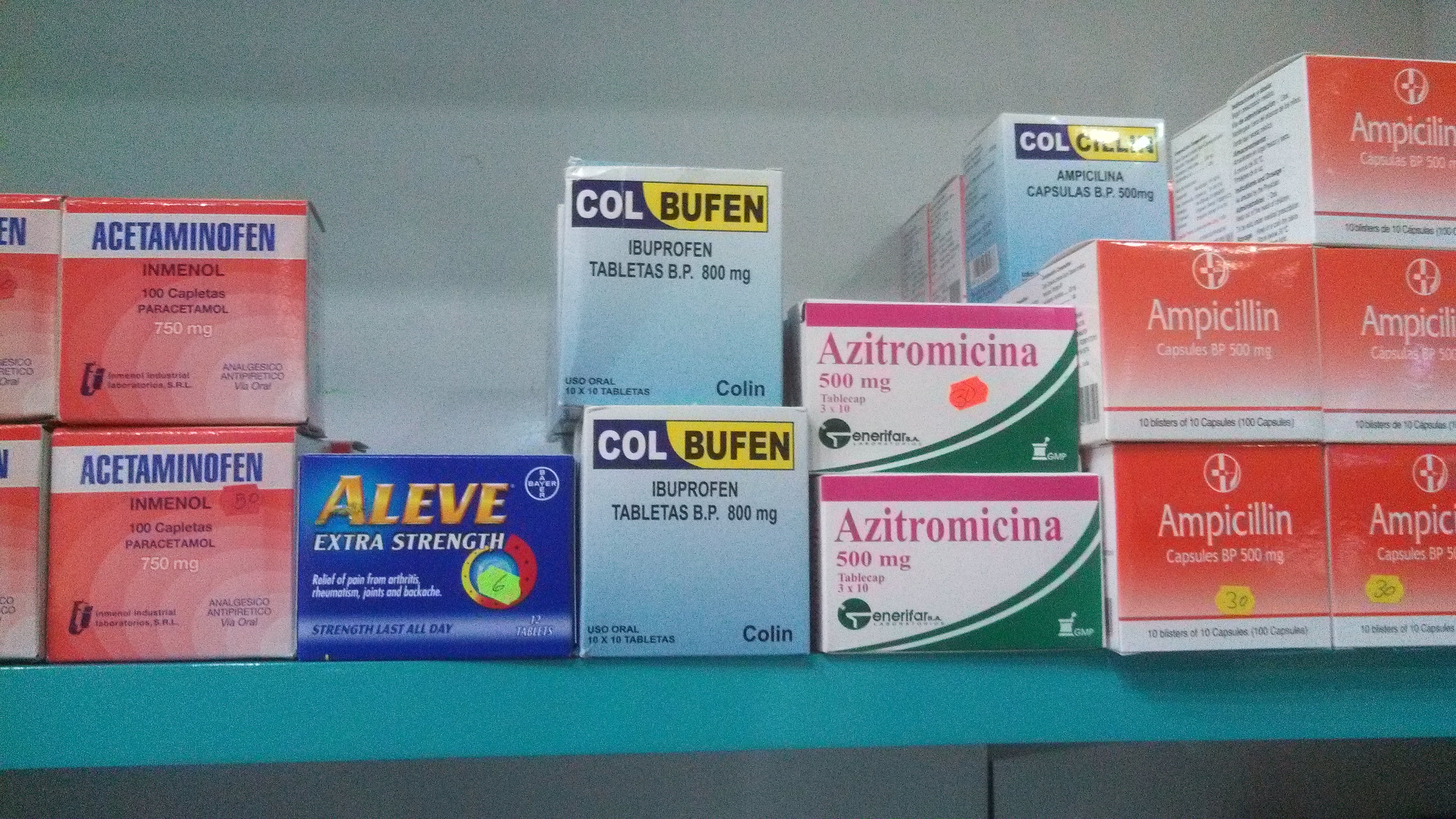
Well after a winter that still doesn’t seem to want to move on willingly, the balmy climes of the Caribbean were a much-needed detour. Waking up to warm sunshine for a week worked wonders to melt the icicles of some seasonal depression. I got to thinking: wouldn’t it be GREAT to practice pharmacy on a tropical island paradise? So then I stroll into the convenience store on the resort. Among the sarongs, the cigars, and the wood-chip-filled bottles of Mamajuana, I stumble upon this:

IMG_20150426_092913_046

Okay. I give up.

Your eyes do not deceive you. From left to right, we have acetaminophen 750mg, Aleve extra strength, Ibuprofen 800mg, ‘Azitromicina’, and ampicillin 500mg. This selection was found in a gift shop and it didn’t appear the ladies behind the counter were…’ahem’…well-versed in the medications they were selling. I understand that regulations are lax in some countries, but compared to the controls we have in Canada, I would hate to be doing any kind of medication reconciliation when this kind of stuff is considered over-the-counter.

From looking around the pool, and hearing from people in the party I was with, I would posit that some may have some blood pressure problems. I reckon that others may be on blood thinners for atrial fibrillation or stroke prevention. There may be hidden macrolide or penicillin allergies floating up to the wet-bar where a friend would casually say: ‘Oh, that sounds like a UTI. Here, I just picked up a few of these for myself just in case. Try some, they’ll fix you up.’ I’m sure this has never happened before on the resort.

Still, perhaps I’m taking this a bit too seriously. I should take some friendly, sun-baked advice:

IMG_20150426_092954_391

The Friccilicont is a menthol / methyl salicylate rub with a funky name but not too notable other than the pesky allergy risk.  However, a little buspirone would do wonders to chill me out. Yup. Buspirone. We don’t see it too often anymore, but it’s a lovely CYP 3A4 substrate that’s used for anti-anxiety and to enhance the effect of anti-depressants. Anybody picking this up in the airport ‘Pharmacia’ may not be told to lay off the grapefruit juice at the buffet. Once again, more than a few blood pressure meds or antibiotics could be in the carry-on that don’t play well with this one, especially if it was in regular use.

One more thing: All-inclusives are known for a few perks. Adults (and perhaps some late-teens) seem to enjoy the beach umbrellas, the barter-shopping, and BARS IN EVERY LOBBY/BEACH-HOUSE/POOL/ROOM/PARKING LOT/CORNER STORE/RESTAURANT. They even come find you if you’re looking lonely out in the common areas. Reading through the monograph for buspirone, alcohol may not be the best thing to consume. Additive CNS depression notwithstanding, liver and kidney impairment are significant cautions. Any diabetics snacking in the preferred lounge?

In closing, I’m poking some fun at the relative lack of controls and standards in a foreign country, but it’s really meant to contrast the type of clinical decision-making pharmacists in Canada are making every day. We take pride in heading off many of the potential issues outlined above and in the process, reduce the risk for significant adverse effects for drugs individually and in combination for patients in our care.

Aren’t you glad that we don’t have these on our counters:


IMG_20150426_093103_942

Make sure to fill up on the M&Ms while you’re at it. I can’t look at this picture without picturing the American ad where the fatherly gentleman is bouncing out his front door and down the sidewalk. This is followed by a fast-talking fellow listing all of the disclaimers and precautions over top of ‘good morning’ imagery.

Sigh – Here’s to Dominican dreams and relaxing vacations.


Disclaimer: The views and opinions expressed in this article are those of the author(s) and do not necessarily reflect the official policy or position of any agency, employer or affiliation.

My Managing Theory – Qualities of a Good Manager

I’m always looking to push myself. In taking my new role, the reflection process has begun and lists are being made to prioritize the skills I need to leverage, and the ones I need to work on.

Management is a different animal, no matter what the setting. Be it a physician’s office or a warehouse, a restaurant or a bank branch, a manager is someone who manages resources to make an operation run. Many have arrived at that level as people who know the business intimately and show an aptitude for producing results. Others are brought in because of certain qualities that have been identified as lacking, even if their practical expertise is weak (i.e. a human resource background running an IT division, etc.)

I’ve been managing people for most of my pharmacy career, and it’s something I quite enjoy. I am far from perfect but have had mentors in the past who have given me tips on creating a positive culture in the pharmacy. Over time, I have distilled three main qualities that I feel make a well-rounded manager. They are in areas of administration, human resources and vision. In the past, I have used this thought process to help set goals for people in management positions. It can help to highlight their individual strengths and weaknesses by asking specific questions:


1) Administration – This is the detail-oriented piece. Are you able to be responsive via email or phone? Do you meet deadlines for audit responses and status updates? Are policy/procedure systems in place and followed?

Pharmacy examples: Timely responses for College audit action plans, preparation for quarterly/bi-annual inventory counts.

2) Human Resources – This theme centres around people management. For both paying customers and staff, how well are tense situations defused? How consistent is the communication (do all team members get the same message and training)? How consistent is the service provision (do all customers receive the same level of care)? For teams, are evaluations being done? Have goals been clearly set and carried through? Are individuals given opportunities to expand roles or prepare for possible promotions? Do people feel they’re treated fairly and maintain positive morale?

Pharmacy examples – Setting up regular conference calls or staff meetings to keep everyone informed and addressing issues as they arise, using job descriptions to determine if employees are challenged to their full potential.

3) Vision – This one is the toughest to quantify but is really about long-term planning. How do you see the team in 6 months to a year? What future events impact the operation and how will that impact be mitigated? Do employee goals reflect the expected needs for a given role should it evolve?

Pharmacy examples – Evaluating a site to implement expanded scope for pharmacists. This involves assessing readiness of the clinicians, identifying training opportunities, and determining appetite for new prescribing services among customers.


All managers possess a strength that fits well in one of these buckets. Usually when a person is described, phrases like 1) ‘They are always on the ball’, 2) ‘Their staff love her/him’ or 3) ‘He/She always has great ideas to improve things’ are used to generalize. Individuals with two strengths out of the three are harder to find. The qualities an individual possesses help to shape a professional development action plan. I’ve divided the three main combination types of managers into larger buckets that I’ll outline below:

Admin/HR – These folks have the day-to-day management down pat. Staff love them, patients love them. They are timely with communication and know their team and operations extremely well. Training is a priority, so day-to-day functioning is excellent. Employees developed in these environments are high-functioning and autonomic. In this case, suggested change can cause discomfort as it may upset the current dynamic but usually once given a plan of attack, the execution is excellent.

Admin/Vision – Managers with this strength combo are analytic and methodical. They have excellent planning skills and really enjoy the organization piece of their role as manager. Any ideas are well-thought out and articulated. I have found that they tend to be introspective in nature and may need additional support and coaching to train and sell their ideas to staff.

HR/Vision – These are the motivators and idea people. They are able to aim high for their customers and team and have an infectious, boundless energy. The menial administration tasks are often put on the back-burner in lieu of the next exciting project. I’ve found that this type of management style can be a challenge and is often dependent on the strength of the core team: if another pharmacist or assistant possesses the admin savvy they can often complement a relative weakness, although their experience is often gained in a previous role with a different mentor.


I’ve simplified these buckets to make them easier to digest. I use them to coach others but also for myself. I would put my relative strength in the HR group, with vision being second. My administrative skills are solid, but not my passion compared to the other two. I am lucky to know mentors and current managers (not just in pharmacy) that are much stronger than I in each of these areas. As much as possible, I try to absorb their strategies to help create structure and accountability for my staff.

Properly executed change doesn’t happen overnight. I need to manage expectations for my superiors and my team, but most importantly, I need to manage my own.


Disclaimer: The views and opinions expressed in this article are those of the author(s) and do not necessarily reflect the official policy or position of any agency, employer or affiliation.

Holiday Musings

Ah, the holiday season is upon us. In the case of retail pharmacists, it’s a time to fit shopping and decorating in between adjusted schedules to allow for staff to have a few days off. Patients become less patient due to the bustle and we are managing care while physician’s offices close until the New Year (which is becoming easier every year now that we have prescribing authority).

So as life slows down for at least a couple of well-deserved days of rest, I would like to take the opportunity to look back on a very eventful year for PharmAspire. Every interaction I have, every bit of news that pops into my inbox, all seems to find its way into the writings somehow.  Sometimes, I have wondered if the list of topics would reach an endpoint or the themes would become stale. But pharmacy is so fast-moving, chasing that moving target continues to make this site fun.

Let’s see here:

We started with New Year’s  and all of the expectations we create for ourselves. The follow-up on that was more interesting to me only because I realized how much was forgotten about the original post; although I was somewhat successful with my goals to that point, it wasn’t because I had a constant reminder to keep me on track. Maybe that will be my first resolution for next year…

The next item to highlight is one of my favorites, and it came in 50 shades. This drew on my personal experience and attempted to emphasize the uncertainty of what new clinicians may be dealing with, including myself. February was a turning point in that I was contacted by Pharmacy Practice + with an offer to work together for the publication. It has been an honour to work with such a fantastic editor. Vicki, your support this past year has been phenomenal and I look forward to seeing what is in store for 2015. I can’t thank you enough.

Fast-forward to the spring and we had a couple of lifestyle pieces about Life Outside Work and the 60/40 rule. Then heading into the fall, we visited regulation-related topics including licensed technicians and lab requisitions.

It’s been quite the journey, but a rewarding one that continues to push me to be a better practitioner and a better person. None of this would be possible without a few key people:


My friends – After a post, I will inevitably receive a tweet / email / text / phone call from someone giving me encouragement. They look through the magazine when it’s delivered. They’ve elected to receive email alerts the site. They’ve started following me on facebook and Twitter. Pharmacy is a huge community, and I’m blessed to be a part of it.

My family – Di and the kids have been the unsung heroes through my roller-coaster career. They keep me grounded. They provide perspective to who I am and what I strive to be.

Mom and Dad – I can always count on mom to be asking for back issues of any months she may be missing. They are with us every step of the way, helping two full-time shift-workers maintain a semblance of normalcy amongst a chaotic routine.

Laura M. – She’s been there since the beginning. Over oat cakes and lattes, she showed me what a blog actually was. Her input has helped my confidence and simply put, made me a better writer. By making sure I don’t take short-cuts when articulating my thoughts, or using confusing similes / metaphors, she takes my flight of ideas and condenses them into readable prose. She has also written a number or pieces for the site as well. A heartfelt thank-you for everything you’ve done and continue to do.

Finally, to you the readers – This blog is an avenue for us to explore our lives in pharmacy with a positive light. Taking the time out of your day to check out a post means a lot. As therapeutic as it can be for me, hopefully some of the topics will continue to resonate with your own practice and professional development.


So what’s in store? I’ve had a couple of people suggest vlogging, which frankly I find terrifying but if it encourages collaboration, I may be convinced. There are a few irons in the fire that may drive content early in the New Year, so stay tuned for that. I’m always looking for folks wanting to contribute ideas, discussion points, or media items. Feel free to contact me:

email: dcovey@pharmaspire.ca

Twitter: @pharmaspire

Facebook: pharmaspire


Let’s raise a glass of egg-nog-infused cheer! Have a Merry Christmas and Happy Holidays!


Disclaimer: The views and opinions expressed in this article are those of the author(s) and do not necessarily reflect the official policy or position of any agency, employer or affiliation.