I had been working on a draft for my next post. It was meant to be a lighter look at some of the subject matter at the recent provincial pharmacy conference in Nova Scotia. The conference took place at the end of September so I have really been dragging my heels this fall. The presenters were excellent and engaging, using the latest apps to poll the crowd and promote on social media. My 2026 resolution of sorts was to get back on the horse and dedicate more structured time to writing.
The truth is, I honestly didn’t feel like writing this past week, nor do I want to delve into what you will read next…
News came in after Christmas that there was a car accident at 8pm in the evening of Dec 27. A head-on collision with a suspected drunk driver and passenger in one vehicle, and an unsuspecting 52-year old husband and father of three driving home from visiting his parents. Glenn Rodrigues lost his life that night. The pharmacy community lost a giant. It lost a leader, a mentor, a teacher and a trusted friend. Incidentally, he was one of the presenters at the conference, and his energy that day was infectious. For many, that will be their last memory of him: watching in awe as he deftly led a real-time demonstration of AI scribe, proving its immense value as a clinical tool. He had such a knack for getting you excited about what the practice of pharmacy is today, and what it will be in the future. My last memory of Glenn was shortly after his presentation in the conference hallway by the coffee bar. I congratulated him on another amazing session and began to pelt him with suggestions for topics and formats for the Pharmacy Association 2026 podcast season.
I don’t know how to properly articulate just how much of a force Glenn was. I hesitated a moment before writing ‘was’ in the last sentence, as I feel he still ‘is’ and will continue to be. His fingerprints seem to be everywhere.
So many pharmacists, dating back to when he arrived at the Burbidge building in 1995 for his first year of pharmacy, have benefited from his boundless positivity and insight. He was active at the College till the very end, developing Skills Lab curriculum for burgeoning clinicians who sought to follow his lead.
The trajectory of pharmacy practice in Nova Scotia over the past 2 decades has been influenced heavily by Glenn’s passion and curiosity. Ahead of his time, he challenged conventional behaviors when it came to performing medication reviews, prescribing for minor ailments, managing injection clinics, integrating regulated technicians into workflow, piloting AI transcribing, etc. He received pushback on how aggressive he could be with practice change, but he was firm and confident in his beliefs on how he could…check that…WE could best provide clinical care.
So now we ask ourselves, “What Would Glenn Do?” When his sister Cara delivered Glenn’s eulogy, she encouraged all of us to ponder how he might approach life situations. For this level of grief, it’s difficult to point to any linings, silver or otherwise. One thing I do know is that Glenn would want us to THRIVE; he helped write a prescription for it, and he was a driving force in developing a camp for it. The idea for Camp Thrive was for pharmacy managers to come together and work through problems as peers without pressure or judgement. It touched on operations, change management, human resources, financials, and planning for the future. He wanted for us to feel empowered to make difficult changes and adapt beyond where we may have once thought impossible. He not only felt elation for when the sparks of change grew into a flame, he relished being part of the hatching of a plan, collecting the tinder and building that fire to last through the harshest weather.
Rest easy, my friend. We miss you, and we’ll do our absolute best to carry the torch you used to light our way. You will be a constant voice perched atop our collective shoulders for countless years to come.
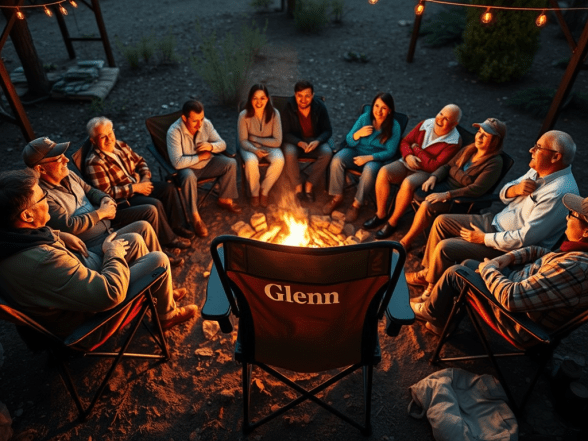
Until we meet again, we’ll always save you a seat at the campfire.
Disclaimer: The views and opinions expressed in this article are those of the author(s) and do not necessarily reflect the official policy or position of any agency, employer or affiliation.
Regular readers of this blog have noticed a pronounced swing towards travel and personal interest pieces. The 10-part Odyssey was borne out of a desire to relive my recent trip to the US last August whilst learning and sharing various anecdotes along the way. This was never intended to be a permanent shift.
This is not a travel blog, but rather a pharmacist who happens to be writing about travel.
Let me explain…
It has been over a year now since my pharmacy career was interrupted. Using a simple sports team analogy, there was a change in strategy. I was summarily substituted from my role and took my place on the sidelines.
When I wrote Changes & Choices, it was about embracing the opportunity to evolve and grow in unexpected ways. It was about feeling those nerves when attempting a new task or planning a large project. It was about surrounding myself with supporting voices that cheered and challenged, lifted the spirits and tempered the expectations. It is a huge relief to have mentors for strength and guidance through the emotional whirlwind. They continue to keep me hungry and excited for what’s next.
Part of this sabbatical was to take a long, hard look at my track record to date; as an employee for sure, but also as a father, son, brother, spouse, and friend. How has my career trajectory impacted those around me, and my own sense of self? How have I adapted through the years, mentally and physically? How did I foster leadership with my teams, and how did I ask for support from my leaders when I was struggling?
This trip was emblematic of that reflection. Taking two plus weeks off in the middle of August was not something I had ever done before, as a relief pharmacist, as a manager or in any of my corporate roles. When there was vacation, often it came with frequent email and text check-ins to arrange coverage and respond to emergencies. This time the focus was on my parents, my fiancée, and enjoying every adventure along the way. The people we met, the towns we explored, the places where we ate, and all the miles in between were healing in so many ways. Those memories are forever, and brought out the best in me.
Truth be told, this blog was borne out of a similar reflection 12 years earlier (I repeat….12 YEARS). At that time, I made the decision to take a step back from a middle management pharmacy role and return to the front lines. The practice of prescribing was new for the profession and many pharmacists were grappling with the ethical dilemma of both prescribing and dispensing medication. Seeing your name on a prescription vial really was a vital step to owning the process. With turf battles being waged with other professional associations and exacting reimbursement criteria, confusion reigned for a time. On this front, I had a conservative approach; focusing on the diagnostic assessment as opposed to the resulting prescription felt like a solid starting point. The valid counter to this was to take the narrow expansion of scope and identify patients who would benefit. For example, we could now prescribe for cold sores, so cruising the OTC aisle for customers asking for Abreva or Lipactin would provide an opportunity for a consult and to educate the public at the same time. Stomach and sleep remedies were also popular. Unfortunately, the general assessment itself was not subject to funding, but was instead tied to specific prescribing activities.
The issue was quite simple: the operational side of me was aware of the possibilities that would come with dogged execution of our newfound abilities, but the burgeoning clinician in me wasn’t ready to take the plunge. I needed to be confident in my own practice before coaching others to navigate the change. It was tough to step down the ladder, but it was necessary and allowed me to be more effective when I received the chance again.
So here I am on replay, but this time I have a better idea of my strengths and weaknesses. I have explored different work environments and practice settings, if only to see if I can picture myself thriving in different roles. I have become more involved in advocacy and regulatory committee work, so It’s not a question of if…it’s when! The pharmacy profession continues to be a huge part of who I am, and want nothing more than to continue my contributions.
Therefore this pharmacy blog shall continue…and I can’t wait for that next piece of inspiration.
Disclaimer: The views and opinions expressed in this article are those of the author(s) and do not necessarily reflect the official policy or position of any agency, employer or affiliation.
And we’re living here in Allentown But the restlessness was handed down And it’s getting very hard to stay
From the iconic song written and performed by Billy Joel, this passage refers to the decline of the manufacturing sector during the 1980’s. Bethlehem Steel, the second largest steel manufacturer in the US for most of the 20th century, was falling on hard times and the future was uncertain. The mill eventually shut down for good in 1995. Although the lyrics strike a negative tone, it still spoke to the resilience of Allentown; unemployed steel-workers toughing it out and refusing to quit making a life there.
We were only there for an evening, but we were also restless to reach out final destination. It was also getting hard to stay due to the incessant screaming.
Say that again?
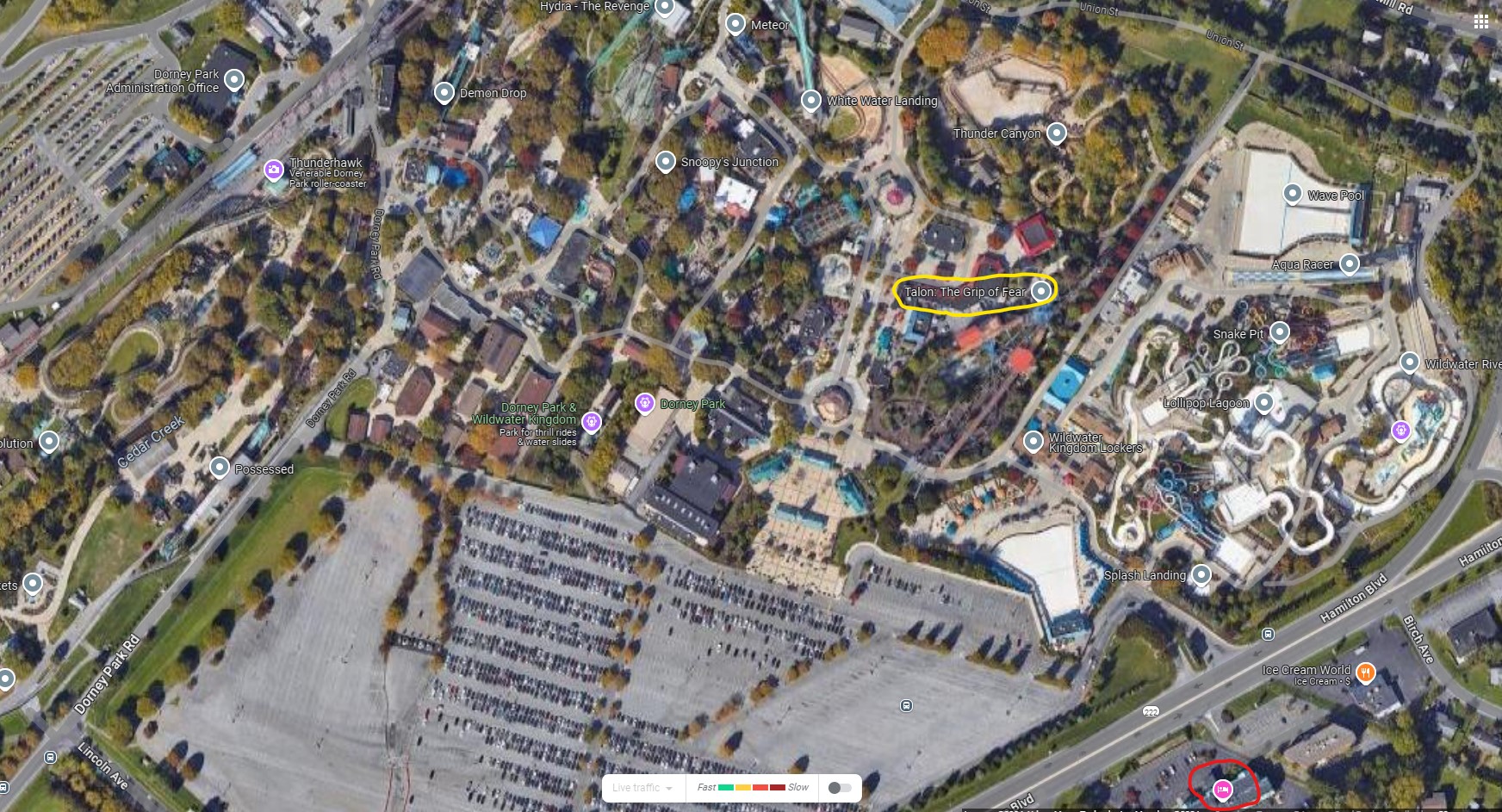
Yes, from the moment we arrived at our Holiday Inn parking lot, we could hear periodic screams and shrieks from across the road. Little did I realize when booking these accommodations, that we wouldn’t be in a sleepy part of town off the interstate, but rather on the border of one of the largest theme parks we have ever seen: 200 acres of Dorney Park and Wildwater Kingdom. Opened in 1884, this place is a monster, and the screaming was coming from one of the 8 roller coasters in the park. In fact, when it opened in May 2001, it was touted as the largest inverted roller coaster in the northeastern United States. One where you stand and are suspended below the rails, this thrill-ride will take you 14 storeys into to air, invert you 4 separate times and reach speeds of 58 mph (ahem…93 km/h). For those you want the thrill of a lifetime, or simply enjoy vomiting their oversized park-bought hotdogs, the Talon: Grip of Fear will not disappoint!
Just to get an idea of where we were situated, the image below from google maps shows our hotel in the lower right in the red circle. The place where they skin the cats is ringed in yellow. Did I mention this place is LARGE?!
At any rate, we discovered that our rooms were not yet ready so we asked for a recommendation for lunch. Seeing how we wound up in tourist-central, I reckon the hotel hosts receive this question almost as much as requests for extra towels. Without missing a beat, he directed us a few short minutes up the road to Carrabba’s Italian Grill. This is a restaurant chain we were not familiar. I can’t recall much other than thinking that it was our second day in a row having Italian, so I opted for a dish called the Pollo Rosa Maria, a chicken breast stuffed with Fontina cheese and prosciutto. The menu picture was amazing. The taste? It would rank it slightly above average, (3 out of 5 sundried tomatoes) with good preparation, appealing presentation but more bland than expected.
Before heading back at the hotel, I decided to refresh my ibuprofen stocks, so we found a pharmacy in a Weis Market that was two buildings away. With my keen sense of navigation, I managed to turn the commute into an unintentional 15 minute tour of Cedar Creek Park. Since I’m having entirely too much fun doodling on Google maps, here’s another image for reference:
Here’s the thing: Hamilton Blvd is a strange drive for non-locals. It is a main thoroughfare, and is a standard two-lane highway with a concrete divider. When we exited our hotel, we could only turn right and would have to switchback by Dorneyville Dental on the bottom left. From that point, Hamilton splits into two one-way stretches that envelop 5 or 6 city blocks. For my pharmacist readers, it’s like a nodule formed in the middle of the highway and separated the two sides of the street to the point you could fit a small community inside. After confidently turning left past the Wendy’s, we drove past the top of your screen before everything looked completely wrong and we started looking for the way back around.
Ibuprofen in hand we trekked back to the hotel for a bit of downtime. My headache abated over the next hour and we were off again, this time to explore a local winery or brewery for a late afternoon flight before dinner. Firing up the nav system in Dad’s Genesis, we found Vynecrest Winery in nearby Brenigsville, about 15 minutes away.
We arrived at approximately 5:07pm. I remember thinking the parking lot was rather empty this time of day. The flag outside read open to we headed into the shop. After a few beats a woman appeared to say that they closed at 5 and had not removed the open sign from outside and neglected to lock the door.
“You can try Clover Hill up the road. They close at 5:30pm”
Off we go, arriving at Clover Hill at 5:17pm.
“I’m sorry. We’ve already had last call and are no longer offering tastings. Feel free to peruse the shop.”
We were getting restless and annoyed. The next option was Rising River Brewing, located in the borough of Macungie, which took us through Trexlertown and East Texas (yes, it is a suburb of Allentown). A couple quick things:
Macungie is derived from “Maguntsche”, a Lenape word, meaning either “bear swamp” or “feeding place of the bears”. Sounds like a lovely place to settle and raise a family.
The community of East Texas is named after the state of course, but the ‘East’ prefix is to distinguish it from another Texas in Pennsylvania. It is also the global headquarters for Day-Timer, the company that brings you all kinds of paper-based calendars and weekly organizers. To wit, I will visit Staples every November to buy my Day-Timer as preparation for the following year.
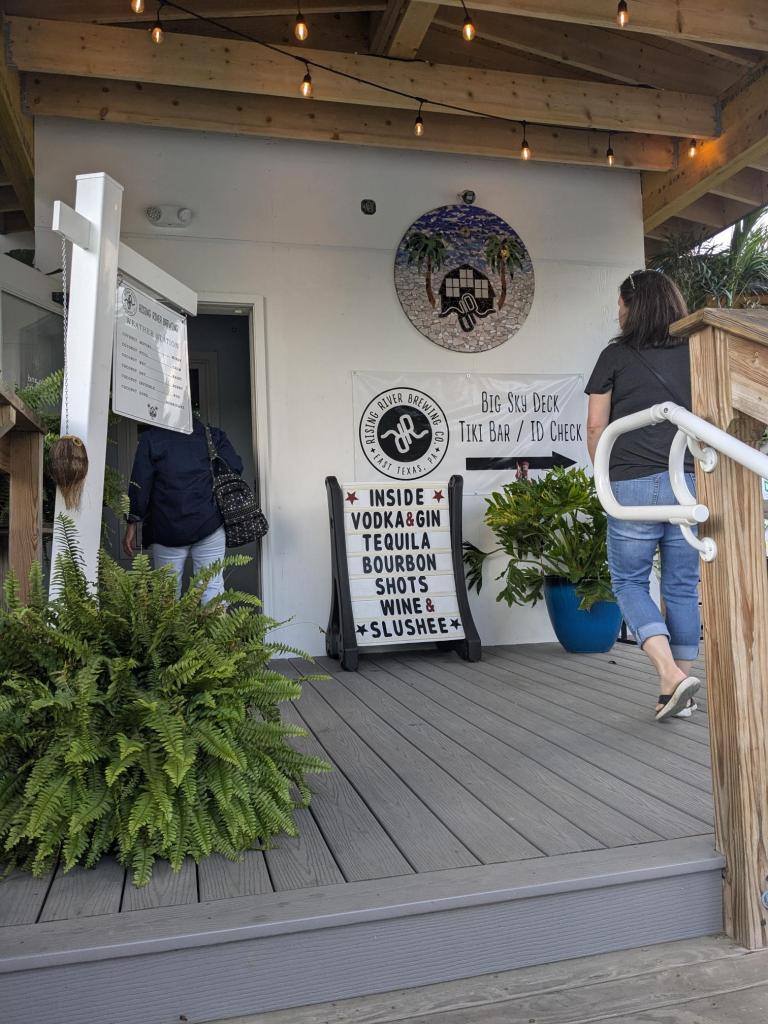
Rising River is nestled in a residential area. When we arrived, it looked packed. There were two parking lots, a large main building, and a massive deck in the back. It appeared there were lawn games, a foot bridge and gazebo further down on the property. There were lineups to be seated outside. We sauntered into the main building to ask the barkeep if there were restaurant services. She said that wine and mixed drinks were available in the main building, which reminded me of a legion hall, and draught beer on tap was out on the patio. A food truck was conveniently parked alongside the deck serving a massive sprawl of people looking for fish, chips and hotdogs. A bit disappointed but looking to make the most of the situation, we sat close to the tiki bar outside and were ignored by the servers for about a half-hour. We finally approached the bar and were told to get in line on the other side. Folks had drink tickets, so we were confused; did we miss a sign or crash a private event? Then a voice came over the PA system and everything made sense: this was Wednesday night Bingo at the Rising River Brewery and seemingly ALL of Macungie were armed with dabbers and were fueling up prior to the first round.
We managed to order beers from a gentleman who looked entirely overwhelmed, but in good spirits. We took off shortly after a lady came around to display what an ‘X’ looks like on a bingo card, quietly exiting between shouts of “B13”. We headed back the hotel with a bottle of blackberry brandy to munch on leftover cheese and crackers from our grocery trip a couple days earlier and to fight with apps on the smartTV.
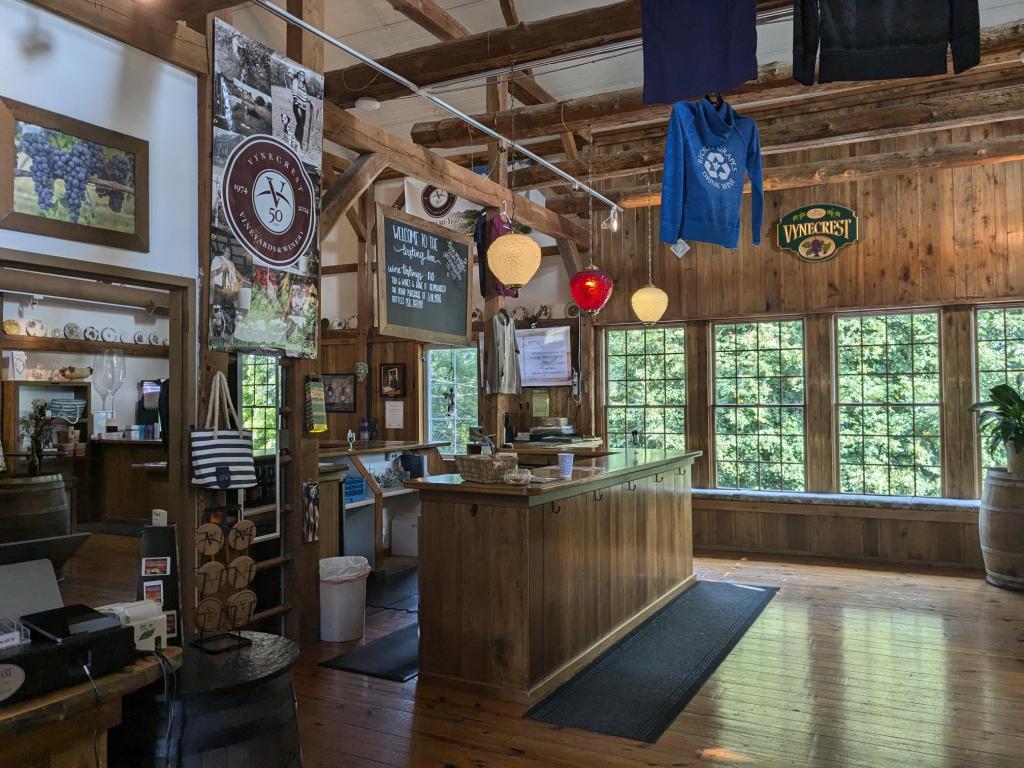
Below left: Vynecrest Winery shop before they told us they were closed. Bottom right: Rising River, featuring everything you need to get through a weeknight in Macungie 🙂
We arose on Thursday morning, Aug 15. Another fine weather day for our drive west through the state. After a quick bagel, we proceeded to turn right so we could turn left. Stupid Hamilton Blvd.
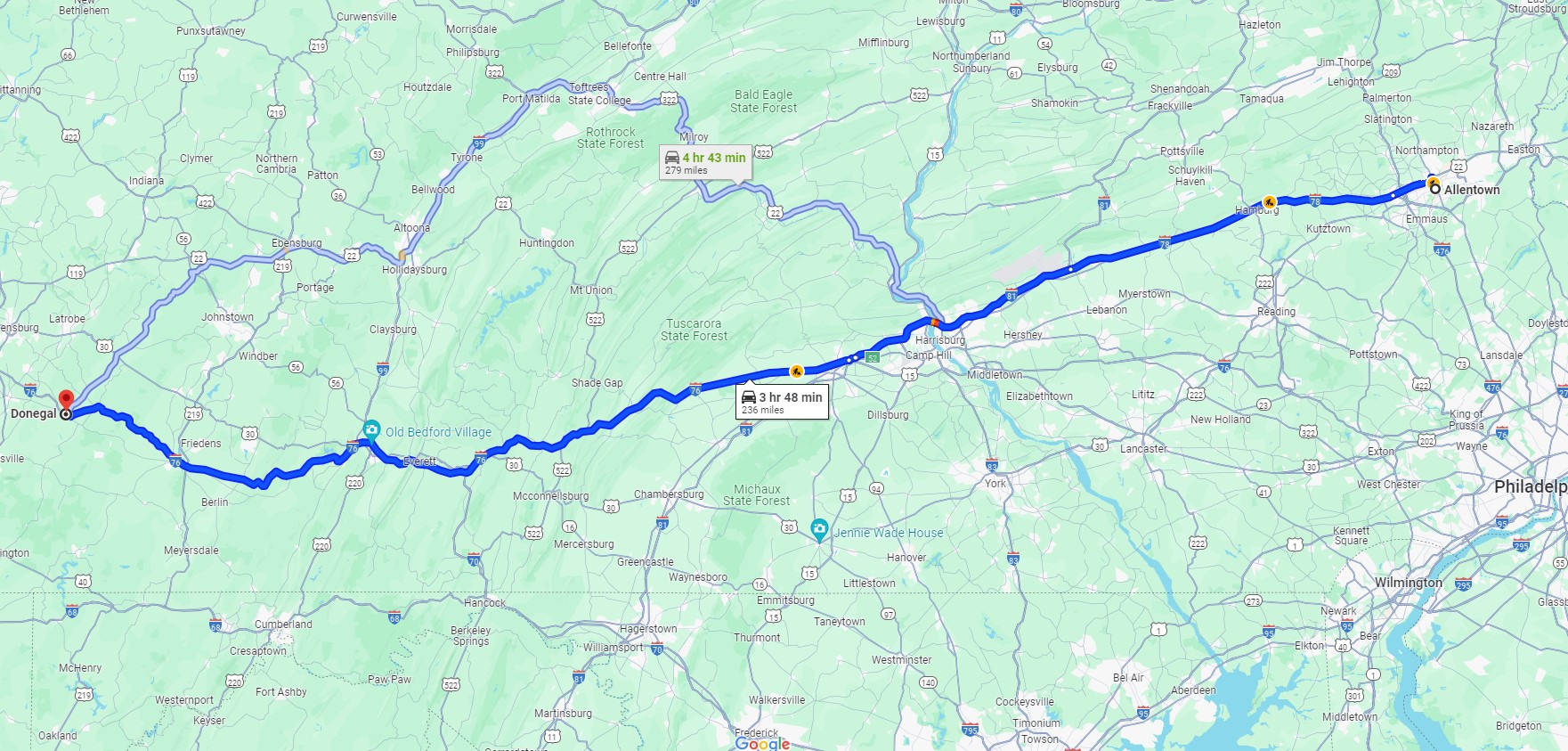
Allentown (PA) –> Donegal (PA)
Since I have largely ignored my own advice on straying off on unnecessary tangents, the route summary will be brief, as it was largely a straight line for about three-and-a-half hours through the Appalachian Mountains.
Leave hotel, jump on the I-78 due west at Wescoville.
At Middlesex, merge onto I-76, the Pennsylvania Turnpike.
Drive through a series of Appalachian mountains. These tunnels are two lanes each way and span 2-3km. If you have semi-trailer trucks around you, it certainly adds to the claustrophobia:
Kittatinny Mountain Tunnel (fun fact: the western portal is featured on the first postcard during the opening sequence of National Lampoon’s Vacation)
Tuscarora Mountain Tunnel
Allegheny Mountain Tunnel
Continue straight to Donegal, a borough in Westmoreland County roughly 80 clicks southeast from downtown Pittsburgh.
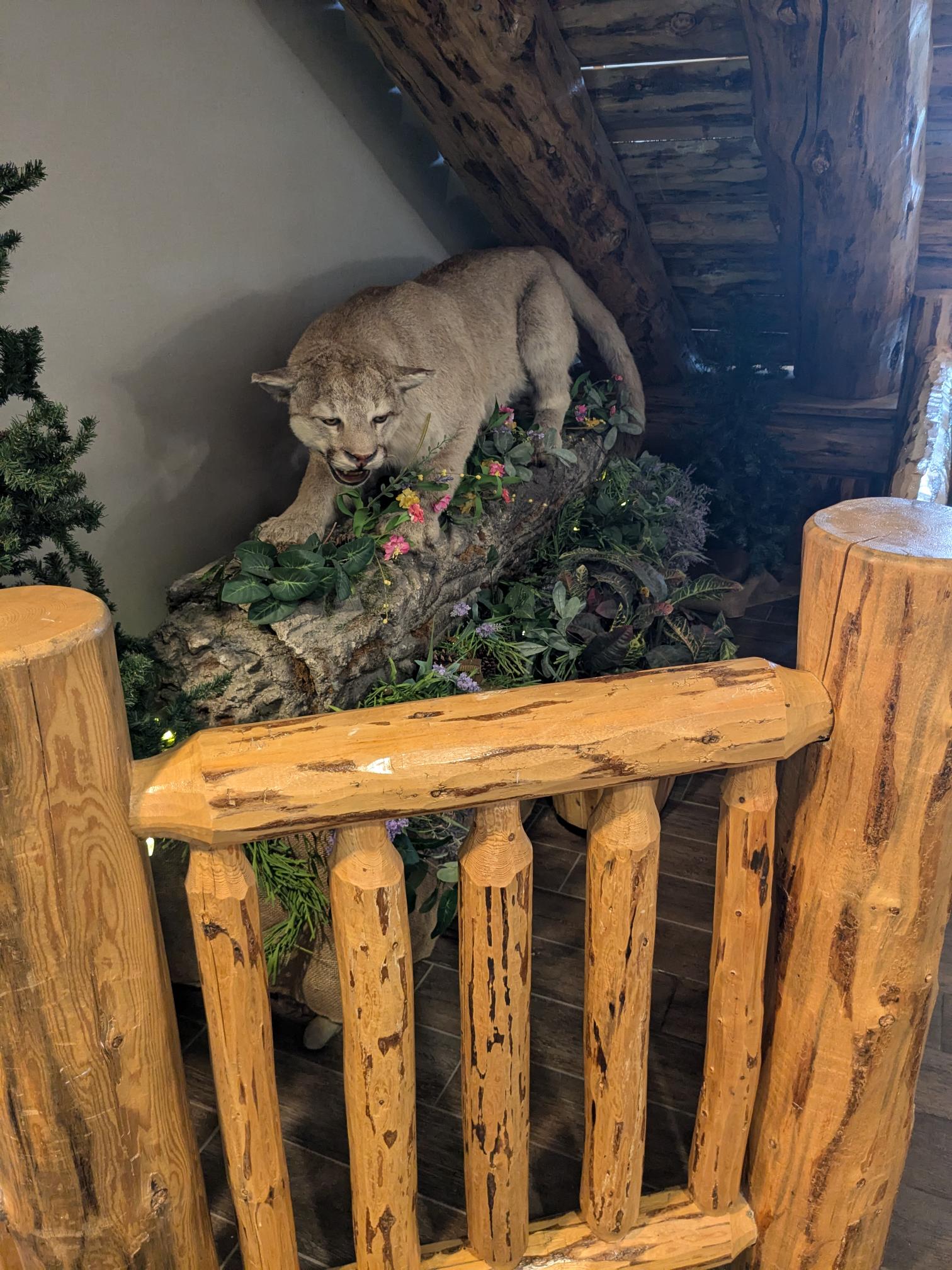
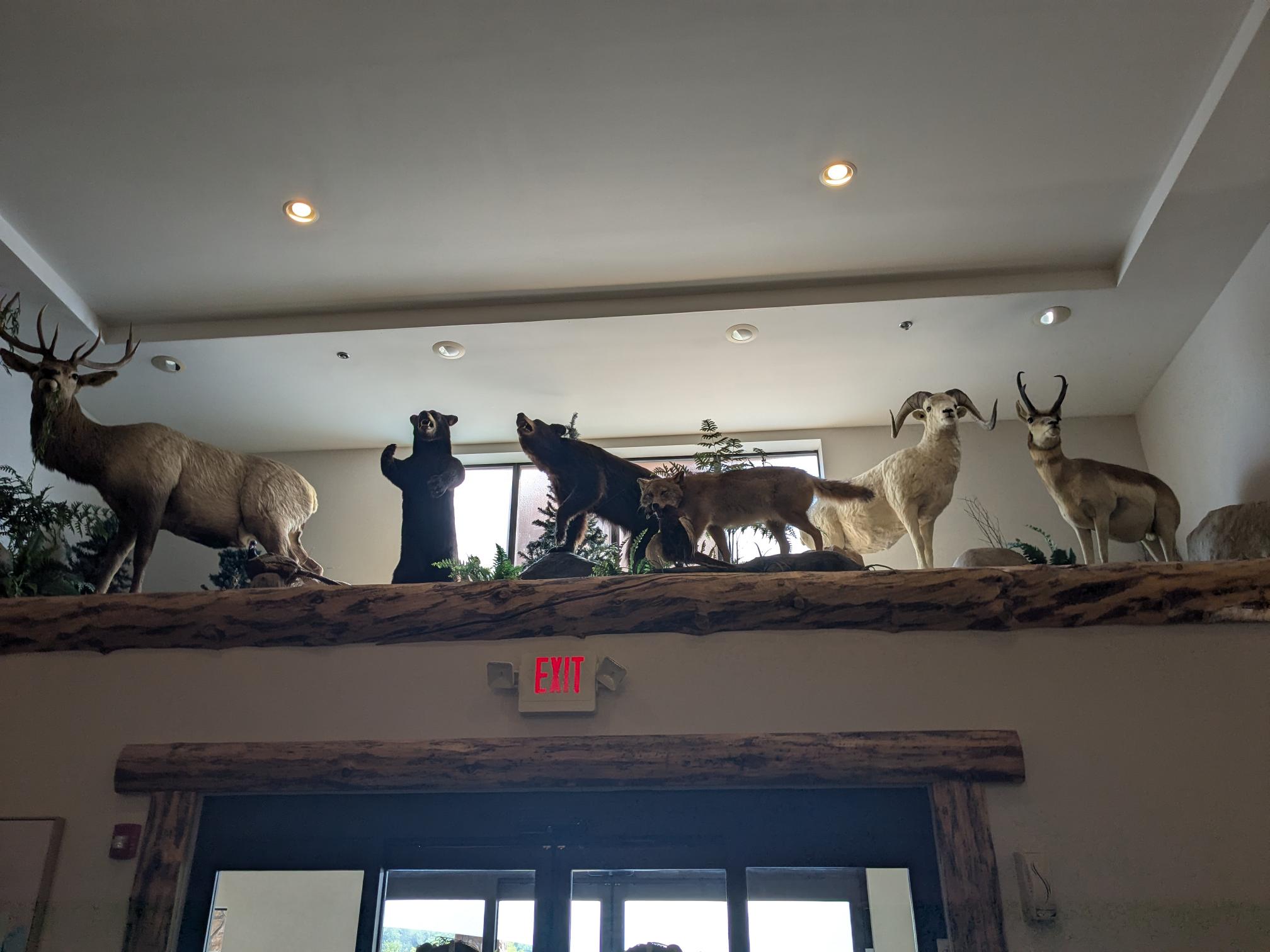
Reaching our destination at the customary mid-afternoon tick of the clock, we were greeted in the hotel lobby by some furry friends:
I do not come from a family of hunters. The only taxidermy I tend to see are in museum exhibits. The rustic log cabin feel of this place was rather fascinating. Not wanting to wade into Pennsylvania politics, I was getting the feeling that 2nd amendment rights are a hot-button issue in this part of the state, but more on that later.
Join us next time, when in Part 5 we spend the first of our two days touring the Donegal township and surrounding areas, shopping in the general store, sampling some local spirits and preparing ourselves for Friday’s visit to Fallingwater!
Disclaimer: The views and opinions expressed in this article are those of the author(s) and do not necessarily reflect the official policy or position of any agency, employer or affiliation.
When we last left our intrepid adventurers, they had just arrived in the Catskill Mountains and checked in to their accommodations at Hotel Vienna, a 2-storey chalet with exposed beams and cabin feel. At the foot of Windham Mountain, there is the requisite ski resort and a local golf course. The video in the above link has some aerial shots that are quite lovely.
As it turns out, Windham is a very common name in these parts. Not to be confused with Windham, NH, or Windham, Connecticut, or Wyndham Resort and Hotels (spelled with a ‘y’), the town of Windham, NY is located in Greene County, on the northern boundary of the Catskills Mountain range. It is a town of about 1,700 people but is a popular vacation spot for New Yorkers and other areas in the northeast. Fun Fact: Scott Adams*, the creator of the Dilbert cartoon series, grew up in Windham and was valedictorian of his high school.
*I should note that although I am a huge Dilbert fan and have referred to his comic strips in previous work presentations, I am not a Scott Adams fan for his views and the controversy he generates.
Like anyone who has traveled the Cabot Trail in Nova Scotia, we are spoiled by fairly frequent look-off points to grab pictures and feel infinitesimally small as we gaze across wide valley expanses between the mountains. The route to Windham certainly teased those views, but with very few parking opportunities and overgrown look-off points, my pictures from the car are woefully underwhelming and are not worthy to be shared. Further along, you can find the Five-State Lookout but you will need clear skies and a sense of what you are viewing; there are no directions or reference guides available, only a parking lot and the stunning horizon in the distance.
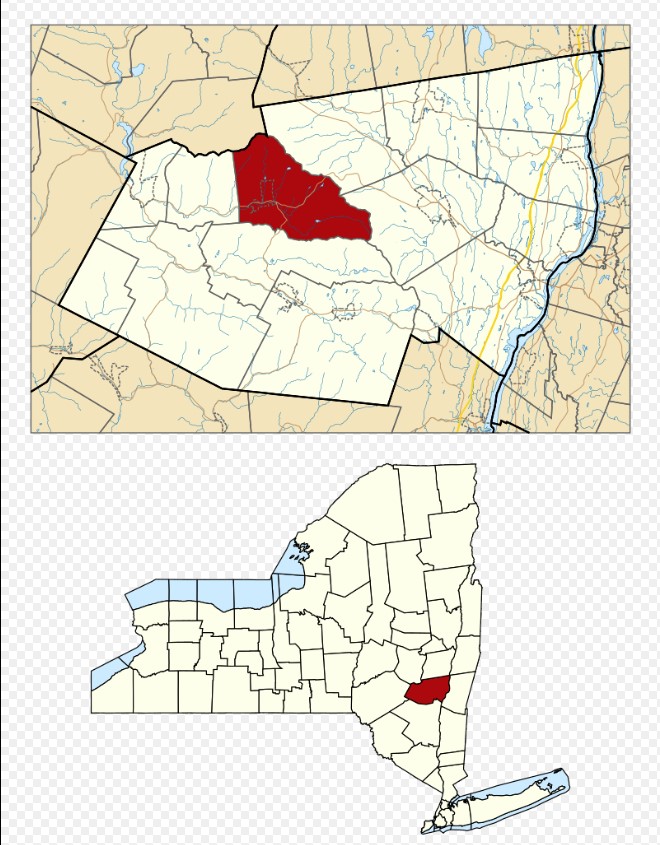
Like a nesting doll, the images below depict the Windham town limits within Greene County, and the county within New York state. The famous Hudson river is the bluish boundary to the right.
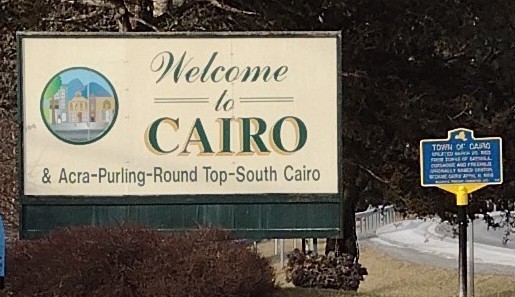
After that preamble, it shouldn’t surprise you that Windham was in fact, NOT our actual destination. That honour would go to a little hamlet called Round Top, within the neighbouring town of Cairo (pronounced ‘Care-oh’ because America dares to be different on occasion).
My mother had picked this location to visit a university friend she had met almost 50 years ago in Laval, QC. My parents had kept in touch with this gentleman over the years via email (and before that, the archaic rotary phone, and before that, presumably telegraph or carrier pigeons). He was gracious enough to welcome us into their home below the peak of Blackhead Mountain, where the roads are quiet but full of wildlife; there are many opportunities to encounter deer or bears, especially as streetlamps are minimal and the roadways are narrow.
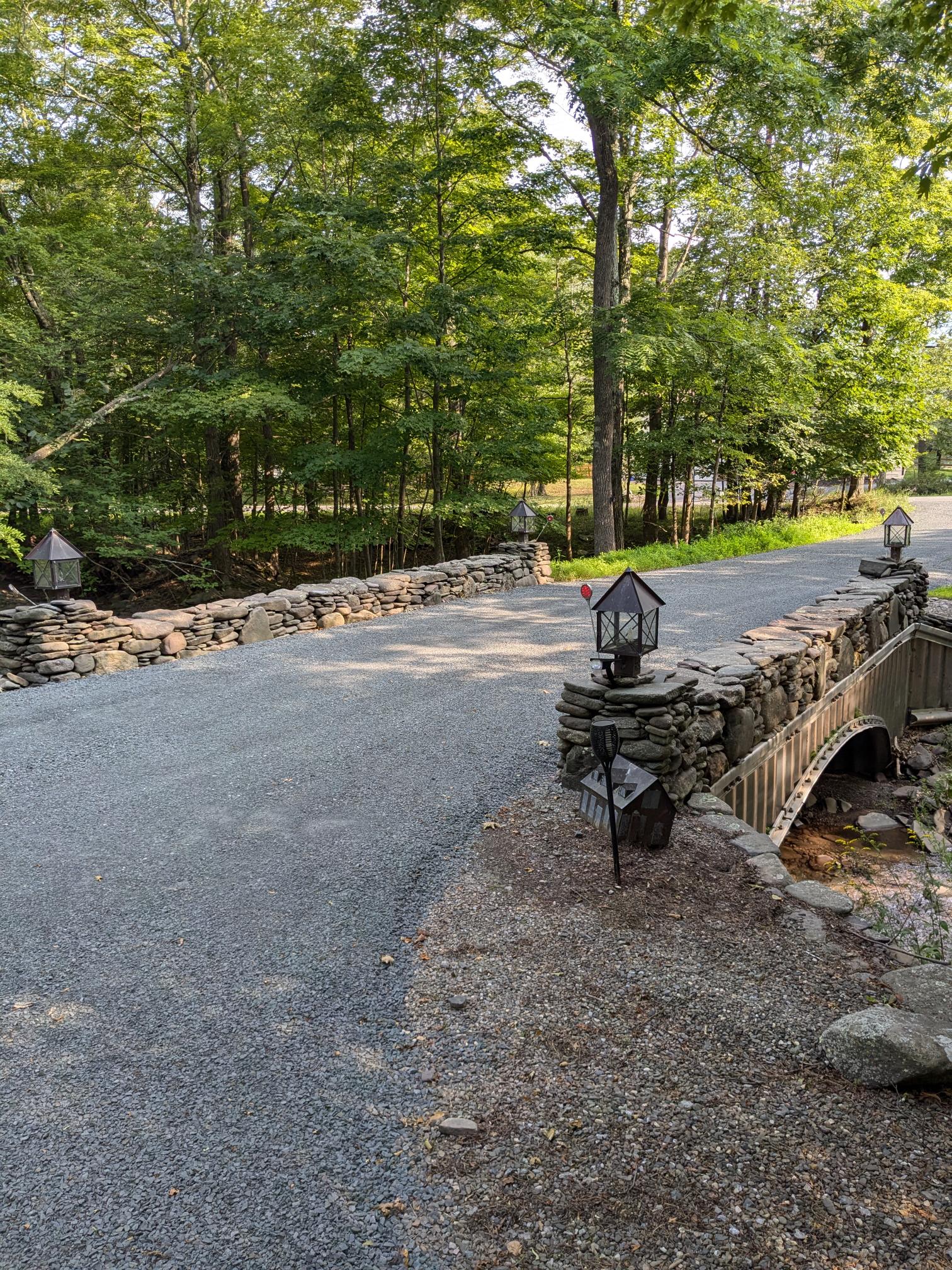
My parents has last visited several decades prior. At that time, their friends had lived in a large house further upstate. On the windy road leading to the house, we weren’t sure what to expect. We were met with rock walls on either side, and the entrance to the property has an incredible stone bridge over a brook that babbles or rushes depending on the rains.
The house was beautiful. A 2-storey farmhouse style home with a full length porch across the front, was surrounded by curved stone walls to form terraces. There was only one problem. The master of the house was not there as he had left to pick up dinner. We were told the front door was unlocked and to make ourselves at home. I should emphasize that we had not been there before, so little voices cautioned us that there was a slight chance we were unknowingly breaking in unannounced to a stranger’s abode.
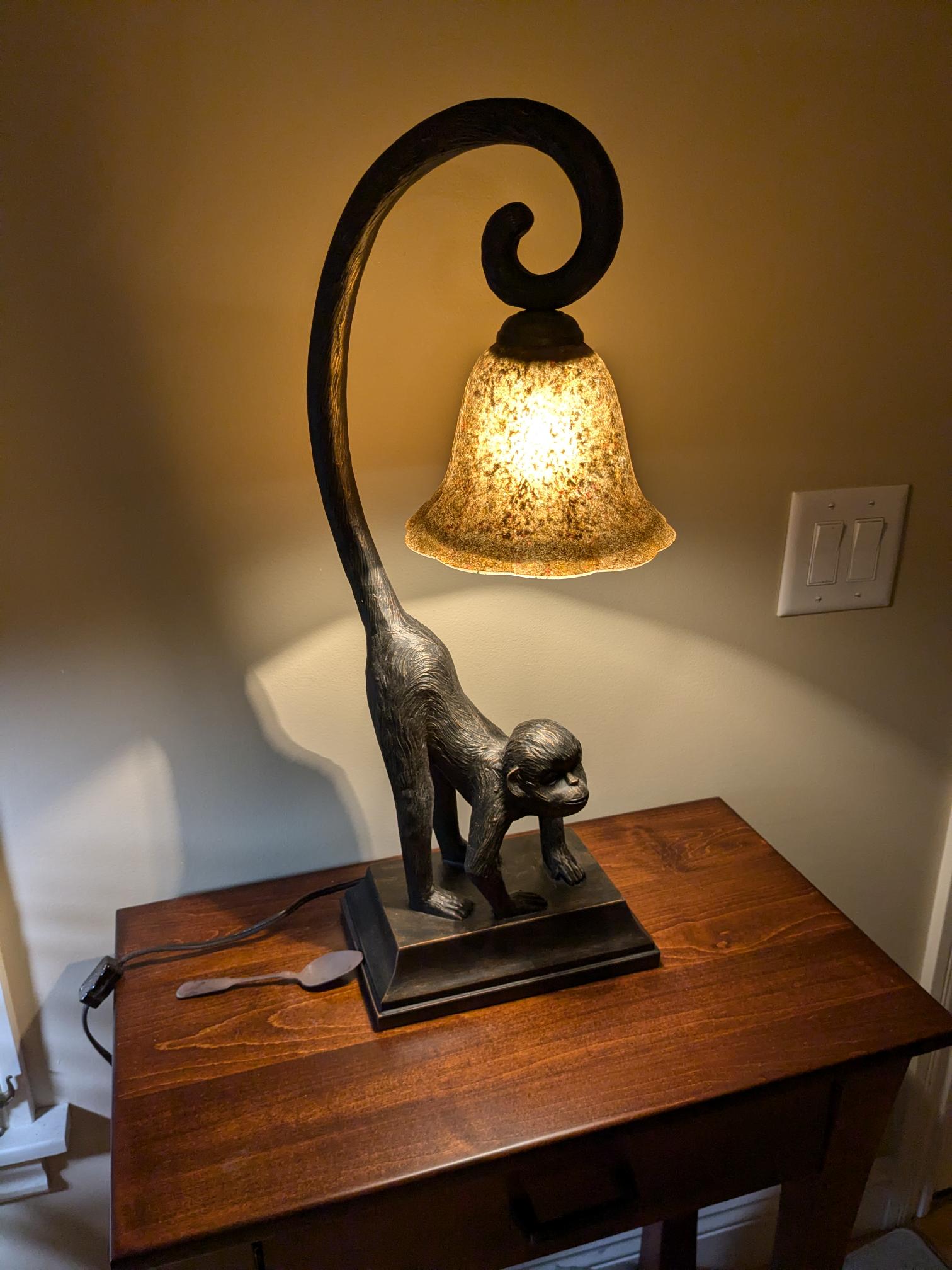
Inside there was plenty of artwork and interesting conversation pieces on the mantle and window ledges. I had to include a couple of pictures: one of the monkey lamps in the living room and a little parrot friend that welcomed the four of us.
When our host arrived, we were treated to some of the best chicken parmigiana we’ve ever tasted. There was a version of Melanzane (eggplant) alla Parmigiana that was just as tasty. We all had seconds and there were tons left over. They also treated us to a fine bottle of California red to wash it down. You may ask where a fine Italian meal is procured in ‘Care-O’. I shall not leave you in suspense: it was from Two Brothers Pizza off of country Route 84.
After looking through old pictures and reminiscing about what amounted to mischief in the 70s (wading around in the fountain at the newly opened MicMac Mall anyone?), we bid our adieus and trundled back to the hotel to fight with the apps on the SmartTV.
The morning of Wednesday, Aug 14, was now upon us. We ducked into the continental breakfast offered in the common room and piled back into the car around 9:30 for more highway hijinks.
Windham (NY) –> Allentown (PA)
This was a much shorter drive than the previous legs, but probably one of the most stressful. I have never seen more trucks on a stretch of highway in my life. Our route on this day was as follows:
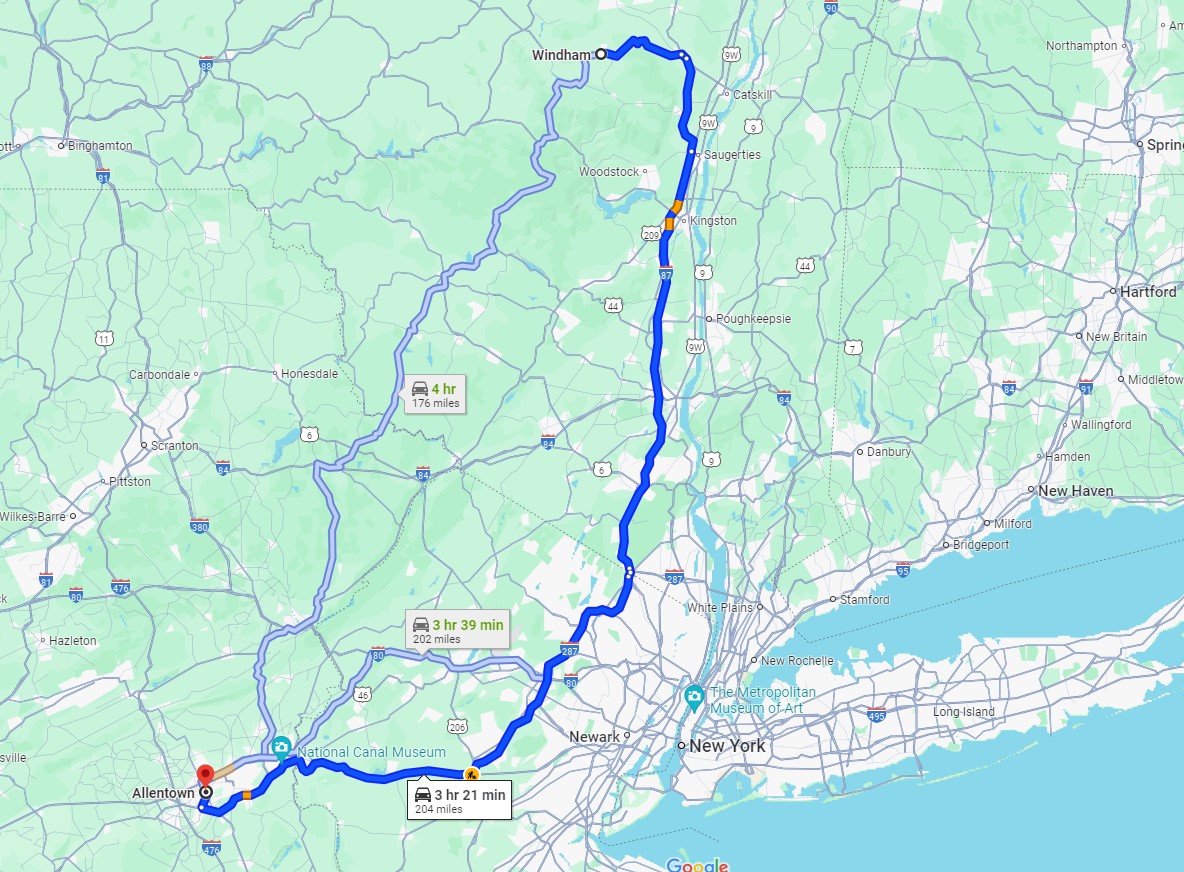
Leaving Windham, we traveled East on NY-23 back to Cairo, then veered south on NY-32.
After about 40 minutes, we reached Saugerties and headed due south on I-87 to certain doom.
I should probably explain. As you can see from the map above, the I-87 runs straight along the Hudson across the New Jersey line, when it merges to I-287 around Suffern, NY. This route continues further south and at the nearest point, comes within 20km of Newark, and about 30km from Manhattan. There happens to be a wee bit of commerce in this area and as you could imagine, rigs of every shape, size, colour, with trailers hauling logs, building materials, animals, mini-homes, heavy equipment, and tankers, were all wanting to race to their respective destinations. Sprinkle in some traffic snarls that slowed their progress, and you have all the ingredients of the next screenplay in the Mad Max film series.
Not realizing we were bisecting New Jersey state to this extent, we passed some fun city names along the way: Mahwah, Crystal Lake (for slasher horror fans who grew up with the Friday the 13th movie franchise), Pompton Lakes, Riverdale (possible hometown of Archie and friends?), Parsippany, and Basking Ridge, which sounds like the name of a relaxing day spa. We didn’t actually see much from the highway as most of it was spent surrounded by high-sided 53-foot trailers swerving between four lanes. We continued to the fun-to-say Pluckemin, NJ, and jumped onto the I-78 due west.
After about 25 minutes, we made a semi-circle around the borough of Alpha, NJ to reach the Pennsylvania border. Our destination was getting close!
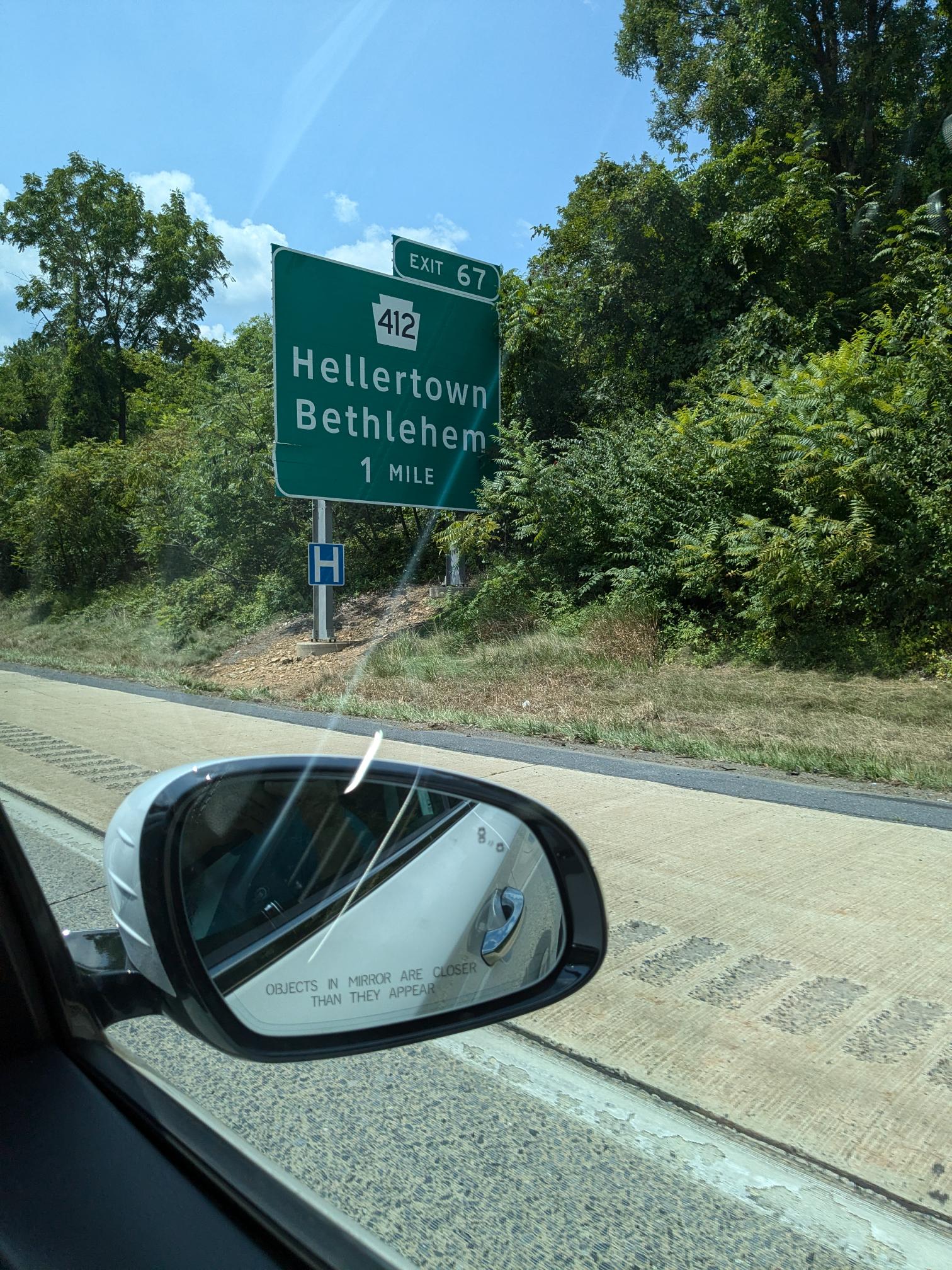
As we approached Allentown, we momentarily suffered an existential crisis when we passed the following road-sign:
Turn right to Bethlehem or left to Hellertown? I swear I am not making this up.
Pulling off the highway around 2pm we proceeded to the Holiday Inn on Hamilton Rd in Dorneyville, which is not a ville at all, but described as a ‘census-designated place’ in Lehigh County. With our room not quite ready, we set out to find some lunch and check our surroundings.
Please join me for our next installment when we embark on a winery hunt that eventually landed us in East Texas, a pharmacy visit to snoop pain relievers, and a lovely drive around (and through!) the Allegheny Mountains.
Until next time…
Disclaimer: The views and opinions expressed in this article are those of the author(s) and do not necessarily reflect the official policy or position of any agency, employer or affiliation.
An interesting choice of townships to be sure. A resort town of just over 11,000 people, Wikipedia reports that is is the 3rd oldest town in Maine. Travel southward just a short 21 mile jaunt (sorry…34 km) on the I-95 and you arrive at the popular shopping mecca of Kittery / Portsmouth on the Maine-New Hampshire border. Follow the coast to the north for about 10 km and you land in Kennebunkport. If that sounds familiar, it might be because the Bush family has a retreat there. Their compound has hosted a number of world leaders though the years, including Margaret Thatcher, Mikhail Gorbachev, Vladimir Putin and Nicolas Sarkozy during the presidencies of H.W and W. respectively.
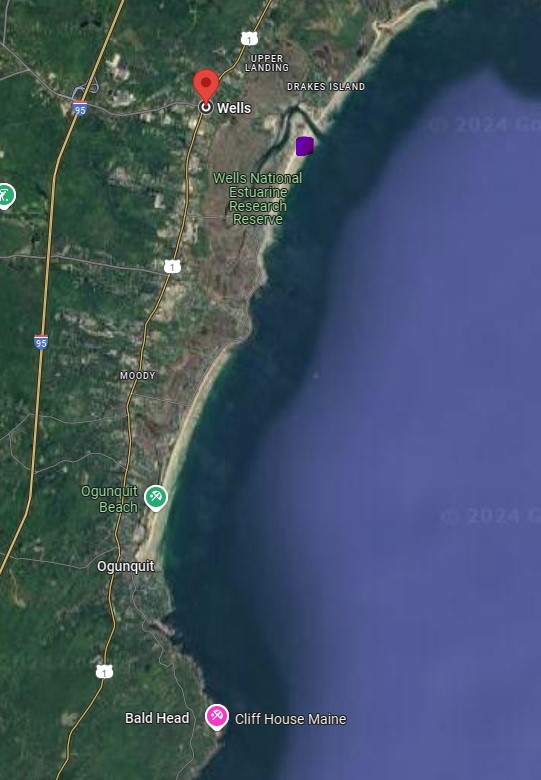
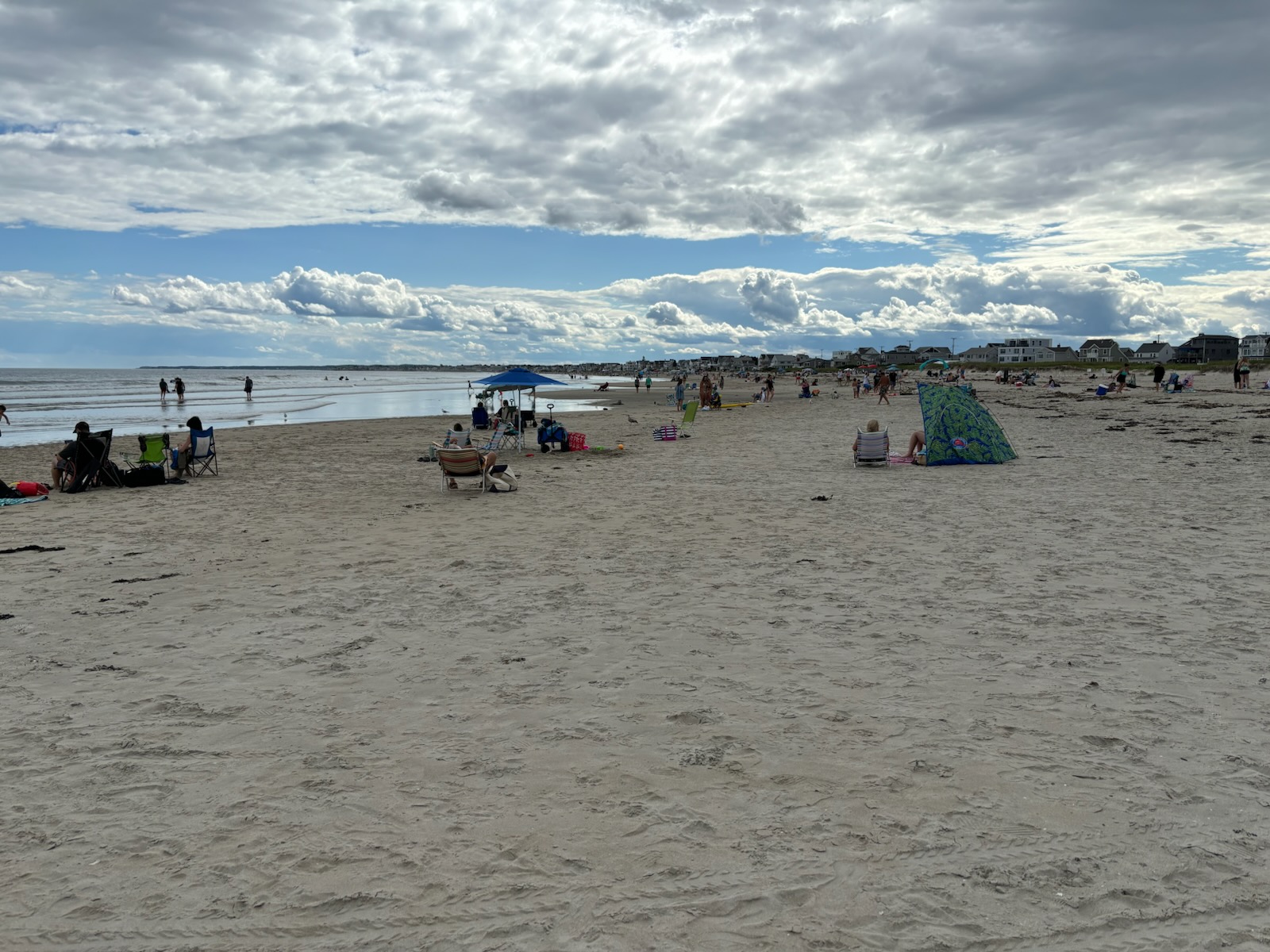
Wells Beach is a popular destination spot, so here it is in all it’s splendor:
On the left, our position on the beach looking southward towards Ogunquit*. Bald Head is the point waaaay off in the distance. This area is lined with vistas, with proper two and three-story chalets overlooking the water, not any hardscrabble, clapboard cottages or nondescript bunkhouses to be found. A large number of the beachgoers spoke French, as evidenced by the succession of Quebec license-plates we passed as we walked along the strip.
*The purple blob pictured above is not to scale
So why Wells, you ask? This first leg was one of the easiest to identify as my father has an aunt and cousins in the area. I recall being here twice before: once when I was barely school age and again in my mid-twenties when we visited Loudon, New Hamphire to see a Nascar race. On the first trip, I have still images in my mind of a car museum (no longer in operation) and mini-golf (we saw a course, but not sure if it was the same one). The second trip stands out for two things:
1) Mom wanted to hit every antique store along the old highway. Usually we had already passed them, so a-backtracking we would go! I’m exaggerating of course, but it seemed like more than a few. I think I may have even bought a diecast model at one, so we were all complicit to a degree.
2) Locks! They lived in a different house back then, but when we had visited Dad’s aunt, her husband had a collection of locks. Old, new, large, tiny, combination, keyed, you name it. This was both eccentric and fascinating, with each show-and-tell explaining the craftmanship, location and practical purpose of various locking mechanisms.
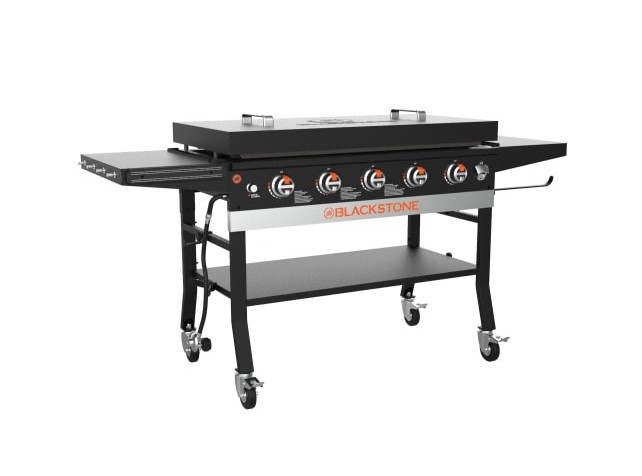
Our visit this time was a short one. We arrived Sunday evening, had dinner at Batson River, conveniently located on Mile Rd leading to the beach. It was a very busy spot with a bit of a wait, but the pizza was quite tasty. On Monday, we spent the majority catching up with family at their home on the outskirts of town. It is a beautiful spot with ample privacy, mature trees and a pool. I also got to visit my first Hannaford’s supermarket for food and libations. They had a pharmacy, so like a moth to a flame, I flew too close and therefore had to inspect their fascia and fixtures, check for product ‘holes’ in the displays and look at foreign packaging of familiar cough and cold products. It was in the front left corner of the store and appeared closed off, with a drop off at one end and pick up at the other. We grabbed some Neosporin off the top shelf directly in front of the dispensary, but didn’t catch anyone within view behind the glass. After cruising the aisles to accidentally find an amazing red blend from California, we headed back for a evening BBQ featuring cheesesteaks and salads.
As a sidenote, watching one of these monsters in action is a treat:
Apparently you can cook anything on a Blackstone. If you have a hankering for omelets or just want to show off your Teppanyaki skills, this is the griddle for you!
One more TripAdvisor review if you’re interested: should you visit Wells, check out the Bitter End restaurant. I can let the website pictures speak for themselves, but if you are looking for an atmosphere that includes dory boats mounted in the yard, a bathroom covered wall-to-wall with pop-culture icons, and a fun cocktail list, you will not be disappointed.
Tuesday, Aug 13 arrived. We had bought breakfast supplies and enjoyed some toasted ham and egg sandwiches to start the morning. We checked out of the AirBnB shortly before 10am and began our next segment of the tour.
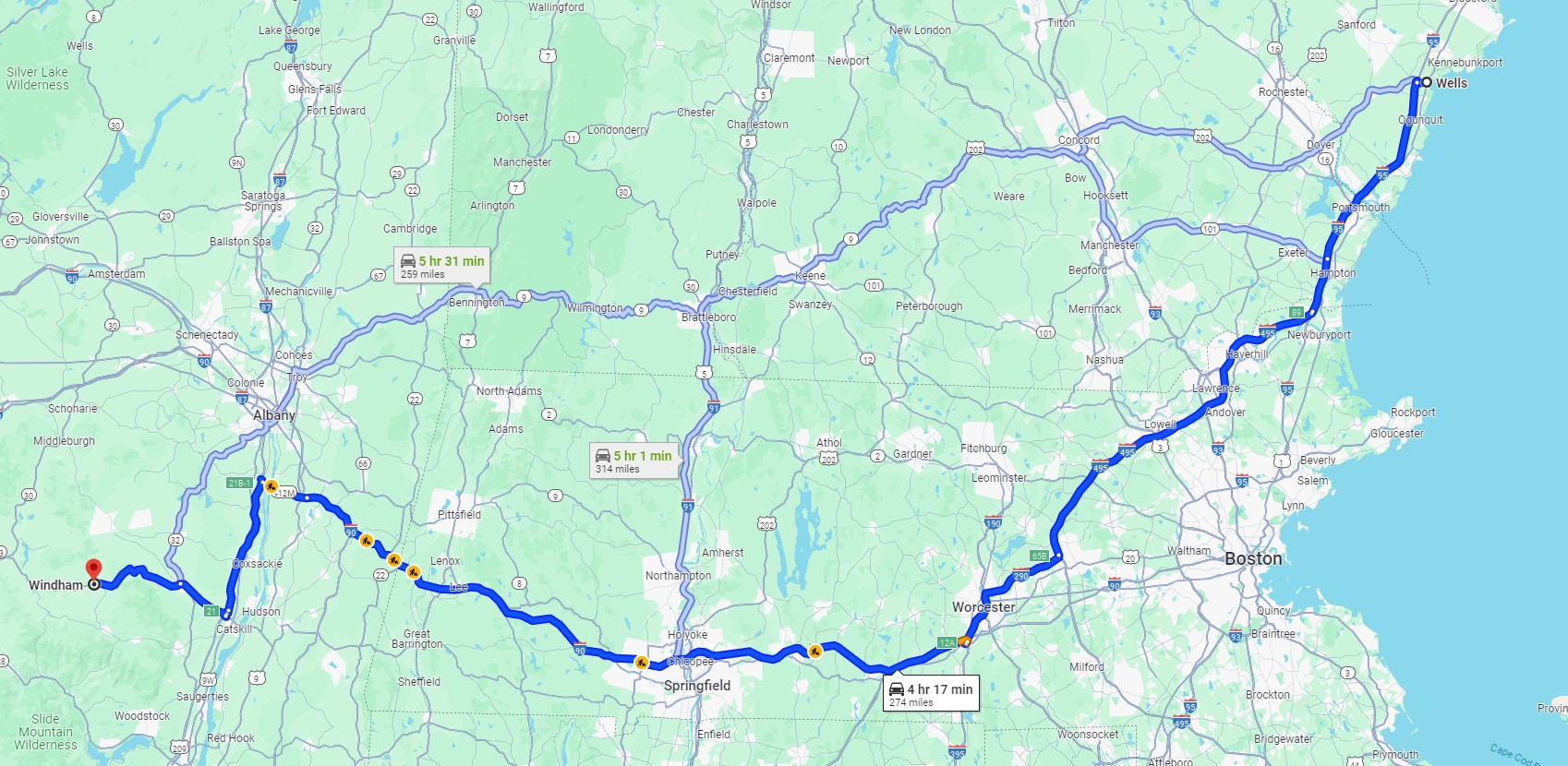
Wells (ME) –> Windham (NY)
For those who enjoy following along on real paper maps, like 5-year-old me for instance, I’ll give a quick synopsis of the route.
This journey took us further down the I-95, spending about 15 minutes crossing the corner of New Hampshire before entering Massachusetts.
Jumped on the 495 at Amesbury to venture southwest across the state. Thankfully, the main highways were mostly free of construction and road rage incidents. I learned fairly quickly that with any decent volume of traffic on the road, adaptive cruise control was not my friend. If we were stuck in the middle of three or four lanes, it was a constant speed up/slow down as cars and SUVs flew by on either side.
Next onto the 290 at Marlborough. We passed through Worcester and once we hit Auburn, merged back to a highway with an ‘I’ in front.
Other than driving through Springfield, a city of over 150,000 people, the I-90 wasn’t too interesting to drive. It was hilly and forested but the US does do a great job at rest stops; they are never too far apart and provided all the conveniences of gas, snacks, coffee and restroom facilities.
We crossed the NY border at Stockbridge and across the Hudson River to begin heading south on the I-87 until we reached Climax, NY (no really 🙂
Another 40 minutes west into the mountains and we arrived in Windham, the ‘Gem of the Catskills.’
It was now mid-afternoon and we were ready for a bit of reprieve from the car. It’s also a good time to pause the narrative and invite you back for part 3, where our story takes us to visit family friends, eat some amazing Italian takeout, white-knuckle through New Jersey, and watch tourists scream on the Talon: Grip of Fear!
Stay tuned…
Disclaimer: The views and opinions expressed in this article are those of the author(s) and do not necessarily reflect the official policy or position of any agency, employer or affiliation.
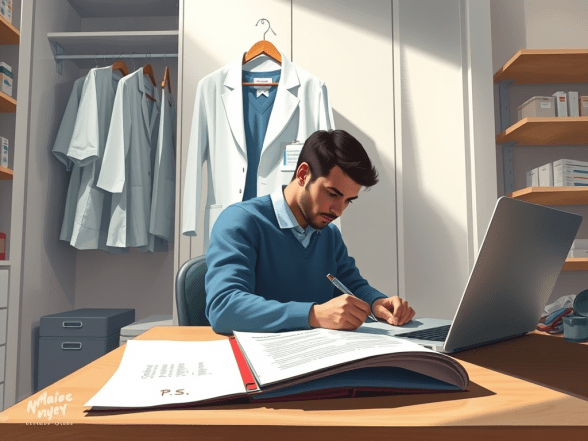
The year is 1998. It’s December, and we have just learned that we failed the physiology final midway through second year. We are despondent and openly wonder if pharmacy is the right fit as a career.
Mom and Dad tried to guide us in high school; there was no plan for university other than wanting to stay in a science-related field. Mom’s background is child-development, so she always seemed to know what her kids would do or experience before we did. Dad’s training was in the fields of architecture and environmental design, requiring spatial orientation and extreme precision. Neither knew much about pharmacy other than they had a pleasant family pharmacist and were impressed by his combination of social skills and pharmacology knowledge. Sounded like it could be a viable option.
After 2 years of a chemistry degree, acceptance into the pharmacy program was an enormous source of pride. Eager to learn about a different kind of chemistry, there was another wrinkle to consider: the advent of problem-based learning (PBL). This style of learning is quite self-directed with minimal didactic lectures. Relying on peers to help educate and problem-solve was a dramatic departure from previous university experience. Accreditation for this new program was conditional, so that added to the nerves. As an aural/visual learner, frustrations began to mount with the lack of direction. Building a house without a foundation and having to craft all the pieces from scratch was proving to be a tall order.
Rest assured, we ARE on the right track. Waiting to re-write the exam at the end of the academic year was a struggle, but you’ll earn your pass and shall soon forget how close you came to moving in a different direction.
Pharmacy has been THE perfect fit for you and your personality. The highlights are numerous, but I shall attempt to preview a few of them:
Benefits of Problem-Based Learning – Stay with me here. The method that almost broke our spirit ended up providing valuable tools for your journey. We will earn the ability to work collaboratively as a clinician, vetting good evidence from the poor, and learning how to own therapeutic decisions.
The pharmacy community – From our time in class or tutorial, to our clinical rotations, to our first solo shift behind the counter, to our first medication error, there will be a sense of belonging from countless professors, preceptors, mentors and confidants along the way. As an older and wiser you, I am excited to say that many of your classmates still hold special places in your life 25 years later.
A wealth of opportunity – This doesn’t just refer to roles of employment with escalating responsibility. It also includes contributions to continuing education, advisory/steering committees, regulatory projects, advocacy events with government representatives, and the chance to specialize in special populations or disease states.
Continuing Care – This segment of pharmacy will prove to be one of the most rewarding in our career, both as a facility consultant and later as an operations manager. Working with the frail elderly will provide a rich appreciation of the delicate balance between therapeutic outcomes and quality of life.
Coaching – Watching people grow their skills and thrive along their chosen paths will become our main fount of purpose, streaming with pride. You never know when someone you introduce to the profession of pharmacy will choose it as their own career path.
In addition, there will be a few items that with the benefit of hindsight, are now a source of amusement:
Carbon Paper – It shouldn’t come as any surprise that dot matrix printer ribbons were past their prime from the time we accepted that first pharmacy job. Filling out manual claims on carbon copies and mailing them to insurance plans will seem ridiculous almost immediately. Enjoy the ‘zip-zip’ sounds and the tearing of those perforated strips while you can.
Sleuthing – On occasion we might feel like a big deal when reading a prescription with terrible handwriting for a drug name that hasn’t existed in two decades from an out-of-town doctor who graduated med school in the sixties. It may impress the new interns, but we have to acknowledge just how terribly unsafe many of those orders will be.
Compounding – Taking out the hotplate and magnetic stirrer to melt some soft paraffin is surprisingly satisfying, that is until the the cap is removed from the bottle of LCD that remains to be added. That dark brown liquid with an unmistakable scent lingered like no other. It managed to stain everything and seemed to splash by itself no matter how careful we tried to be. Take home point: always take advantage of our yearly quota of lab-coat purchases!
Errors happen – The goal of perfection is noble, but impossible. Enter each day with the mindset to help as many people as you can safely and conscientiously. We will own our mistakes and do our best to learn from them. Do not allow a singular negative patient experience to detract from hundreds and thousands of positive interactions. Our intention is to help people, and we certainly will.
To sum up, please stick with this gift of a career and keep an open mind about what kind of pharmacist…check that…person you want to be. Be thankful for the journey and the people that make it meaningful. Use your lessons to inspire others to grow within the profession. Stay curious. Stay grounded. We may never fully appreciate the impact we will have but down the road a little ways, those fingerprints will be recognizable.
Can’t wait for you to venture out into young adulthood and make some marks! Best of luck on our chosen path.
Sincerely,
You/Me #stillaworkinprogress
PS – Hashtags (#) will make more sense in about 10-15 years 😉
Disclaimer: The views and opinions expressed in this article are those of the author(s) and do not necessarily reflect the official policy or position of any agency, employer or affiliation.
Change. It is both inevitable and unstoppable, inspirational and heartbreaking. It is both emotive and stoic, superficial and intensely personal.
This past 6 weeks have no doubt reminded me of the power of change as my place in the pharmacy world has been upended. After 25 years in the profession, a restructuring has suddenly left me on the outside looking in.
Initially, this came as a surprise; every role comes with ups and downs but usually even out over the long term. The idea of letting go of a work routine and the network of people that go along with it was always a possibility, but not something I had strongly considered. I am proud of what my teams have accomplished over the years and did my best to prepare them for their next chapters. I just know that they will continue to thrive, though I shall dearly miss being along for the journey.
Although disconcerting, the weeks that followed were full of well-wishers offering support and guidance. What could have been a much darker experience was helped immensely by a stable home life and a passion for the arts; after performing with an amazing cast in Jesus Christ Superstar last June, I am equally chuffed to be back onstage with http://stageprophets.ca for a 2-weekend run of Music Man that takes place in mid-May. It’s a grueling process, but storytelling at it’s finest!
What I have recently found embedded in this cacophony of change is a tiny, exuberant voice that grows louder with each passing day. The message is simple: be thankful for new choices and new opportunities.
“The secret of change is to focus all of your energy not on fighting the old, but on building the new” -Socrates
Leave it to a 2,500-year-old Greek philosopher to challenge the status quo by being curious and asking the experts questions on topic definitions that he did not fully understand: https://en.wikipedia.org/wiki/Socratic_method. My first choice is to adopt the above strategy and be open-minded to the growth opportunities I have today and to those that present in the future. I have looked at some graduate courses, but also have interest in other segments of the pharmacy profession outside of retail, including industry and government. There are so many directions to explore and learn, many of which I am assuredly unaware as of this writing.
“Change will not come if we wait for some other person or some other time. We are the ones we’ve been waiting for. We are the change that we seek.” -Barack Obama
This quote from Barack resonates deeply. We all strive to make our marks wherever we dabble. I feel there are so many more contributions I can make to a profession that has given me a rewarding career to date. The thought of once again being that catalyst for change certainly excites me. I want to immerse myself into the next work environment with a renewed fervor, pushing my own creative limits and trying to make better those around me.
“Every day the clock resets. Your wins don’t matter. Your failures don’t matter. Don’t stress on what was, fight for what could be. “-Sean Higgins
A quick web search on ‘Sean Higgins’ directs to a Wikipedia page for a former NBA basketball player turned Chairman/CEO of an investment company. Admittedly, I did not research this to any extent, but I keep picturing a resetting 24-second shot clock that is used on the court. It seems to fit.
I actually wanted to end on this one because frankly, I don’t agree with the second or third sentences. My wins did matter. My failures did matter. At least they mattered to me. They all helped to mold and create the person I am today. Those experiences will allow me to make the best choices when embracing the inevitable, unstoppable change. The latter part of the quote makes sense. Although I value the past, it will not define me. The time has come to move forward with wide-eyed exhilaration.
“Choices are the hinges of destiny.” – Edwin Markham
Disclaimer: The views and opinions expressed in this article are those of the author(s) and do not necessarily reflect the official policy or position of any agency, employer or affiliation.
Back in Part 1, we took a brief look at the pandemic’s impact on pharmacy and the substantial wave of change we face from primary dispensers to primary clinicians.
This evolution has been occurring over the past decade since medication reviews and minor ailment prescribing were first offered in a number of provinces. With post-pandemic reopening, the difference now is that pharmacists are no longer carrying all of the burden to promote and create public awareness of accessible, pharmacy-driven clinical services. You could easily argue the opposite; members of the public are coming to expect and demand that pharmacy fill gaps in the healthcare system, particularly with assessments and disease-state management. This demand is driving innovation and challenging the very image of a standard dispensary that has existed for as far back as most can remember: a pharmacist in a white coat standing in the middle, surrounded by support staff who are greeting customers and filling orders.
To wit, I am very proud of my company’s latest partnership here on the east coast! It’s a pharmacy model that eschews the reliance of imagery that uses counting trays, pills in bottles or ointment jars to promote pharmacy. Instead the focus is on allowing pharmacy to be available for orphan patients, and better triage healthcare needs. This should help reduce the glut in emergency rooms, decrease wait times for services, and aid in the management of various disease-states.
So with all of this pushing forward, is there any hesitation? Perhaps, so let’s dive in.
First off, I have never spoken to anyone in the profession, from students, to recent retirees in all pharmacy environments, that hasn’t endorsed giving pharmacists increased latitude with respect to clinical decision-making. I have heard plenty of stories where pharmacists did indeed have a better understanding of a patient’s needs but recommendations to a prescriber were either ignored or rejected. When they first appeared in the standards, some held trepidation that they could perform injections or diagnose minor ailments. When the title of pharmacy technician became regulated around 2010, it took awhile for the profession to integrate the role.
Counting my university degree, this marks my 25th year as part of the profession. Relating my introduction into pharmacy practice with PharmD graduates of today is quite the discussion. I do tend to forget how much has come and gone until someone reminds me of something notable. For example, I recall when statins were being hyped in the late 90’s as a game-changer in lowering cholesterol and reducing cardiovascular risk. We learned the mechanism of action of these HMG-CoA reductase inhibitors in lecture. When Zocor (simvastatin) was approved in Canada during 1999, Merck shipped sleek boxes containing foil packs of shield-shaped tablets that served as a conversation pieces in the dispensary. There were a bunch of similar drugs introduced in the coming years and most are still available in generic form today. One notable molecule lost in the annals of time was Bayer’s Baycol (cerivastatin), that was pulled from the market in 2001 due to alarming reports of rhabdomyolysis, a condition caused my damaged muscle tissue releasing proteins and electrolytes into the blood. Another emerging drug class in the early 2000’s were the COX-2 Inhibitors for arthritic conditions. Effective for inflammation but less corrosive to the stomach lining than previous therapies, physicians were handing out samples for Celebrex (celecoxib) and Vioxx (rofecoxib) to patients eager to find relief. Unfortunately, the sheen came off of this therapy class due to evidence of increased heart-related events, and subsequent removal of rofecoxib from the market in 2004. It’s worth noting that these variants were pulled voluntarily. Both classes are still widely used and provide significant benefit to scores of patients worldwide. The takeaway from me was recalling the countless conversations with our scared and/or upset patients that needed to look for alternatives.
Further skipping down memory lane, we reminisce of the days of writing third party credit claims on carbon copy forms and counting pill bottles to manually create drug orders. There was no internet, no email, or laser printers. Every store had an outdated Remington’s reference and CPS versions dating back to the 70’s. Smoking was still permitted in workplaces until the mid-2000s. Older physicians wrote for arcane drug names like Ilosone, Ledercillin, and Doral. We wished that all pills were shaped like Premarin because of how they spread out on the counting tray just right.
The good news is that some things haven’t changed too much:
Patients still need us to guide them through the healthcare system and trust us to be their advocate.
An appropriate drug regimen can manage disease and significantly increase quality of life.
Relationships made within the pharmacy community last for careers and beyond.
We still feel rewarded when patients bring their baking at Christmas as a show of their thanks.
Mentors are valuable no matter when or where you are on a career path.
The last point is resonant on a few different levels. When I graduated, the world was an oyster. I had a brain chock full of the latest guidelines, all the me-too drug names (brand AND generic) and 15 minute counseling monologues to deliver on each. My preceptors valued my ability to find the best answers to clinical questions, and my eagerness to create algorithms for the staff. They would admit to feeling like dinosaurs; their knowledge was a bit dated, and that we forced them to step up their games. On the other hand, I would marvel at how they would be so relaxed with a cancer patient, or be able to pick out the three most important items on a counseling document. It amazed me at the ease of which interaction risks were contextualized with the history and desires of the patient. Finally, I appreciated when they had the perfect piece of friendly advice for every situation I would encounter.
So now that I am a full generation away from that first shift, I could acknowledge that I’m too far behind, start coasting and risk being eaten whole, but I refuse to throw my hands up in the face of massive change. The work experience gained and relationships forged over the years will serve me better now than ever before. I may offer perspective and guidance to ensure new clinical tools are properly integrated into a struggling healthcare system. The advice that I still receive from my mentors may now be dispensed to the next wave of practitioners. We will complement and support each other on our respective journeys.
For those of us beyond the first leg of our careers, the dinosaur running behind us is fading further behind. The only thing at risk of extinction is the notion that our value to the profession is somehow diminished. Whether you have 5 years, 15 or 50, the quality of patient care you deliver every day will never get old.
Disclaimer: The views and opinions expressed in this article are those of the author(s) and do not necessarily reflect the official policy or position of any agency, employer or affiliation.
After vacation, you could say we encountered some rather bad luck. I say we, but the sympathy should be reserved for my wife, who after two days back at work, suffered a nasty fall and shattered her olecranon. My diagnostic skills are weak in this area, but my hack medical description of this injury would place it as a Type IIIB, replete with instability of the forearm and multiple fragments. Lest we say that it wasn’t funny at all (cue collective groan).
Having never had a catastrophic injury before, when I received her phone call that something was wrong, her voice was a bit higher-pitched, but the timbre and inflection didn’t suggest anything worthy of alarm. In fact, she seemed more concerned about a set of keys that dropped through a sewer grate during the tumble. Assuming shock was playing a part, we arrived at the emergency with the arm immobilized, and she proceeded to sit and read her book for 4 hours in the waiting room. She felt some discomfort when she tried to move, but no agonizing pain. We were both aghast when the doctor returned with the x-ray results; her ‘bad sprain’ would require immediate surgery. In hindsight, the fact she could no longer locate the knob of her elbow probably should’ve been a giveaway.
So the ER doc forwarded paperwork to the main hospital, but it was one in the morning and the services were closed. So he applied a cast, asked she refrain from eating or drinking, and head to the hospital at 9 in the morning (basically cast, fast, and last). The morning comes, they take x-rays, perform a work-up triage, and….send her home…on a Friday. The new instructions were to start fasting at midnight, and wait by the phone for a possible call in the morning. Saturday morning rolls in and no call. Now I might add, she is not taking anything for pain, just frequent icing and sleeping uncomfortably in a chair with a cushion supporting her thankfully non-dominant arm. By 3pm, I’m calling the hospital myself as she now hasn’t eaten in over 15 hours. Lo and behold, the nurse had thought someone already called. No surgery today due a multiple trauma situation. Repeat the midnight fast. Two MORE days go by until she gets in on the Monday morning. With a little hardware insertion, she is now partially bionic and taking on any arm-wrestling challengers (kidding).
Through the ordeal, we realized that as pharmacists entrenched in the healthcare system, we are providing care to patients, and don’t often ponder the role of the consumer. To find ourselves on the flip side dealing with the uncertainly of a foreign process, we honestly had a frustrating few days. Healthcare is often measured in units of length, not quality. How long will it take to fill my prescription? How long is the wait in the emergency room? How long is the wait list for my carpal-tunnel surgery?
As a provider, we understand all the moving parts and systems that help us deliver quality healthcare. The time we take to ensure we’re being prudent, thorough and safe can not be understated. To us, 30 minutes for a prescription may be completely realistic so that everyone in line for a medication service will receive the same experience, regardless of whether it’s an injection, a medication review and/or a simple refill. In order to maintain consistency and sustainability, that block of time is necessary for very good reasons.
As a consumer on the other hand, we lacked the understanding, and every missed phone call, or being ‘bumped’ was hard to comprehend. My wife is unable to function for 3 1/2 days; no real sleep, fasting cycles, trouble performing any regular tasks we may take for granted (laundry, cooking, dressing, showering, etc). We’ve since determined that an ‘eternity’ is now defined as 3 1/2 days. Just at the point of feeling helpless and distraught, it dawns on us that we need to trust the professionals to provide us with the best care under the system that binds them. How can we, as pharmacists, expect patients to trust us when we say that their prescription will take the time we quote them, when we’re not willing to give that same latitude to those trying to help us?
So I propose we attempt to measure the time in a different way. Specifically, let’s look at duration of relationships. How long have you had the same family doctor? Did he/she treat your parents or kids? How long has your pharmacist been following up on that pesky diabetes? How long is the history you’ve had with a dental clinic? Usually, the strong bonds you form in primary care are a testament to the quality you receive, and yes, most people will feel it’s worth the wait.
Time is relative. A service may seem to take too long, but merely a speck in what could become a rewarding long-term relationship.
Disclaimer: The views and opinions expressed in this article are those of the author(s) and do not necessarily reflect the official policy or position of any agency, employer or affiliation.
So the votes are in, and with a track record of 39% accuracy, last week the groundhog predicted an early spring. I’m not sure how I feel about that, but the sky looked pretty cloudless here so those of us slogging through a winter funk have reason to be hopeful.
Since it is an unofficial, cute, holiday, I figured it was worth proposing my own. As I attempt to defy convention once again, consider the following question:
Ever give someone a sponge bath?
In my (ahem) younger days, the idea of a sponge bath was how I needled a close friend who was working towards her nursing degree. Naturally it’s completely ignorant and ridiculous to think that nursing, or any direct patient care could be reduced to one task. In fact, what may seem rather menial in nature and by no means glamorous, is of utmost importance for those that can not bathe themselves. I know how much I appreciate feeling clean, so I can only imagine how helpless it must feel to understand the benefits of good hygiene, but be unable to carry through the behaviours on your own.
Although I didn’t become a pharmacist to avoid sponge baths, it certainly didn’t rank on the list of responsibilities I envisioned for a career. Now that I’m well into my chosen occupation, it seems that my view of other health professions has always been colored by their impact on my own. This inherent bias has really prevented me from appreciating the multitude of care considerations outside of medication management.
Physicians and nurses have been so complementary all these years so it’s fair to start with them. From a medication standpoint, it shouldn’t be a surprise that those prescribing and administering don’t always know the chemical names of generic brands, dosage forms strengths or interactions. Even after taking a four-year degree concentrating solely on them, there are so many drug options in the CPS, it’s surprising I remember a small fraction without needing to research. Physicians are the leaders in primary care. They diagnose every ailment through any available means: inspection, manipulation, blood tests combined with subjective and objective measurements. It must be a huge weight to provide answers to those feeling their worst on any given day. Being the one to inform a family that a spot on a lung is terminal cancer, or confirming that protracted mobility issues are due to ALS, would be heartbreaking. Not to mention the hospital visits, the special authorizations, the referral letters all while trying to keep abreast of the newest science in the field. It’s amazing and since it has become an expectation, often underappreciated.
Shifting gears, have you ever seen a relaxed nurse on the job? Most of whom I’ve met have so many balls in the air they could put buskers to shame. Being responsible for the quotidian care of many individuals is not an easy undertaking. Things we take for granted: getting dressed in the morning, toileting, having the dexterity to handle a spoon are significant challenges for folks of all ages whether in an institutional setting or transitional care. It takes compassion to help change hearing aid batteries, or massage a sore shoulder. It takes fortitude to debride open wounds or clean up accidents related to continence.
Other health professions contribute to well-being and are responsible for bettering quality of life. Dietitians instill healthy mealtime discipline but allow for that diabetic to enjoy his/her favorite treat now and then. Occupational therapists adapt environments and modify tasks to help regain or maintain daily productivity. Physiotherapy will intervene after a hip fracture to increase mobility and function.
We all have a part to play, and every professional requires practice and support from the other fields. A truly holistic approach to patient care demands it.
This pharmacist would like to send along a hearty ‘thank-you’ to all of my healthcare allies in whatever capacity you may touch the life of our mutual patient. We all share a passion for the same thing: to help others feel the best they possibly can for as long as they possibly can. Your contribution matters. We promise to work at our craft to ensure that we hold up our end of the bargain.
Disclaimer: The views and opinions expressed in this article are those of the author(s) and do not necessarily reflect the official policy or position of any agency, employer or affiliation.





 PharmAspire